

More news on this day
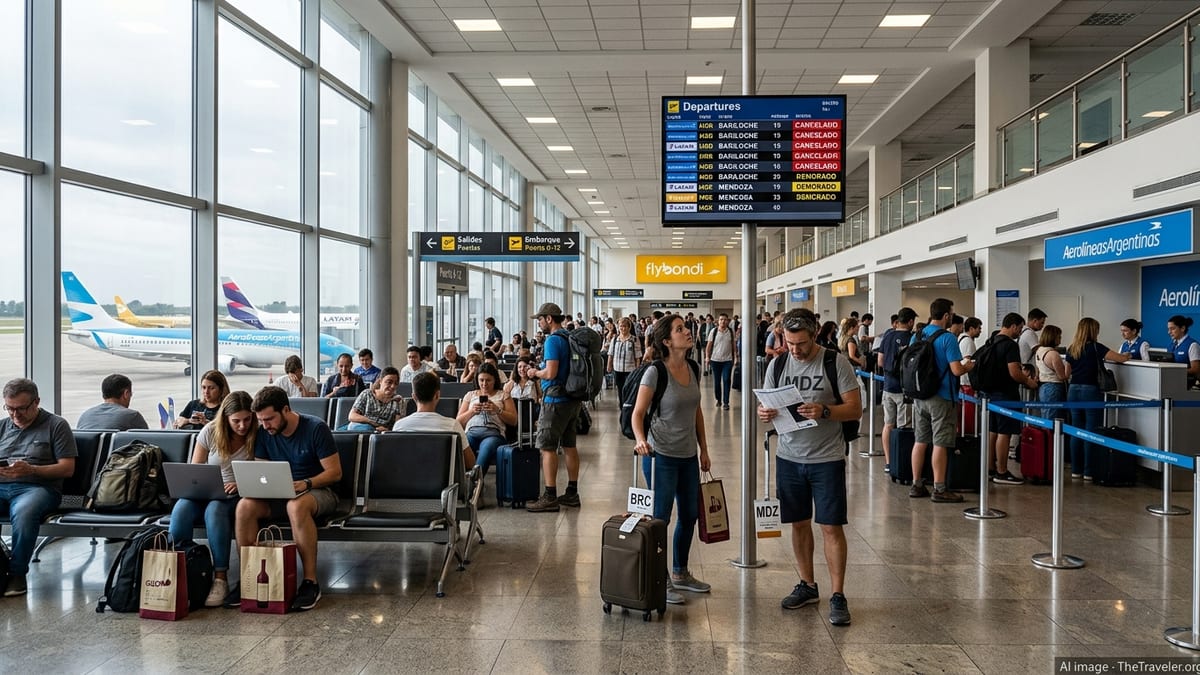
Travellers across Argentina have faced another day of uncertainty as publicly available data and local coverage point to at least 31 delays and 24 cancellations involving Aerolineas Argentinas, LATAM, and Flybondi services linking Buenos Aires, Bariloche, and Mendoza, stranding passengers at key hubs and forcing last minute itinerary changes.
Get the latest news straight to your inbox!
Wave of Disruptions Hits Key Tourist Corridors
The latest round of disruption comes at a time when domestic and regional air travel in Argentina is under close scrutiny, particularly on heavily used leisure routes between Buenos Aires, the Patagonian resort city of Bariloche, and the wine region gateway of Mendoza. Flight-tracking dashboards and local media tallies indicate that services operated by Aerolineas Argentinas, LATAM, and low cost carrier Flybondi collectively registered 31 delayed departures and 24 outright cancellations over a short operating window.
While delay figures fluctuate throughout the day, the concentration of problems on routes that funnel tourists to some of the country’s most visited destinations has magnified the impact. Travellers transiting through Buenos Aires’ Aeroparque Jorge Newbery and Ezeiza International Airport reported extended waits, missed onward connections, and last minute rebookings as schedules were repeatedly adjusted.
The disruption has been especially visible on trunk routes between Buenos Aires and Bariloche as well as Buenos Aires and Mendoza, where multiple airlines compete and aircraft utilization is high. These links are central to Argentina’s domestic tourism economy, and even modest waves of cancellations can quickly cascade into widespread schedule instability.
Although the precise breakdown of responsibility for each delayed or cancelled service is still being parsed, the combined effect across the three carriers has reinforced growing concerns about operational resilience in Argentina’s crowded domestic skies.
Aerolineas Argentinas and LATAM Confront Capacity and Reliability Pressures
As the country’s flag carrier and dominant domestic operator, Aerolineas Argentinas often bears the brunt of passenger frustration when schedules falter. Publicly available route information shows that the airline maintains extensive links from Buenos Aires to Bariloche and Mendoza, alongside connections from other provincial capitals, making it particularly exposed when weather, congestion, or crew availability trigger knock-on delays.
Travel forums and recent passenger accounts highlight a pattern of schedule changes and re timings on Aerolineas Argentinas services, sometimes notified in advance but still disruptive for those with tight itineraries or separate international tickets. In many cases, flights eventually operate, but at significantly different times than originally planned, complicating transfers between Buenos Aires’ two airports and limiting flexibility for travellers.
LATAM, which operates regional services into Argentina primarily through its Chilean arm, has also featured in the latest tally of delays. The carrier remains a key player on cross border routes and select domestic segments, including flights that connect Buenos Aires with cities such as Mendoza through regional hubs. When LATAM services run late or are cancelled, passengers can find themselves competing for limited rebooking options on already busy domestic flights, particularly during peak holiday and wine tourism seasons.
Observers of the Argentine aviation market note that both Aerolineas Argentinas and LATAM are operating within a challenging environment marked by currency volatility, shifting demand patterns, and infrastructure constraints. Against this backdrop, even routine operational disruptions can quickly translate into large clusters of delayed or cancelled flights across major corridors.
Flybondi’s Low Cost Model Under Renewed Scrutiny
The latest disruption has again drawn attention to Flybondi, Argentina’s ultra low cost carrier, which has been repeatedly criticized in recent years for frequent delays and cancellations on popular domestic routes. Publicly accessible profiles of the airline describe a business model built around high aircraft utilization and aggressive pricing, factors that can leave little margin for error when technical or weather issues arise.
Online travel communities contain detailed accounts from passengers who report long delays, same day schedule changes, and in some cases multiple cancellations on itineraries involving Flybondi services to and from Buenos Aires, Bariloche, and Mendoza. Some travellers describe being forced to purchase last minute tickets on rival carriers after flights were pulled from the schedule or significantly retimed.
Regulatory documents and consumer protection filings indicate that Flybondi has previously faced penalties over alleged shortcomings in its handling of delays and cancellations, as well as communication with affected customers. The airline has pushed back against some of these findings, but the public record underscores how frequently its operations have come under official and consumer scrutiny.
The current cluster of 31 delays and 24 cancellations is adding to that perception problem, particularly among international visitors who may be less familiar with the trade offs associated with ultra low cost travel in Argentina’s domestic market. For many, the immediate concern is less about price and more about the likelihood of actually reaching Bariloche’s lakes or Mendoza’s vineyards on the day planned.
Travellers Juggle Airport Transfers, Rebookings, and Missed Holidays
For passengers caught up in the disruption, the practical impacts extend far beyond airport departure boards. Buenos Aires’ status as a dual airport city means that many itineraries involve transfers between Ezeiza and Aeroparque, often within tight layover windows. When inbound flights arrive late or are cancelled, even a well planned ground transfer can become unworkable.
Recent traveller reports describe scenarios in which delays on domestic legs into Buenos Aires led to missed international departures, forcing expensive rebooking or additional hotel nights. Others recount overnight waits following cancellations from Patagonia or Cuyo region cities, with limited information about alternative options and long lines at customer service desks.
In Bariloche and Mendoza, the fallout from disrupted flights can cascade through local tourism ecosystems. Tour operators, rental car agencies, and hotels frequently re arrange bookings at short notice when visitors fail to arrive as scheduled. While many suppliers attempt to accommodate such changes, non refundable reservations and tightly packed itineraries mean some travellers simply lose paid experiences or have to compress multi day stays into shorter windows.
Travel planning discussions increasingly emphasize the importance of building buffer days between domestic flights and long haul departures, particularly when using separate tickets or low cost carriers. The latest figures on delays and cancellations are likely to reinforce advice to avoid tight same day connections and to maintain flexible ground arrangements in case of extended disruption.
Growing Calls for Transparency and Contingency Planning
The concentration of flight problems across Aerolineas Argentinas, LATAM, and Flybondi on core routes has intensified debate about how delays and cancellations are communicated and managed in Argentina. Consumer advocates and frequent travellers often point to gaps between legal obligations on re accommodation and refunds, and the realities passengers experience at airports when irregular operations occur.
Publicly available regulations set out compensation and assistance rules for delays beyond certain thresholds, including options for rebooking on other flights, full refunds, or alternative transport by road. Implementation, however, can vary significantly depending on the carrier, the airport, and the specific circumstances surrounding a disruption.
Analysts following the sector argue that greater transparency around on time performance and cancellation rates by route and by airline would help travellers make more informed choices, especially on leisure heavy corridors to Bariloche and Mendoza. Some independent websites and social media accounts already attempt to track this information, but coverage is patchy and not always up to date.
For now, the immediate reality for many travellers is a heightened sense of uncertainty. With 31 delays and 24 cancellations registered across three major airlines in a limited time frame, those planning trips within Argentina are being encouraged by travel communities and publicly available guidance to monitor their bookings closely, allow extra time for connections, and prepare contingency options in case their flights through Buenos Aires, Bariloche, or Mendoza do not operate as scheduled.