

More news on this day
Hundreds of passengers across Australia and New Zealand were left in limbo today as widespread delays and cancellations hit major hubs in Brisbane, Auckland, Sydney, Melbourne and other cities, disrupting operations for Qantas, Air New Zealand, Virgin Australia, Jetstar, Qatar Airways and several smaller carriers.
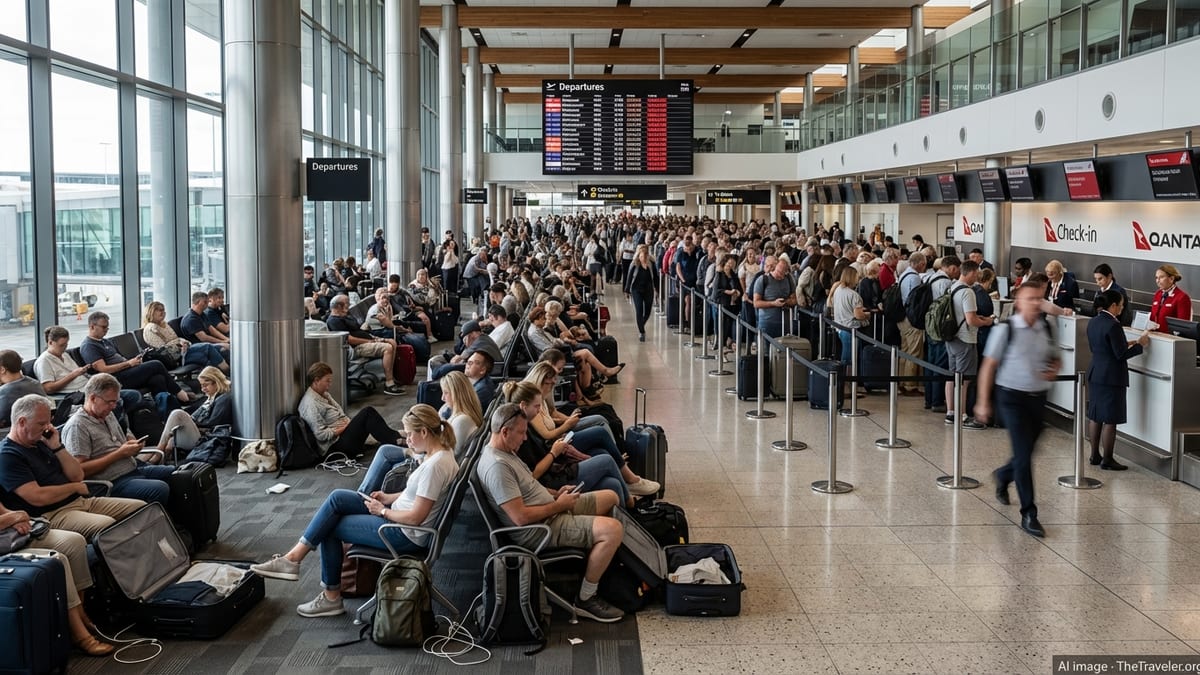
Widespread Disruption Hits Major Trans-Tasman Hubs
Operational data from airport authorities and flight-tracking services on March 9 indicates at least 36 flight cancellations and nearly 800 delays across Australia and New Zealand, creating one of the most severe single-day disruptions for the region so far this year. The impact has been felt most acutely at the busiest hubs, including Sydney, Melbourne, Brisbane and Auckland, but secondary airports such as Christchurch and Wellington have also reported significant knock-on effects.
Domestic and short-haul international services bore the brunt of the disruption, with tight turnarounds and high aircraft utilization leaving little slack in schedules. As delays mounted through the morning, early bottlenecks cascaded into afternoon and evening departures, meaning passengers who initially expected brief hold-ups instead faced rolling delays, missed connections and, in some cases, outright cancellations.
Airport terminals in Sydney, Melbourne and Auckland were described as crowded and tense, with long queues at customer service counters and self-service kiosks intermittently taken offline as airlines attempted to rebook disrupted passengers. Ground staff reported difficulty securing accommodation for stranded travellers, particularly in city centres where major events had already pushed hotel occupancy higher than usual.
Brisbane emerged as one of the hardest-hit Australian gateways, with extended waits at security and check in compounding the operational issues. Travellers heading to and from New Zealand on popular leisure and visiting-friends-and-relatives routes were particularly exposed, as services linking Brisbane, Sydney and Melbourne with Auckland and Christchurch saw multiple delays clustered around peak departure banks.
Qantas, Air New Zealand and Partners Scramble to Recover Schedules
National carriers Qantas and Air New Zealand faced some of the highest levels of disruption, reflecting their dominant positions in domestic and trans-Tasman markets. Both airlines were forced to cancel services and significantly delay many others as they worked to reposition aircraft and crew, while maintaining minimum connectivity on trunk routes such as Sydney to Melbourne and Auckland to Wellington.
Regional affiliates and codeshare partners added complexity to the recovery effort. QantasLink and Alliance Airlines, which provide essential connectivity to smaller Australian cities, experienced a mix of cancellations and lengthy delays, limiting options for passengers attempting to reroute via alternate airports. In New Zealand, regional links feeding into Auckland and Christchurch were also affected, undermining the reliability of onward long-haul itineraries.
Qatar Airways, which operates key long-haul connections from the region to Doha and onward to Europe, reported a series of delays on flights from Sydney, Melbourne, Brisbane and Auckland. With Gulf hubs already under pressure from wider international disruption, even small schedule variations in Australia and New Zealand had outsized consequences for passengers relying on tight connections to reach Europe, Africa and the Middle East.
Industry analysts noted that the cumulative effect of the day’s disruption went beyond the raw number of cancellations. Airlines in both countries have been operating with leaner fleets and tighter crew rosters, meaning that a relatively modest spike in delays can quickly escalate into widespread schedule instability, particularly during busy weekend and holiday travel periods.
Passengers Face Long Queues, Patchy Communication and Extra Costs
For passengers, the most immediate frustration was often the lack of timely and consistent information. Many travellers reported departure boards that changed repeatedly within short windows, with flights oscillating between delayed, boarding and “gate closed” statuses as operations teams attempted to reset schedules in real time.
Queues at airline help desks in Sydney, Melbourne, Brisbane and Auckland stretched for dozens of metres, with some passengers waiting hours to speak to an agent about rebooking options or compensation. Travellers whose onward connections fell outside the region, including those bound for long-haul flights to Europe or North America, were among the hardest hit, sometimes needing complete itinerary rebuilds when missed connections led to multi-day gaps in available seats.
Accommodation and meal support varied by carrier and route. While some passengers on longer delays reported being issued hotel vouchers and transport, others said they were advised to seek their own arrangements and pursue reimbursement later, adding a financial burden to already stressful circumstances. Travel insurers in both countries are expected to receive a surge of claims related to missed events, prepaid tours and additional accommodation.
Families travelling with children and older passengers were particularly vulnerable, with extended waits in crowded terminal areas. Airport volunteers and customer care teams distributed water and basic refreshments in several terminals, but seating and quiet spaces remained at a premium throughout the day as flights continued to depart late into the night.
Airports and Airlines Point to Systemic Strain
While the precise mix of causes varied from airport to airport, industry sources pointed to a combination of factors driving the disruption. High seasonal demand, congested airspace, crew scheduling challenges and ongoing maintenance backlogs across several fleets have all narrowed the margin for error in the region’s aviation system.
In Australia, the national competition regulator has repeatedly highlighted elevated levels of delays and cancellations compared with pre-pandemic norms, particularly among low cost and hybrid carriers that rely on tight aircraft turnaround times. Even as performance has improved over the past year, metrics remain volatile, leaving airlines exposed when weather events, technical issues or external shocks hit multiple airports in quick succession.
New Zealand’s domestic market, heavily concentrated around Auckland, faces similar structural pressures. Limited runway capacity during peak periods and strong demand for early morning and evening departures make it difficult to recover quickly from even minor disruptions. When regional flights feeding into Auckland arrive late, the effect can ripple through the entire network, affecting passengers far beyond the original delay.
Airport operators across the region have acknowledged the strain on infrastructure and staffing. Security screening, baggage handling and air traffic control are all operating closer to capacity than before the pandemic, leaving less flexibility to absorb spikes in demand or operational hiccups. As a result, days like today, with only a few dozen outright cancellations but hundreds of delays, can feel to passengers like a much larger systemic failure.
What Travellers Can Do If Their Flight Is Affected
Consumer advocates in Australia and New Zealand are urging passengers affected by today’s disruption to document their experience carefully, keeping boarding passes, booking confirmations and any written communication from airlines. These records can prove critical when seeking compensation or refunds, particularly where local consumer law or airline policies entitle travellers to reimbursement for meals, accommodation or alternative transport.
Passengers are also being advised to use multiple channels when rebooking, including airline apps, call centres and social media, rather than relying solely on long airport queues. For those with tight onward connections, contacting the operating carrier of the next flight as early as possible can sometimes open up additional options, including rebooking on partner airlines or rerouting through less congested hubs.
Travel planners recommend building additional buffer time into itineraries that depend on same-day connections, especially when flying through major hubs in Australia and New Zealand that have seen frequent delays. Booking longer connection times and avoiding the very last flight of the day on critical legs can reduce the risk of being stranded overnight.
With airlines, regulators and airport authorities all scrutinising performance more closely, today’s events are likely to add pressure for further investment in resilience, from additional spare aircraft and crew capacity to upgraded terminal infrastructure and more robust contingency planning. For now, however, travellers across Australia and New Zealand are left grappling with the immediate reality of crowded terminals, uncertain departure times and disrupted journeys.