

More news on this day
Hundreds of passengers were left in limbo on Saturday as a fresh wave of flight cancellations and delays snarled air travel across key hubs in the United States, Canada and Colombia, with knock-on impacts felt across the wider Americas.
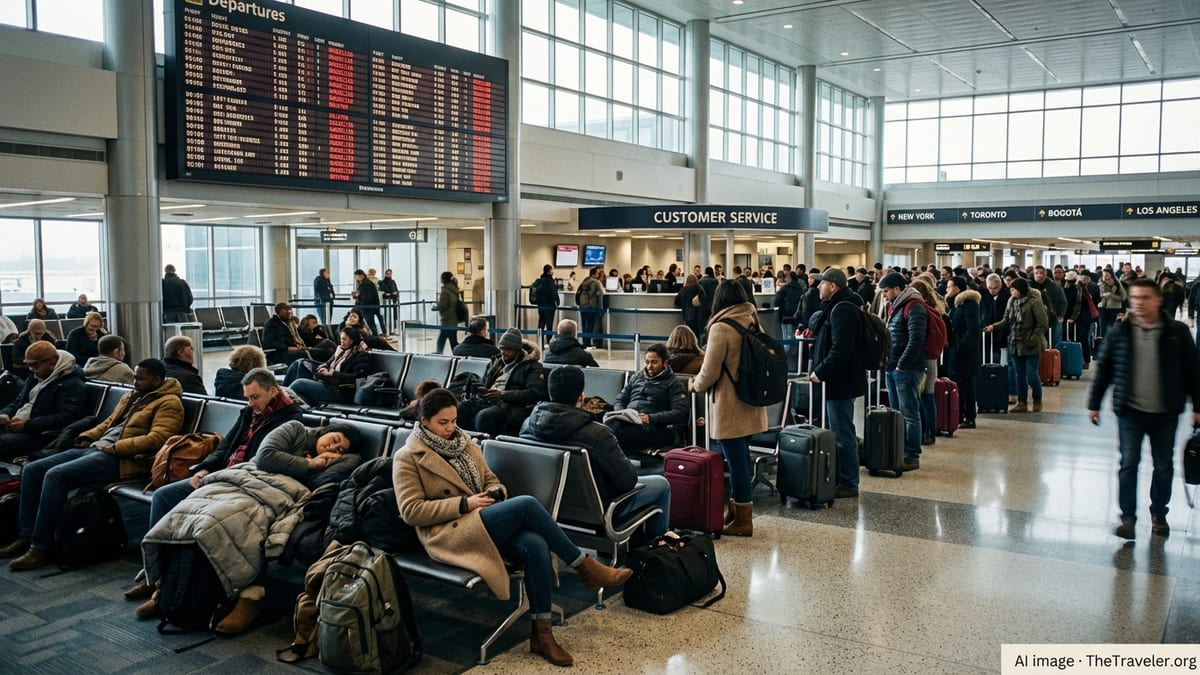
Widespread Disruptions Hit Major Hubs in the Americas
Flight-tracking data and airport operations reports on February 21 indicate at least 35 flights cancelled and 109 delayed across multiple carriers, including InterCaribbean Airways, Alaska Airlines, Avianca and Air Canada. The disruptions have affected major cities such as New York, Toronto, Bogotá, Los Angeles and Calgary, as well as smaller regional gateways that depend heavily on these networks.
Passengers reported being stranded in terminals for hours as departure boards filled with red status updates. At New York area airports and Toronto Pearson, travelers described long queues at airline service desks, limited hotel availability and confusion over rebooking options. Similar scenes unfolded at Los Angeles International, Bogotá’s El Dorado International and Calgary International, where ground operations struggled to reallocate aircraft and crew.
The latest wave of disruption comes at a time when airlines across North and South America are already managing constrained schedules, weather-related backlogs and tight staffing. Even when the absolute number of cancelled flights is modest compared with major storm events, the concentration of affected services at key connecting hubs has meant outsized consequences for passengers attempting multi-leg journeys.
InterCaribbean Routes Disrupted Across Key Island Gateways
Regional carrier InterCaribbean Airways, which stitches together island communities across the northern Caribbean, reported multiple cancellations across its network. Affected flights included services linking Robert L. Bradshaw International in St. Kitts with Barbados’ Grantley Adams International, as well as several rotations involving JAGS McCartney International Airport on Grand Turk, Providenciales International in Turks and Caicos, and George F. L. Charles Airport in Saint Lucia.
Because these flights often act as lifelines between smaller islands and larger international gateways, the impact on passengers extended well beyond the individual sectors. Travelers heading for long-haul connections in Barbados, Providenciales or Nassau found themselves stuck at small terminals where alternative options were limited and same-day rebookings were scarce. Tourism officials in several island destinations warned that cascading delays could affect inbound visitor numbers through the remainder of the weekend.
InterCaribbean’s fleet of turboprop and regional aircraft serves a geographically fragmented region where weather, airport infrastructure constraints and tight turnaround times amplify the effect of each disruption. With a string of services scrubbed from schedules, hotel operators and tour providers reported arrivals shifted by a day or more, adding fresh pressure to an industry still rebuilding its visitor base.
Alaska Airlines Passengers Face Knock-On Effects in U.S. Markets
In the United States, Alaska Airlines reported cancellations on several high-profile routes, including services linking Fort Lauderdale with Seattle, Seattle with Hollywood Burbank Airport and rotations in and out of Anchorage and remote northern Alaska. Passengers on the West Coast also saw disruptions ripple through the network, including on transcontinental links involving New York and Los Angeles.
Although the overall number of Alaska flights affected was limited compared with the carrier’s full daily schedule, the services in question often serve as critical connectors for leisure and business travelers. A cancelled morning departure from South Florida to Seattle, for instance, can force dozens of passengers to miss onward flights to smaller cities in the Pacific Northwest and Alaska, where frequencies are lower and backup options fewer.
Alaska’s schedule in recent days has already been operating under strain from earlier weather disruptions and tight aircraft utilization. With crews near legal duty-time limits, even isolated cancellations or delays in one part of the network can quickly have knock-on consequences for flights hours and thousands of miles away. Saturday’s disruptions are another reminder of how delicately balanced large airline schedules have become.
Avianca Cancellations Disrupt Colombia and Regional Connections
South American flag carrier Avianca experienced cancellations affecting flights into and out of Bogotá, a critical hub for Colombia and a major connecting point for broader Latin American travel. Services from the capital to smaller domestic airports and neighboring countries were among those most affected, leaving passengers with few immediate alternatives.
For many travelers, Bogotá serves as the primary gateway linking Colombian secondary cities with destinations across North and Central America. When flights from Bogotá are cancelled or significantly delayed, it can sever the final leg for passengers already en route from places like New York, Toronto or Los Angeles, transforming a scheduled same-day connection into an unplanned overnight stay.
Airport staff at El Dorado International worked to rebook affected passengers on later departures or on partner airlines where seats were available, but limited capacity during busy travel periods meant that some travelers faced waits stretching into Sunday. Tour operators catering to inbound visitors reported groups arriving hours or even a full day behind schedule, compressing itineraries and creating additional logistical costs.
Air Canada Struggles Amid Broader Canadian Operational Pressures
Air Canada, the country’s largest carrier, reported its own share of cancellations and delays, affecting routes that link Canadian hubs such as Toronto and Calgary with major U.S. cities as well as domestic destinations. Affected services included both mainline operations and codeshare flights marketed jointly with partners like Avianca and United Airlines, complicating rebooking efforts.
The disruptions come on the heels of a week of challenging operations in Canada, where a prolonged pattern of winter weather has produced hundreds of cancellations and delays since February 18. Those storms, which brought snow, freezing rain and reduced visibility across a broad swath of the country, have left airlines with lingering backlogs, out-of-position aircraft and stretched ground crews.
Calgary, Toronto and Montreal have seen particular pressure, with airport authorities reporting crowded terminals and congested deicing queues. Even as weather conditions gradually improve, carriers have struggled to restore full schedule reliability. The additional cancellations and delays on February 21 have further complicated that recovery, adding frustration for passengers who had already rebooked once or twice this week.
Weather, Crew Availability and Network Complexity Fuel Disruption
While the causes behind each individual cancellation vary among airlines, several common threads run through Saturday’s disruptions. Weather continues to be a central factor, with residual impacts from recent storms in Canada combining with localized operational challenges in the United States and the Caribbean. Poor visibility, runway contamination and the need for deicing have all contributed to slower-than-normal operations.
At the same time, airlines are operating complex, highly optimized networks with limited slack built into daily schedules. Aircraft and crew are planned tightly from one flight to the next, meaning that any delay early in the day can cascade through subsequent sectors. When storms or air traffic control restrictions upend the first legs of a rotation, carriers sometimes have little choice but to cancel downstream flights to reset their operations.
Crew availability is another pressure point. With duty-time regulations limiting how long pilots and flight attendants can work without rest, airlines must balance safety requirements against the need to keep as many flights operating as possible. Once crews reach their limits because of extended delays, flights may be cancelled even if the aircraft and weather conditions would otherwise allow them to operate.
Stranded Passengers Navigate Rebooking, Vouchers and Added Costs
For passengers, the immediate challenge has been getting reliable information and securing alternative travel plans. At New York, Toronto, Bogotá, Los Angeles and Calgary, customer service lines grew throughout the day as travelers queued for rebooking, hotel vouchers and meal assistance. Many reported waiting on hold with airline call centers while simultaneously trying to rebook via mobile apps or airport kiosks.
Policies varied by carrier and route, but in most cases airlines offered fee-free changes for affected passengers, along with rebooking on the next available flight in the same cabin class. Where disruptions were traceable primarily to weather or broader air traffic issues, compensation in the form of cash or credits was more limited, particularly in jurisdictions without stringent passenger rights regulations.
Travelers with complex itineraries involving multiple airlines faced particular difficulty. Codeshare arrangements between carriers such as Air Canada and Avianca, while convenient under normal circumstances, can complicate responsibilities when things go wrong. Some passengers reported being referred back and forth between partner airlines while they tried to confirm who would cover hotels or alternative flights.
Economic and Tourism Ripple Effects Across Regions
The wave of cancellations and delays carries broader economic implications for destinations that rely heavily on air connectivity. In the Caribbean, the loss of even a handful of regional flights on peak days can translate into fewer tourists reaching resorts, smaller groups arriving for cruises or tours, and lost revenue for local businesses. Weekend disruptions are especially damaging because they coincide with the busiest arrival and departure days for leisure travelers.
In North America, tourism boards in cities like New York, Toronto, Los Angeles and Calgary watch such disruptions closely, as they can deter short-stay visitors and erode confidence among business travelers who depend on tightly timed itineraries. For airlines already facing higher operating costs and competitive pressures, the expense of accommodating stranded passengers adds to the financial strain.
Colombia’s tourism sector, which has invested heavily in attracting visitors to Bogotá and secondary cities, is similarly exposed when international links falter. Missed connections and rebooked itineraries can shorten trips, prompt cancellations of internal flights and tours, and reduce overall visitor spending. Travel agents and tour operators across the Americas reported spending much of Saturday reshuffling ground arrangements, airport transfers and hotel stays to adapt to the shifting flight picture.
What Travelers Can Do in the Face of Ongoing Volatility
With airline networks still sensitive to weather, staffing and infrastructure constraints, travel experts advise passengers to plan for continued volatility over the coming weeks. That means building longer connection times into itineraries, traveling with carry-on luggage where possible to ease rebooking and monitoring flight status through official airline channels well before departure for the airport.
Passengers are also encouraged to familiarize themselves with airline policies on cancellations and delays, including entitlements to rebooking, meal vouchers and hotel accommodation. In some cases, purchasing flexible fares or travel insurance with strong disruption coverage can mitigate the financial impact of unexpected overnight stays or missed connections.
As Saturday’s events across New York, Toronto, Bogotá, Los Angeles, Calgary and other cities have shown, even a relatively modest number of cancellations and delays can leave hundreds of people stranded when they involve key connectors. For now, travelers across the Americas are urged to remain flexible, patient and prepared for last-minute changes as airlines work to stabilize their operations.