

More news on this day
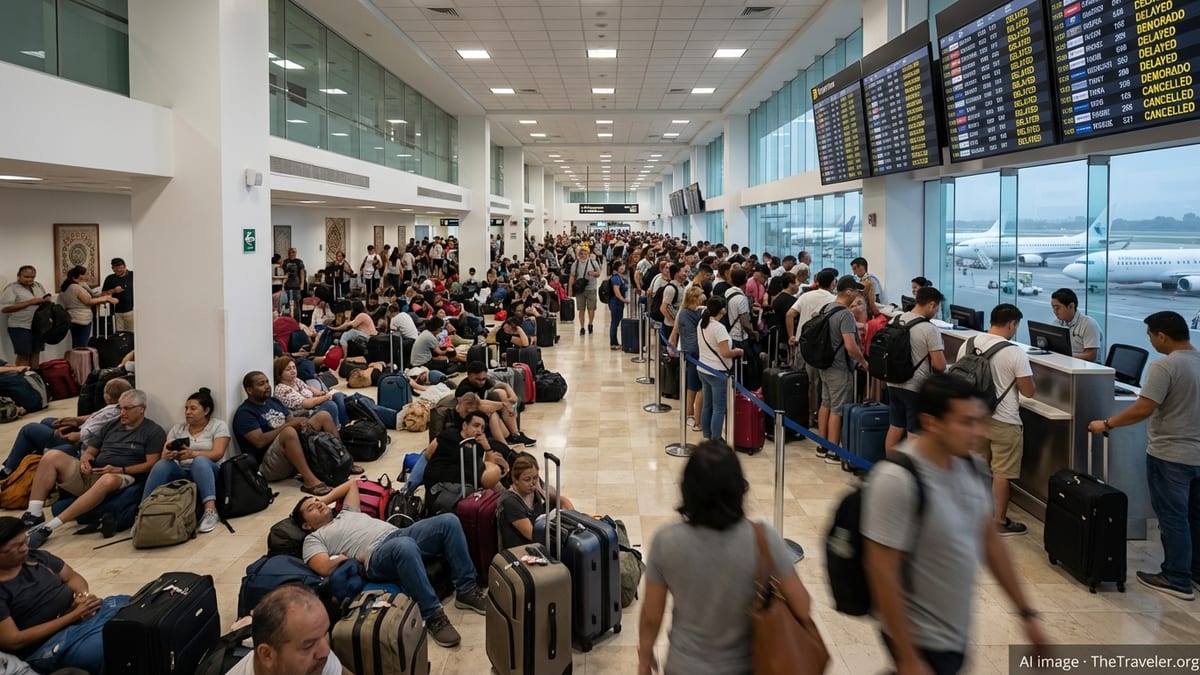
Hundreds of air travelers were left stranded at Cancun International Airport on Friday after a wave of delays affecting 95 flights and the cancellation of one service rippled through routes connecting Cancun with key Mexican and U.S. cities, disrupting operations for major carriers including American Airlines, United Airlines and Aeromexico.
Wide-Ranging Disruptions Across Mexico’s Busiest Beach Gateway
The disruption at Cancun International Airport unfolded over the course of the day as a high volume of delayed departures and arrivals quickly overwhelmed terminal operations. Airport monitors showed growing clusters of flights pushed back by an hour or more, with queues for check in, security and customer service stretching deep into the concourses as passengers scrambled to rebook missed connections or secure hotel vouchers.
According to operational tallies from airport and flight-tracking data, 95 flights linked to Cancun were delayed and one was canceled, affecting movements not only in and out of the Caribbean resort hub but also across a network of routes to Mexico City, Monterrey, Guadalajara and Tijuana. With many of these flights operated or codeshared by major U.S. and Mexican airlines, the knock-on effects reached hubs in Texas, Florida, California and beyond as aircraft and crews were left out of position.
The timing of the disruption, during a period of strong leisure demand and busy international arrivals, magnified the impact on travelers. Cancun is consistently among Mexico’s top airports by passenger volume, handling hundreds of flights a day, and any large-scale operational setback can quickly cascade into missed connections, overnight stays and re-routed itineraries throughout North America.
While only one flight was officially canceled, the scale of the delays meant many passengers experienced what amounted to cancellations in practical terms, with onward connections missed and some journeys postponed to the following day. For visitors arriving for short beach breaks or business meetings, even moderate delays proved highly disruptive.
Weather, Congestion and Operational Strain Behind the Delays
Airport and industry sources pointed to a familiar mix of contributing factors behind the latest wave of disruption. Periods of unsettled weather in the wider region, combined with already heavy traffic into Cancun, led to air traffic control restrictions, spacing out arrivals and departures and forcing airlines to adjust schedules on short notice. When traffic volume is high, even brief slowdowns in the flow of aircraft can mushroom into sustained rolling delays.
The delays were compounded by operational challenges inside airlines themselves. Carriers serving Cancun continue to grapple with tight crew rosters and aircraft utilization, after years in which the industry has had to rebuild capacity and staffing following the pandemic. When an aircraft arriving late into Cancun is scheduled to operate a quick turnaround to cities such as Mexico City or Monterrey, a delay of an hour or more can easily spill into multiple subsequent departures.
Ground handling and airport services have also been under pressure. High passenger volumes, long security lines and the time required to manage rebookings, baggage transfers and customer assistance all contribute to slower turnaround times for aircraft. On a day when nearly a quarter of flights face schedule changes, the airport’s systems and staff are pushed close to their limits, making recovery slower once the initial trigger has passed.
Industry analysts note that Cancun’s rapid growth as an international leisure hub has outpaced infrastructure improvements at times, leaving little margin when irregular operations occur. The airport’s runways and terminals can handle significant traffic, but sustained peaks during holiday periods or long weekends leave airlines and passengers more exposed to cascading delays when something goes wrong.
Major Carriers Hit: American, United, Aeromexico and Others
Airlines with large footprints in Cancun and the wider Mexican network were among the hardest hit by Friday’s disruptions. American Airlines and United, both key players on transborder routes linking Cancun with cities such as Dallas, Miami, Chicago, Houston and Newark, experienced multiple delayed departures and arrivals as aircraft flow through their hub systems was disrupted.
Aeromexico and its regional affiliates, which operate an extensive domestic and international schedule through Mexico City and other major cities, also saw irregular operations as flights connecting Cancun with Mexico City, Monterrey and Guadalajara ran behind schedule. Routes linking Cancun to Tijuana on the Pacific coast, which serve both leisure travelers and cross-border traffic into Southern California, were similarly affected as knock-on delays worked their way through the network.
Low cost carriers that have built up robust Cancun operations in recent years were not immune, with delays on some domestic routes reducing connectivity for passengers relying on tight connections between beach destinations and inland cities. However, the heaviest disruption was reported among full-service carriers with complex hub-and-spoke operations, where a single late aircraft can affect dozens of itineraries in a single day.
By late afternoon, many airlines were deploying recovery measures, from aircraft swaps and crew reassignments to extra customer service staff at gates and ticket counters. Even so, long waits for rebooking assistance and limited availability on alternative services meant some travelers were told they would not reach their destinations until the next day.
Stranded Passengers Confront Long Queues and Uncertain Plans
Inside the terminals, scenes were familiar to anyone who has traveled during major irregular operations: lines snaking through check in halls, departure boards flickering with revised times, families camped on the floor amid suitcases, and passengers glued to their phones in search of rebooking options. With hundreds of people seeking help simultaneously, customer service desks for airlines and the airport itself quickly became overwhelmed.
Travelers reported waiting hours to speak with an agent to secure new boarding passes, meal vouchers or hotel accommodations. Those with flexible schedules and carry-on luggage often fared better, moving quickly to claim open seats on later flights or rerouting through alternate hubs. Others, especially those traveling in large groups or with checked baggage, found themselves with fewer options and longer waits.
The disruption proved particularly stressful for passengers with tight connections through Mexico City or U.S. hubs. A delay departing Cancun by even 60 to 90 minutes can be enough to cause missed flights onward to destinations in South America, Canada or Europe. For some international travelers, that meant unexpected overnight stays and the need to navigate immigration, customs and additional security checks before resuming their journeys.
Families beginning or ending holidays on the Riviera Maya coast were among the most visibly affected, as children grew restless in crowded gate areas and parents juggled changing travel plans with hotel check in and checkout times. For many, the cost of an additional night’s stay, airport meals and local transport added to the frustration of the lost time.
Ripple Effects Felt in Mexico City, Monterrey, Guadalajara and Tijuana
The delays at Cancun did not remain confined to the Caribbean coast. Because many flights in and out of Cancun are tied into broader domestic and international networks, operations at other major Mexican airports felt the strain as the day progressed. Mexico City, the country’s largest aviation hub, experienced late arrivals and departures on routes to and from Cancun, leading to gate congestion and tightened turnaround windows for onward flights.
In Monterrey, an important industrial and business hub, delayed flights from Cancun disrupted evening schedules for both corporate travelers and residents returning home. Similar patterns emerged in Guadalajara, a key gateway for central and western Mexico, where delayed arrivals reduced connection options to secondary cities. In Tijuana, at Mexico’s northern border, flights linking the Pacific coast to Cancun’s Caribbean resorts also ran behind schedule, affecting passengers planning to cross into the United States via nearby land ports of entry.
Airlines attempted to prioritize flights with large numbers of connecting passengers, but the sheer volume of delayed operations meant some services were held on the ground while others were dispatched to restore balance across networks. For airport operators in these cities, the knock-on effects manifested as short bursts of congestion in arrival halls and security checkpoints as clusters of delayed flights arrived close together.
Because many of the impacted routes connect to U.S. hubs, some American airports also experienced modest secondary disruptions, primarily in the form of late evening arrivals and early morning departures. While not severe enough to trigger widespread cancellations, these slippages underscored how quickly operational issues at a single major leisure gateway can reverberate across the continent.
Official Responses and Passenger Guidance
Cancun International Airport’s operator issued public statements acknowledging the disruptions and urging passengers to check flight status before heading to the airport, arrive earlier than usual for departures, and remain in close contact with their airlines. Additional staff were deployed to information desks and security checkpoints to manage crowds and answer basic questions about rebooking, baggage and airport services.
Airlines affected by the delays activated their standard irregular-operations protocols, including waiving change fees in some cases, allowing passengers to move to later flights when space was available, and issuing meal or hotel vouchers for those facing long waits. Policies varied by carrier and ticket type, and many travelers were advised to review the conditions of carriage for their airline to understand what assistance they were entitled to when flights are significantly delayed or canceled.
Consular officials from several countries monitored the situation, particularly given Cancun’s importance as a destination for international tourists. While there were no reports of safety issues within the terminals, authorities emphasized the importance of maintaining documentation, staying with travel companions and safeguarding belongings in crowded conditions, where opportunistic theft can occasionally occur.
Airport authorities signaled that they expected operations to gradually normalize as the day wore on and into the following morning, but cautioned that some residual delays could persist as airlines worked to reposition aircraft and crews. Passengers booked on weekend departures were encouraged to monitor flight status closely and allow extra time at the airport in case of continued congestion.
What Travelers Can Do When Flights Are Disrupted
For passengers caught up in the disruption, experts recommend taking a proactive approach rather than waiting in a single long queue. In situations like those at Cancun, travelers can often secure faster assistance by combining multiple channels: standing in line at the airport counter while simultaneously using airline apps, customer service phone lines and, when available, chat features to seek rebooking options.
Checking alternative routings through other hubs in Mexico or the United States can sometimes open up seats that agents may not initially offer, especially when direct flights are fully booked. Passengers willing to connect through cities such as Mexico City, Monterrey, Guadalajara or Tijuana may find more options than those insisting on nonstop services, though this can mean longer total journey times.
Travelers are also advised to keep receipts for meals, ground transportation and lodging incurred due to extended delays or overnight disruptions. While compensation rules differ by airline and jurisdiction, documentation is essential if passengers later seek reimbursement, travel credits or insurance claims. Those with comprehensive travel insurance policies may be eligible for additional support beyond what airlines provide.
Experts also highlight the value of packing essential items, such as medication, a change of clothes and important documents, in carry on bags rather than checked luggage. On a day of widespread disruption, access to these basics can significantly reduce stress if bags are separated or flights are rescheduled at short notice.
Ongoing Strains Highlight Fragility of Global Air Travel
The turmoil at Cancun International Airport is the latest reminder of how sensitive modern air travel systems remain to congestion, weather and operational setbacks. Even when the number of outright cancellations is low, a large volume of delayed flights can create a travel experience that feels chaotic for those caught in the middle of it.
As airlines continue to rebuild capacity to meet strong demand for leisure and business travel, hubs like Cancun, Mexico City, Monterrey, Guadalajara and Tijuana play an increasingly central role in connecting passengers across Mexico, North America and beyond. That growth brings economic benefits to local communities but also increases the need for resilient infrastructure, adequate staffing and robust contingency plans when things go wrong.
For travelers, episodes such as Friday’s disruption underscore the importance of flexibility, preparation and patience. While no airline or airport can guarantee a flawless journey, understanding how delays propagate through complex networks and knowing the tools available to manage them can help mitigate the worst impacts when schedules unravel. As operations stabilize in the days ahead, airlines and airport authorities will once again be reviewing what worked, what failed and how to reduce the risk of a similar episode at one of the world’s busiest resort gateways.