

More news on this day
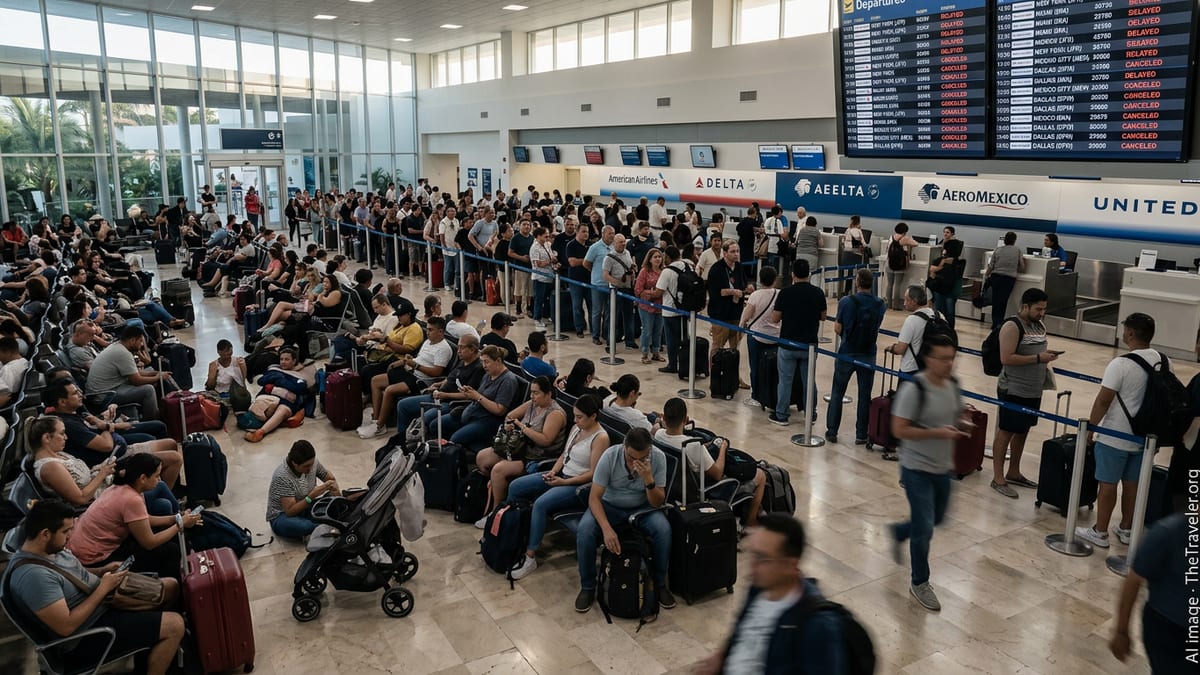
Hundreds of travelers were left stranded at Cancun International Airport in Mexico after a wave of disruptions led to 131 delayed flights and 18 cancellations, snarling plans for passengers bound for key destinations including New York, Miami, Mexico City, and Dallas on major carriers such as American Airlines, Delta Air Lines, Aeromexico, and United Airlines.
Get the latest news straight to your inbox!
Major Holiday Gateway Brought to a Standstill
The disruption unfolded at one of Latin America’s busiest tourist gateways, where Cancun International Airport typically handles close to 30 million passengers a year and serves as a primary hub for leisure travel to and from the United States and major Mexican cities. The latest operational turbulence underscored how quickly conditions at the airport can deteriorate when several airlines experience schedule problems at the same time.
Publicly available flight-tracking data showed that 131 departures and arrivals were delayed while 18 were canceled over the course of the day, affecting a mix of domestic and international services. The knock-on effects rippled out across airline networks, contributing to missed connections and extended layovers for travelers in multiple cities.
The concentration of disruptions at a key transfer point for U.S. travelers meant that even passengers whose aircraft were still operating faced long queues at check-in, security, and immigration, as well as crowded gate areas and baggage halls. Observers noted that many information screens displayed long strings of delayed departures to popular U.S. hubs throughout the afternoon and evening.
Key Routes to the United States and Mexico Disrupted
The impact was most visible on routes linking Cancun with major U.S. cities. Flights to New York and Miami, two of the most heavily trafficked corridors for U.S. leisure and visiting-friends-and-relatives travel, saw multiple services delayed or canceled, forcing some passengers to wait hours for rebooking options.
Connections to Dallas, another critical link for both direct tourism traffic and onward domestic connections within the United States, were also affected. Travelers reported crowded boarding areas as they waited for updated departure times from airlines contending with rolling delays.
Within Mexico, services to Mexico City were hit by the disruption as well, interrupting travel between the country’s leading domestic hub and one of its most important resort regions. With Cancun serving as a feeder for both domestic and international itineraries via Mexico City, delays on this route contributed to missed onward flights and further complications for some passengers.
Major Carriers Grapple With Operational Strain
The disruption involved several of the largest airlines serving Cancun. Public data indicated that American Airlines, Delta Air Lines, Aeromexico, and United Airlines all had flights among the 131 delayed and 18 canceled, reflecting the airport’s role as a shared cornerstone of their Mexico and Caribbean networks.
Schedule problems at a multi-carrier hub often compound quickly, as aircraft and crew become out of position and turnaround times lengthen. When several airlines encounter simultaneous operational strain, there are fewer spare seats across all carriers for stranded travelers, making same-day rebooking more difficult and increasing the likelihood of overnight stays.
In recent years, airlines globally have faced recurring challenges balancing high demand with staffing, aircraft availability, and weather-related constraints. The situation in Cancun fits into a broader pattern in which even short-lived disruptions at popular leisure airports can leave passengers facing lengthy delays, limited alternative flights, and uncertainty about when they will reach their final destinations.
Stranded Passengers Face Long Lines and Limited Options
Images shared across social platforms and traveler forums showed crowded departure halls and long lines at check-in counters as customers waited to be rebooked. Some accounts described queues stretching across terminal spaces, with travelers sitting on the floor near power outlets while they monitored airline apps and departure boards for updates.
With multiple carriers affected, same-day alternatives on the most popular corridors, such as Cancun to New York, Miami, Dallas, and Mexico City, appeared scarce. Travelers on later flights often encountered already-full services, while limited evening frequencies to certain cities meant that a cancellation or lengthy delay could easily push a journey into the following day.
Families with children and travelers on tight vacation schedules were particularly vulnerable to the cascading delays. Some faced the prospect of cutting short resort stays or rearranging hotel and transfer bookings at short notice, adding unexpected costs and stress to what are typically carefully planned holiday trips.
Advice for Travelers Using Cancun in the Coming Days
Given Cancun International Airport’s role as a high-traffic leisure hub with dense schedules to the United States and Mexico, travel experts routinely recommend that passengers build in additional buffer time and monitor their flights closely, especially during busy travel periods or unsettled weather patterns.
Publicly available guidance from airlines and airports emphasizes the importance of checking in online, arriving early at the terminal, and keeping contact details updated in airline profiles so that notifications about last-minute gate changes or delays are received promptly. Travelers connecting through major hubs such as New York, Miami, Dallas, or Mexico City are often advised to allow generous layover times to reduce the risk of missed onward flights when disruptions occur.
The latest episode at Cancun illustrates how quickly conditions can change at a popular resort airport when several large carriers encounter delays and cancellations on the same day. While operations typically normalize over subsequent schedules, passengers with upcoming trips through the airport may benefit from closely tracking their flights and preparing contingency plans in case of further disruption.