

More news on this day
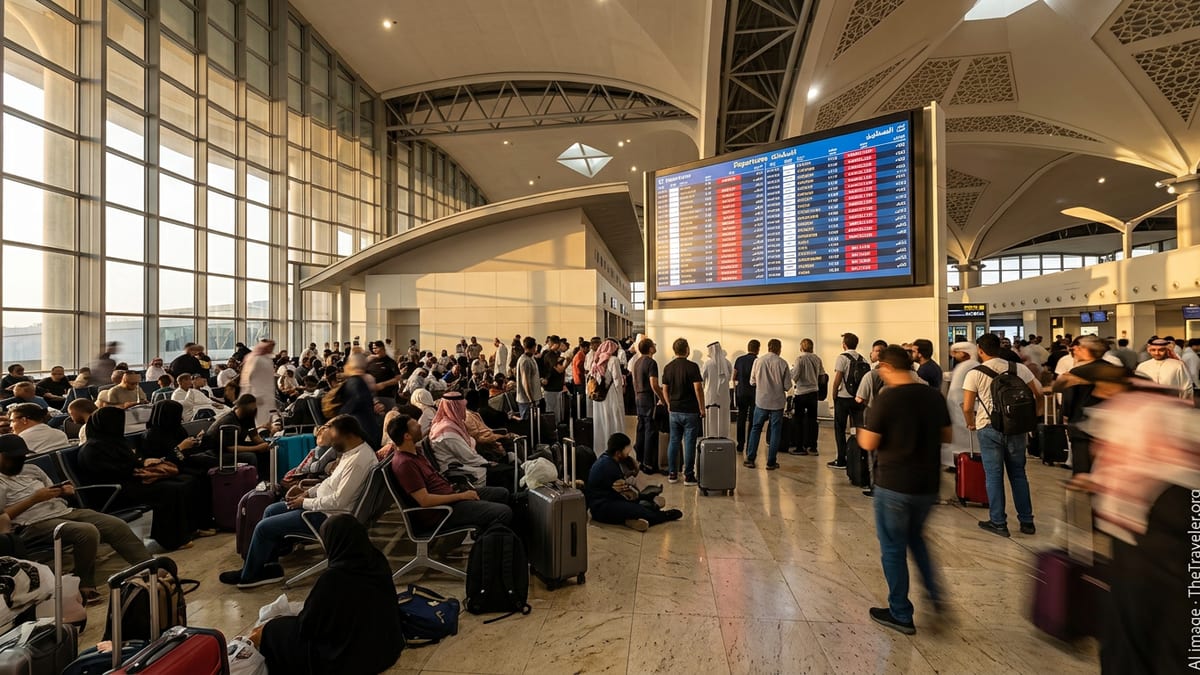
Passengers at Jeddah’s King Abdulaziz International Airport faced long queues, crowded departure halls and mounting frustration today as at least 39 flights were cancelled and many more delayed, disrupting key routes to Doha, Bahrain, Dubai, Dammam and other major cities across the Gulf.
Regional Airspace Turmoil Hits Jeddah Hard
The disruption at King Abdulaziz International Airport comes amid wider turmoil across Middle East airspace, where ongoing security concerns and temporary closures have forced airlines to redraw routes, consolidate services and cancel thousands of flights in recent days. Operational schedules that were already under strain have been further squeezed as carriers seek safe, approved corridors in and out of the Gulf.
Qatar Airways, IndiGo, FlyDubai, Gulf Air and Saudia are among the airlines most visibly affected at Jeddah today, with a combined 39 departures and arrivals cancelled and numerous other flights pushed back by several hours. Aviation analysts say the impact on Jeddah is particularly acute because it serves as both a major gateway for religious travel and an important connecting point between Asia, Africa and the wider Middle East.
Inside the terminal, information screens cycled through rows of red “cancelled” and “delayed” notices through the morning and early afternoon as ground staff tried to rebook passengers and arrange hotel accommodation for those facing overnight waits. With many alternative flights already running close to capacity, some travelers reported being offered seats several days later than originally planned.
Airport authorities have urged passengers not to arrive at the airport without a confirmed, operating booking, stressing that walk-up rebooking options are extremely limited while airlines work through backlogs created since the latest round of airspace restrictions began.
Major Gulf Carriers Trim Schedules and Prioritise Relief Capacity
Qatar Airways has sharply reduced scheduled operations across affected corridors while introducing a limited number of relief flights on routes where regulatory approvals and aircraft availability allow. At Jeddah, the airline’s curtailed schedule has led to cancellations on popular services to Doha and onward long haul connections, leaving transit passengers especially vulnerable to extended disruption.
Indian low-cost giant IndiGo, which normally operates a dense network between India and Gulf destinations including Jeddah and Dammam, has cancelled multiple rotations while attempting to consolidate passengers onto a smaller number of flights. The airline has advised customers that schedules remain fluid and that even flights listed as operating may be retimed at short notice as crews and aircraft are repositioned.
FlyDubai and Gulf Air have also pared back their operations through Jeddah and other Saudi airports, focusing on routes with the clearest available airspace and strongest demand. Saudia, the national carrier, has continued to operate a portion of its domestic and regional schedule but has extended cancellations on select services linking Jeddah with Dubai, Doha and Bahrain.
Airlines across the region are applying special waivers to allow affected passengers to rebook or seek refunds, but customer service channels remain heavily congested. Call centres, social media teams and airport ticket desks are dealing with unprecedented inquiry volumes, leading many travelers to complain of long waits to receive updated travel options.
Travelers Face Long Waits, Uncertainty and Rising Costs
For passengers on the ground in Jeddah, the practical effects of the disruption are immediate and personal. Many report spending hours in check in halls and transfer zones as they wait for updated departure times, boarding calls or confirmation that their flights will operate at all. Families traveling with children and elderly relatives have struggled to find seating in crowded departure lounges, while food outlets and rest areas have come under sustained pressure.
Those whose flights were cancelled outright have had to navigate complex decisions about whether to wait for the next available seat, reroute via alternative hubs or abandon travel plans altogether. With hotels near the airport quickly filling up, room rates have climbed, adding to the financial burden for travelers not fully covered by airline accommodation policies.
Business travelers bound for meetings in Doha, Manama, Dubai and Dammam described scrambling to rearrange schedules, move conferences online or dispatch colleagues from unaffected locations. For some, the uncertainty around when normal operations will resume has prompted broader reassessments of upcoming trips to and through the region.
Despite the challenges, airport staff and airline ground teams at King Abdulaziz International have been widely seen working extended shifts to manage crowds, issue meal vouchers and guide passengers through ad hoc rebooking processes. Travelers who spoke to local media outlets noted that front line employees often had limited information themselves, receiving updates in real time from airline operations centres.
Knock-on Effects Across the Gulf’s Interconnected Hubs
The wave of cancellations and delays at Jeddah is feeding into a wider pattern of instability at key Gulf hubs including Doha’s Hamad International Airport, Dubai International, Bahrain International and Dammam’s King Fahd International. These airports collectively function as major transfer points for Asia Europe, Africa and North America traffic, meaning disruption at one location can ripple quickly through others.
With some carriers still suspending departures from certain cities while slowly restoring capacity on others, aircraft and crew are not always in the right place at the right time. As a result, even flights that do not traverse the most affected airspace can suffer knock on delays while airlines rebuild tightly choreographed timetables.
In Doha and Dubai, where a large share of passengers transit between long haul sectors, missed connections have led to growing numbers of stranded travelers seeking rebooking on later flights or alternative routings via less affected airports in the region. Bahrain and Dammam, though smaller, have also seen their local operations disrupted by the constraints facing Gulf Air, Saudia and partner airlines.
Industry observers note that the Middle East’s success in developing powerful hub and spoke networks now leaves it particularly exposed to regional shocks. When airspace is restricted, the redundancy that typically allows carriers to reroute traffic is limited, forcing them to reduce frequencies or temporarily suspend routes until authorities ease restrictions.
What Passengers Flying Through Jeddah Should Do Now
For travelers with imminent departures from King Abdulaziz International Airport, airlines and airport authorities are advising a cautious, information first approach. Passengers are urged to check their booking status directly with their carrier’s app or customer service channels before leaving for the airport, rather than relying on generic timetable information or third party booking platforms.
Those whose flights are marked as cancelled should seek confirmation of their options for rebooking, vouchers or refunds and avoid traveling to the airport unless instructed, as same day alternatives from Jeddah remain scarce on many Gulf routes. Where possible, travelers with flexible plans are being encouraged to postpone non essential journeys until airlines publish more stable schedules.
Passengers already in transit through Jeddah are advised to remain close to their departure gate or airline service desks, monitor announcement boards frequently and keep boarding passes and travel documents readily accessible in case of rapid retimings. Many carriers are operating rolling departure windows, calling flights forward when a safe slot and available route open up.
While there is cautious optimism that operations can be gradually rebuilt in the coming days as authorities refine airspace guidance and airlines adjust their networks, the situation remains fluid. Travelers planning to pass through Jeddah, Doha, Bahrain, Dubai or Dammam in the near term should prepare for the possibility of further interruptions and build extra time and flexibility into their itineraries.