

More news on this day
Hundreds of travellers were left stranded at Tocumen International Airport in Panama City after an early-morning electrical fault triggered a cascade of delays and cancellations affecting Avianca, United, Spirit, Delta Air Lines and other carriers on key routes linking Panama with Miami, Bogotá, Houston and additional regional hubs.
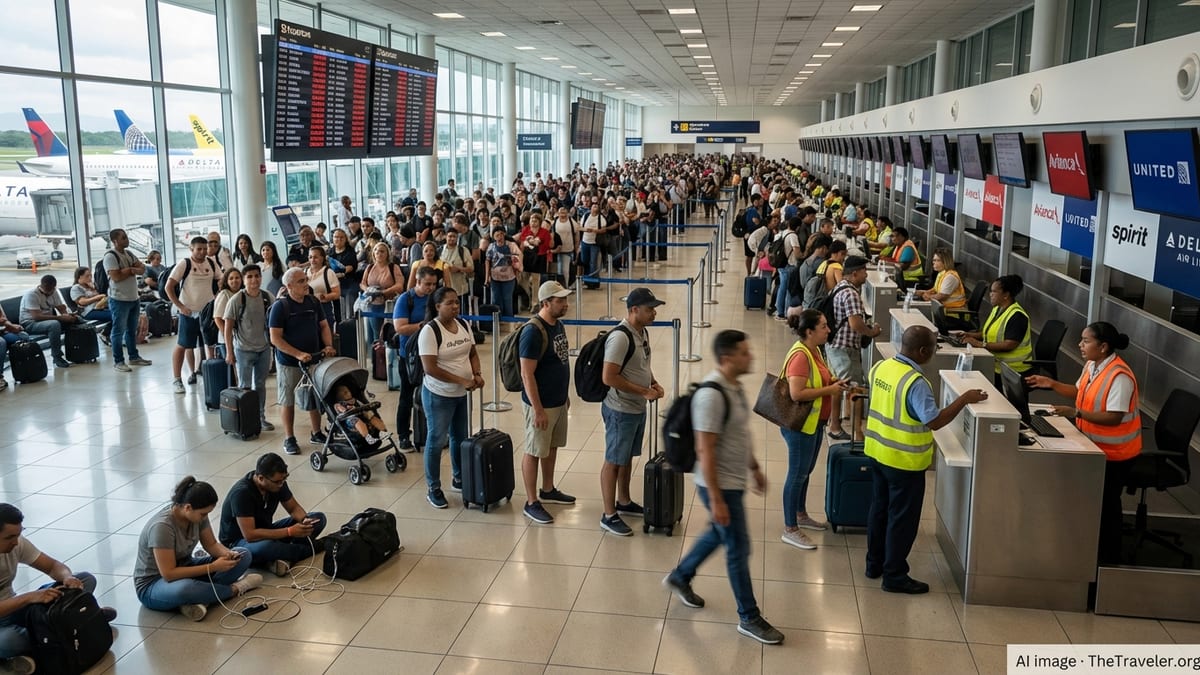
Electrical Failure Sparks Morning Meltdown at Tocumen
Operations at Tocumen International Airport were thrown into disarray after what airport officials described as an internal electrical problem affected a section of the terminal’s power and systems early Sunday. The issue, which emerged during the morning peak, forced temporary shutdowns of some check in counters, gate areas and baggage handling equipment, slowing passenger processing and aircraft turnaround.
Although emergency generators kept runway lighting and core air traffic control functions active, the disruption to terminal infrastructure was enough to stall ground operations. Airline staff reported difficulties repositioning aircraft, loading baggage and completing boarding procedures on time, which quickly translated into mounting delays across the departure boards.
By late morning, at least 10 flights had been significantly delayed while 9 were cancelled outright, according to preliminary tallies compiled from airport and airline data. The figures only tell part of the story, as many flights that did operate departed late, resulting in missed connections across Central and North America and into South America.
Airport authorities said the underlying electrical fault was brought under control within hours, but conceded that restoring normal schedules was far slower, particularly for carriers whose aircraft and crews were already out of rotation or out of position.
Travellers Face Long Queues, Missed Connections and Confusion
For passengers in transit, the timing of the disruption could not have been worse. Tocumen is a major regional hub and an increasingly busy connection point between North and South America, meaning that a handful of affected departures rapidly cascaded into widespread itinerary upheaval. Families heading home from vacations, business travellers bound for meetings and students returning to universities all found themselves competing for scarce rebooking options.
Inside the main terminal, long queues formed at airline service desks as word spread that multiple flights were no longer operating as scheduled. Travellers reported standing in line for hours to secure alternative itineraries or to request meal vouchers and hotel accommodation where required by airline policy. Others opted to retreat to cafés and waiting areas, clutching their phones as they refreshed airline apps and flight trackers for updates that sometimes changed by the minute.
With several morning departures delayed beyond two or three hours, passengers connecting onward via Miami, Bogotá, Houston and other cities saw their subsequent flights depart without them. The resulting wave of missed connections added pressure to already strained airline reservation systems, forcing reroutes through secondary hubs or, in some cases, pushing new departure times into the following day.
Travellers with flexible schedules fared marginally better, often agreeing to be rebooked on later flights or even to reroute through different cities. Those with fixed commitments, including cruise departures, events and time sensitive business meetings, faced more acute stress, uncertain whether they would arrive in time to salvage their plans.
Major Carriers Hit Across Panama, Miami, Bogotá and Houston
The disruption cut a swath through several prominent carriers operating at Tocumen. Regional and international services operated by Avianca were among those affected, particularly flights linking Panama with Bogotá and other Colombian and South American cities. United Airlines, which connects Tocumen with major US hubs including Houston, reported delays and at least one cancellation on its northbound services.
Spirit Airlines, a key low cost operator on routes linking Panama and South Florida, was also caught in the turmoil, with passengers bound for Miami and nearby airports experiencing rolling departure time changes. Delta Air Lines, which operates connections between Panama and the United States, faced its own schedule challenges, as even a single delayed aircraft can ripple through the rest of a day’s rotations.
Because Panama City functions as a crossroads between continents, the impact was not confined to point to point routes. Disruptions on services to Miami and Houston affected travellers continuing onward to domestic US cities, while delays on flights to Bogotá and other Latin American hubs complicated itineraries deeper into the region. For some passengers, three segment journeys suddenly became four or five leg odysseys as airlines pieced together whatever options remained.
Smaller regional carriers and codeshare partners were drawn into the situation as well, as seat inventories tightened on alternative routes. With nine cancellations to absorb and limited spare capacity on a busy travel day, many airlines quickly exhausted same day rebooking possibilities, leaving a portion of passengers facing overnight stays in Panama City.
Airport and Airline Responses Under Close Scrutiny
As queues lengthened and tempers occasionally frayed, attention turned to how efficiently the airport and individual airlines were handling the crisis. Tocumen officials issued statements stressing that safety had never been compromised and that technical teams were working to stabilize electrical systems and restore full terminal functionality as quickly as possible.
Airlines, for their part, activated standard disruption protocols. Customer service teams prioritized passengers with immediate connections, unaccompanied minors and those requiring special assistance. Many carriers began proactively sending notifications through their mobile apps and email systems, urging travellers to check their flight status before heading to the airport and offering self service rebooking where available.
Nevertheless, the sheer volume of affected passengers exposed familiar pain points. Some travellers reported inconsistent information between airport screens, airline counters and mobile apps. Others noted that call center wait times stretched well beyond an hour as passengers around the region sought clarification on whether their flights would operate.
Industry analysts pointed out that while electrical failures of this kind are relatively rare, the episode underlines the need for robust contingency planning at busy hubs. They noted that in highly interconnected networks such as Panama’s, where a large proportion of travellers are in transit rather than originating at the airport, even a modest operational disruption can have outsize effects if coordination and communication lag behind.
Regional Weather and System Strain Exacerbate Disruptions
The upheaval at Tocumen unfolded against a broader backdrop of weather related and operational stress across the Americas, where winter storms and heavy traffic have already led to significant schedule volatility. In the United States, several major airports have been coping with waves of delays and cancellations linked to adverse conditions and crew availability, leaving airline network planners with little margin for additional disruptions elsewhere.
When Tocumen’s electrical problems took hold, some northbound flights to Miami and Houston were already operating amid tight turnaround windows. Delays departing Panama meant that aircraft due to operate subsequent sectors within the US system reached their next airports behind schedule, compounding bottlenecks already building at major hubs.
In South America, carriers have been juggling high seasonal demand with ongoing fleet and staffing adjustments. For airlines like Avianca and others that use Panama as a bridge between South and North America, losing a handful of key rotations on a busy day can force schedule reshuffles that reverberate for 24 hours or more, particularly on long haul or overnight services.
Travel experts say this kind of multi layered disruption is likely to become more common as airlines run leaner operations with fewer spare aircraft and crew. Under such conditions, a localized technical issue can reverberate far beyond the airport where it began, stranding passengers in cities hundreds or thousands of kilometres away.
Human Stories Behind the Departure Boards
Beyond the numbers, Sunday’s disruption at Tocumen produced countless personal stories of inconvenience and improvisation. In the international departures hall, parents paced with restless children while checking gate monitors, business travellers spread laptops out on floor space near charging stations and backpackers swapped advice about budget friendly hotels in case they were forced to stay the night.
Some passengers described racing from one gate to another in response to rapid changes in departure information, only to find their flights had been pushed back yet again. Others found solidarity in shared frustration, forming temporary alliances to watch bags, share snacks or compare the latest updates from different airlines and staff members.
For travellers with medical needs, mobility challenges or language barriers, the experience was especially taxing. Airport staff and airline agents worked to prioritize assistance for these passengers, but limited personnel meant that wait times for wheelchairs, escorts and translation support sometimes stretched longer than usual.
Amid the upheaval, a number of local tourism operators and hotels in Panama City moved quickly to accommodate unexpected overnight guests, offering last minute rates and shuttle services. While this provided a lifeline for some stranded travellers, it also highlighted how dependent the broader tourism economy is on the smooth functioning of a single regional hub.
What Affected Travellers Can Do Next
For those still trying to navigate the disruption, travel advisers recommend a combination of persistence and flexibility. Passengers are urged to monitor their airline’s official channels closely and to use mobile apps, where available, to rebook or confirm seats rather than relying solely on airport queues. Screens at Tocumen and partner airports may lag behind real time updates, so direct digital communication with the airline is often the fastest way to secure a revised itinerary.
Where flights have been cancelled or delays are substantial, travellers should familiarize themselves with their airline’s policies on compensation, hotel stays and meal vouchers. While rules vary by carrier and route, many airlines provide at least basic support in the event of significant operational disruptions within their control, such as technical faults at an airport.
Passengers with onward journeys through Miami, Bogotá, Houston and other hubs are also encouraged to confirm the status of their connecting flights before departure from Panama. In some cases it may be preferable to accept a later departure that preserves a guaranteed connection, rather than rushing onto an earlier but uncertain option that could strand them mid journey.
Travel insurance may offer additional recourse for those facing extra accommodation costs or missed tours and events. Policyholders should keep all receipts and document communications with airlines, as insurers typically require detailed evidence when assessing claims linked to flight disruption.
Lessons for an Increasingly Connected Aviation Network
As operations at Tocumen gradually normalize, aviation specialists say the incident is a stark reminder of the fragility built into modern air travel networks. A localized electrical fault at a single airport has once again proven capable of sending shockwaves across multiple countries and airline systems, particularly when it strikes during periods of heavy demand.
For airports, the episode underlines the importance of investing in resilient electrical and backup systems, conducting regular stress tests and ensuring that crisis communication plans are drilled and ready. Even when technical teams resolve the root problem quickly, passengers will remember how clearly and consistently they were kept informed during the disruption.
For airlines, the experience may prompt renewed scrutiny of schedule buffers, spare aircraft availability and the tools used to communicate with customers in real time. Carriers that manage to offer clear, proactive updates and practical alternatives tend to emerge with their reputations intact, even when disruptions are triggered by factors beyond their direct control.
For travellers, the events at Panama’s main gateway serve as another prompt to build flexibility into itineraries, consider travel insurance and keep essential items in carry on bags in case checked luggage is delayed. As global aviation continues to knit together cities across the Americas and beyond, Sunday’s turmoil at Tocumen is likely to be studied as yet another case study in how a seemingly contained technical failure can ripple across an entire hemisphere of travellers.