

More news on this day
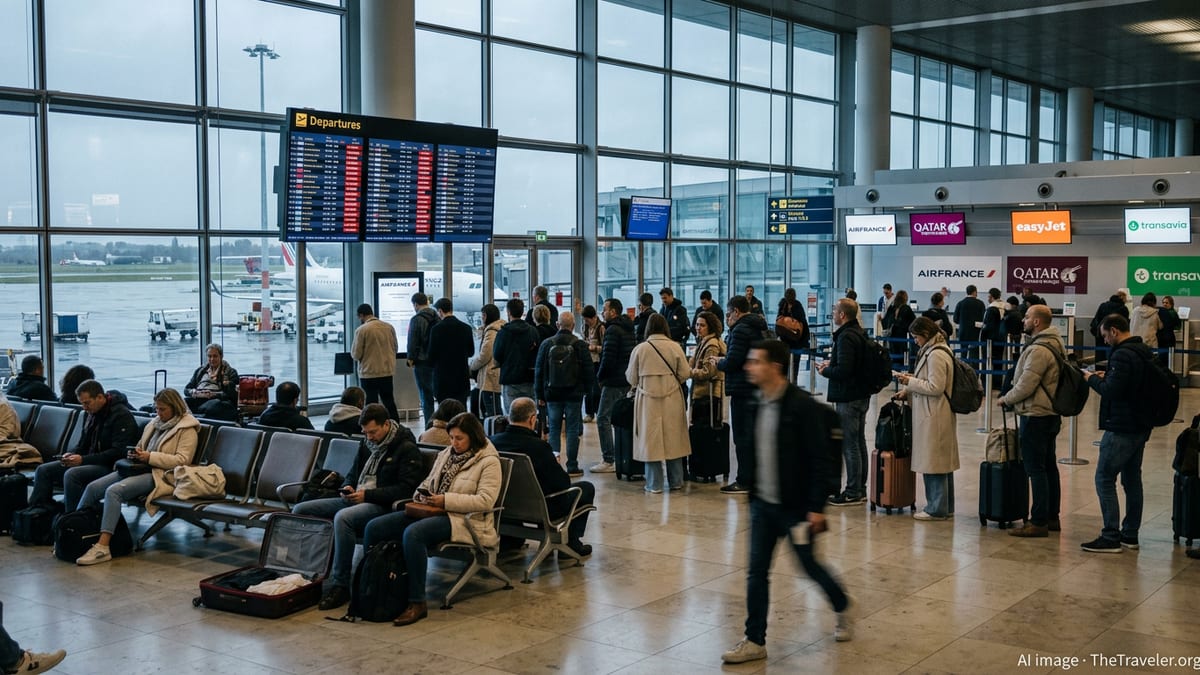
Hundreds of passengers were left isolated at Paris Charles de Gaulle and Orly airports on Monday as airlines including Air France, Qatar Airways, El Al, easyJet and Transavia canceled 33 flights and delayed more than 200 others, compounding wider disruption across already overstretched European and Middle Eastern air networks.
Weather, Airspace Turmoil and Staffing Problems Converge
The fresh wave of disruption in Paris comes amid a volatile start to the spring travel season, with European hubs battling winter weather, tight staffing and knock on effects from the ongoing Middle East airspace crisis. At Charles de Gaulle, departure boards showed rows of late running services to major European and long haul destinations, while Orly struggled to clear backlogs of delayed domestic and leisure flights.
Operational data from flight tracking and airport sources pointed to more than 200 delayed movements and 33 outright cancellations across the two Paris airports in a single day. Much of the pressure has come from aircraft and crew out of position after days of rerouted or scrubbed services linked to restricted air corridors over parts of the Middle East, forcing airlines to tighten schedules and trim rotations.
Industry analysts note that Paris, already one of Europe’s busiest aviation hubs, is particularly exposed when regional crises intersect with local constraints. With Charles de Gaulle acting as a primary long haul gateway for Air France and an important stop for Gulf and Israeli carriers, and Orly serving as a dense base for low cost and leisure traffic, any systemic shock can ripple quickly through their tightly choreographed operations.
Airport authorities have stressed that runways and terminals remain open, but acknowledge that the combination of longer routings, crew duty time limits and ground handling bottlenecks has created rolling delays. Passengers arriving for evening departures have frequently found aircraft arriving late from previous sectors, triggering missed connections and last minute cancellations.
Multiple Airlines Hit as Rotations Unravel
The burden of Monday’s disruption has fallen across a broad mix of airlines. Air France, which relies heavily on Charles de Gaulle for its long haul and European connections, reported cancellations on select regional routes and extended delays on services feeding into transatlantic and African flights. Its low cost affiliate Transavia, together with easyJet, saw tourist heavy departures from Orly to Mediterranean destinations pushed back by several hours.
Qatar Airways and El Al also faced schedule turbulence on Paris routes, as longer flight times around restricted airspace continued to erode operational buffers. Crews arriving late from previous sectors bumped against legal duty limits, forcing airlines to tactically cancel or consolidate departures from Charles de Gaulle. For passengers, this often translated into abrupt changes at the gate, with flights first delayed and then scrubbed outright.
Other carriers using Paris as a secondary hub or spoke, including additional Gulf and European airlines, reported knock on delays as they waited for connecting traffic and slots. With arrival banks no longer aligned to their scheduled departure waves, turnarounds stretched well beyond standard times, further congesting stands and gate space.
Airline operations managers describe a network under constant strain, where even minor technical issues can cascade into significant disruption. With spare aircraft and standby crew already committed to covering earlier cancellations, options for recovery remain limited, leaving little resilience in the system when conditions deteriorate.
Scenes of Frustration in Terminals
Inside the terminals at Charles de Gaulle and Orly, the impact was unmistakable. Long lines formed at airline service desks as travelers scrambled to secure alternative connections, overnight accommodation or meal vouchers. Families returning from school holidays queued alongside business travelers trying to salvage tight itineraries, with many reporting waits of several hours for rebooking assistance.
Some passengers described feeling effectively marooned as gate agents cycled through rolling delay announcements with little detail on departure prospects. For those whose flights were among the 33 cancellations, the challenge was often not just getting out of Paris, but finding any available seats on already crowded onward services in the following days.
Airports attempted to ease the pressure by reinforcing customer service teams and directing affected travelers toward self service rebooking tools in airline apps. However, surging demand occasionally overwhelmed digital channels too, with booking platforms timing out just as customers tried to confirm new itineraries.
For travelers with tight onward connections to long haul flights in the Middle East, Africa or the Americas, missed links created particularly acute stress. Some were left facing unplanned hotel stays near the airport, while others opted to abandon flying altogether in favor of high speed rail to nearby European cities where seats were still available.
What Stranded Passengers Can Do Now
Travel experts say passengers caught in the disruption at Charles de Gaulle and Orly should first confirm whether their flight has been classified as canceled or significantly delayed and then contact their airline through multiple channels, including official apps, websites and customer service counters. Where possible, using digital tools to accept alternative routings can save time compared with queuing at busy desks.
Under European air passenger regulations, travelers whose flights depart from an EU airport or are operated by an EU carrier may be entitled to assistance such as meals, refreshments and hotel accommodation during long delays, as well as refunds or rerouting in the event of cancellations. Eligibility for financial compensation depends on factors such as the length of delay, the notice given and whether the disruption is linked to extraordinary circumstances beyond the airline’s control.
Specialists also advise keeping all receipts for out of pocket expenses, including food, transportation and emergency accommodation, in case airlines request documentation during claims processing. Passengers should carefully review the conditions of carriage and any travel insurance policies, as some comprehensive plans offer additional coverage for missed connections or extended delays.
Those with flexible itineraries are encouraged to consider rebooking onto early morning departures, which often have a better chance of leaving on time when operations reset overnight. For short haul journeys within France or neighboring countries, switching to rail can provide a more predictable alternative while flight schedules remain unstable.
Broader Implications for Europe’s Spring Travel Season
Monday’s chaos in Paris underscores the fragility of global aviation networks as airlines navigate intersecting pressures from geopolitics, weather and staffing. European hubs have already seen elevated levels of disruption in recent weeks, and analysts warn that without additional capacity and better contingency planning, even routine peaks like school holidays or major events could tip systems back into crisis.
For Charles de Gaulle and Orly, the timing is particularly sensitive. Both airports are preparing for a busy summer marked by large scale sporting and cultural events across France, which are expected to draw millions of additional visitors. Any repeat of Monday’s strain during those peak periods could have far reaching consequences for tourism and business travel.
Airlines operating in and out of Paris are now reassessing schedules, building in longer turnaround times and repositioning aircraft where possible to restore reliability. Some are also reviewing their dependence on vulnerable overflight corridors, weighing the cost of longer routings against the reputational risk of sustained disruption.
For travelers, the episode serves as a reminder that air journeys remain exposed to sudden external shocks. Industry experts recommend booking with reputable carriers, leaving generous buffer times for connections and monitoring flight status closely in the days leading up to departure, particularly when transiting major hubs like Paris Charles de Gaulle and Orly.