

More news on this day
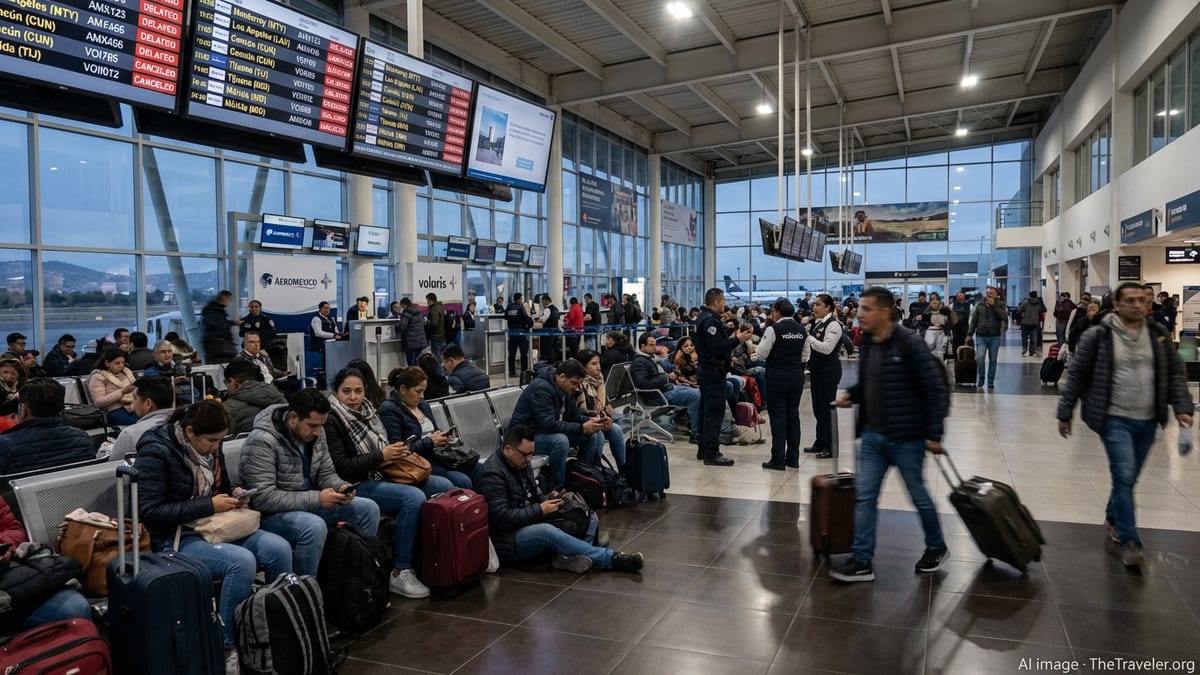
Hundreds of passengers were left stranded on Tuesday at Mexico City’s Felipe Ángeles International Airport in Santa Lucía and Guadalajara International Airport, after at least 29 flights were delayed and five canceled on busy domestic and international routes, disrupting services operated by Aeromexico, Volaris and other carriers.
Disruptions Hit Key Domestic and U.S. Routes
The latest wave of disruption rippled across some of Mexico’s most heavily traveled corridors, affecting flights linking Guadalajara and Mexico City with major cities including Monterrey, Cancún, Tijuana, Mérida and Los Angeles. Airport status boards at both Felipe Ángeles, the relatively new hub serving Mexico City from Santa Lucía, and Guadalajara showed a rolling pattern of delays and scattered cancellations on Tuesday, adding to several days of irregular operations across the country’s aviation network.
According to real-time schedules and airport operator reports, airlines trimmed or pushed back departures as they struggled to restore punctuality following earlier mass cancellations tied to civil unrest in Jalisco state and subsequent operational knock-on effects. While most flights eventually departed late, at least five services were fully canceled on Tuesday, including some linking Guadalajara with northern hubs and U.S. gateways.
For travelers heading to or from popular leisure destinations such as Cancún, Tijuana and Mérida, the disruption was particularly painful. Several departures from central Mexico to these coastal cities left hours behind schedule, forcing passengers to rebook connections and rearrange resort transfers and hotel check-ins at the last minute.
Services to and from Los Angeles were also affected, as Mexican and U.S. carriers adjusted schedules on cross-border routes from Guadalajara in response to uncertainty in western Mexico’s airspace and constrained aircraft availability following previous days of diversions and groundings.
Passengers Face Long Lines, Limited Information
Inside both terminals, scenes were dominated by long lines at airline counters and departure gates as travelers sought clarity on revised departure times and rebooking options. Many passengers reported waiting several hours in crowded halls as staff worked through backlogs of disrupted itineraries created over the past three to four days.
At Guadalajara, where operations have been under strain since violent incidents across Jalisco triggered widespread travel alerts late last week, travelers on affected Aeromexico and Volaris flights described receiving rolling updates that pushed back boarding times in 30 to 60 minute increments. Some were eventually told their flights would not operate at all, with limited same-day alternatives available on already packed services.
At Felipe Ángeles in Santa Lucía, which has been gradually ramping up its role as an alternative gateway to the capital, the disruption exposed the challenges of managing irregular operations at a still-developing hub. While officials stressed that the airport itself remained secure and open, passengers complained of scarce seating, few food options open late into the evening and difficulty accessing clear, centralized information on the status of multiple delayed departures.
Families traveling with children and elderly passengers were particularly affected as delays stretched into the night. Many were seen resting on luggage or terminal floors as they waited to learn whether their flights would depart or be rolled over to the next day.
Airlines Scramble to Recover After Days of Turmoil
The latest delays come on the heels of a tumultuous period for Mexican aviation, marked by large-scale cancellations to Jalisco airports, including Guadalajara and Puerto Vallarta, following violent unrest linked to the reported killing of cartel leader Nemesio Oseguera Cervantes. In the days since, major Mexican and foreign carriers have repeatedly adjusted schedules, diverted aircraft and implemented flexible change policies for passengers traveling to and from western Mexico.
Aeromexico and low-cost carrier Volaris, which both maintain extensive domestic networks from Guadalajara and connect the city to U.S. destinations such as Los Angeles, have been among the hardest hit, alongside other Mexican budget airlines and several North American carriers. Airlines have warned that the impact of earlier closures, diversions and security-related adjustments could continue to disrupt operations even as airports themselves remain formally open.
On Tuesday, airport operator information indicated that while overall traffic at Guadalajara was slowly recovering compared with the worst of the disruption at the weekend, dozens of flights were still operating off-schedule. That backlog contributed to the 29 delayed departures and arrivals recorded across the day at Guadalajara and Felipe Ángeles combined, as carriers shuffled crews and aircraft and prioritized certain trunk routes to stabilize networks.
Industry analysts noted that even a modest number of cancellations can cause a cascade of delays, particularly at airports like Guadalajara that serve as regional hubs. Aircraft and crews arriving late from affected cities force airlines to retime or consolidate later flights, a process that can take several days to fully unwind.
Authorities Urge Travelers to Check Status and Know Their Rights
Mexican aviation authorities have reiterated that both Guadalajara and Felipe Ángeles are operational and under reinforced security, while advising passengers to monitor flight status closely and allow extra time to reach the airport. Officials highlighted that flight schedules remain subject to change as airlines continue to respond to evolving security assessments and work through the operational backlog.
Consumer advocates are urging passengers faced with long delays or cancellations to familiarize themselves with their rights under Mexican aviation regulations, which set out compensation and assistance obligations for carriers in many circumstances. Depending on the cause and length of a delay, travelers may be entitled to meal vouchers, hotel accommodation or financial compensation, in addition to free rebooking on the next available flight.
However, those protections can be complex in practice, especially when airlines cite extraordinary circumstances such as security operations or events beyond their control. In recent days, some travelers at Guadalajara and other Mexican airports have reported confusion over whether their disruption qualified for compensation or only for schedule changes without charge.
Authorities and airport operators have encouraged passengers to keep all receipts related to extra expenses such as food, local transport and overnight stays, and to document interactions with airlines in case formal claims are required later. Travelers are also being advised to confirm any reissued itineraries in writing and to verify that checked baggage is correctly retagged when switching flights or carriers.
Ongoing Uncertainty for Upcoming Travel
With the situation in western Mexico still evolving, airlines continue to issue rolling updates on their websites and customer channels, reflecting a cautious approach to restoring full schedules to Guadalajara and other affected cities. Some carriers have added extra flights or larger aircraft later in the week to help clear backlogs, but industry observers warn that passengers should be prepared for lingering irregularities.
For travelers planning imminent trips through Felipe Ángeles or Guadalajara, experts recommend building in additional connection time, avoiding tight same-day links between domestic and international flights and considering the possibility of overnight stays if disruptions persist. Tour operators and travel agents are similarly advising clients to maintain flexible plans and to stay alert to any last-minute changes to departure times or routings.
As of late Tuesday, operations at both airports showed signs of gradual stabilization, with most flights scheduled for the late evening expected to depart, albeit behind timetable. Yet for the hundreds of travelers who have already endured missed connections, curtailed vacations and disrupted business plans over the past several days, confidence in the reliability of air travel across this key Mexican corridor may take longer to fully recover.