

More news on this day
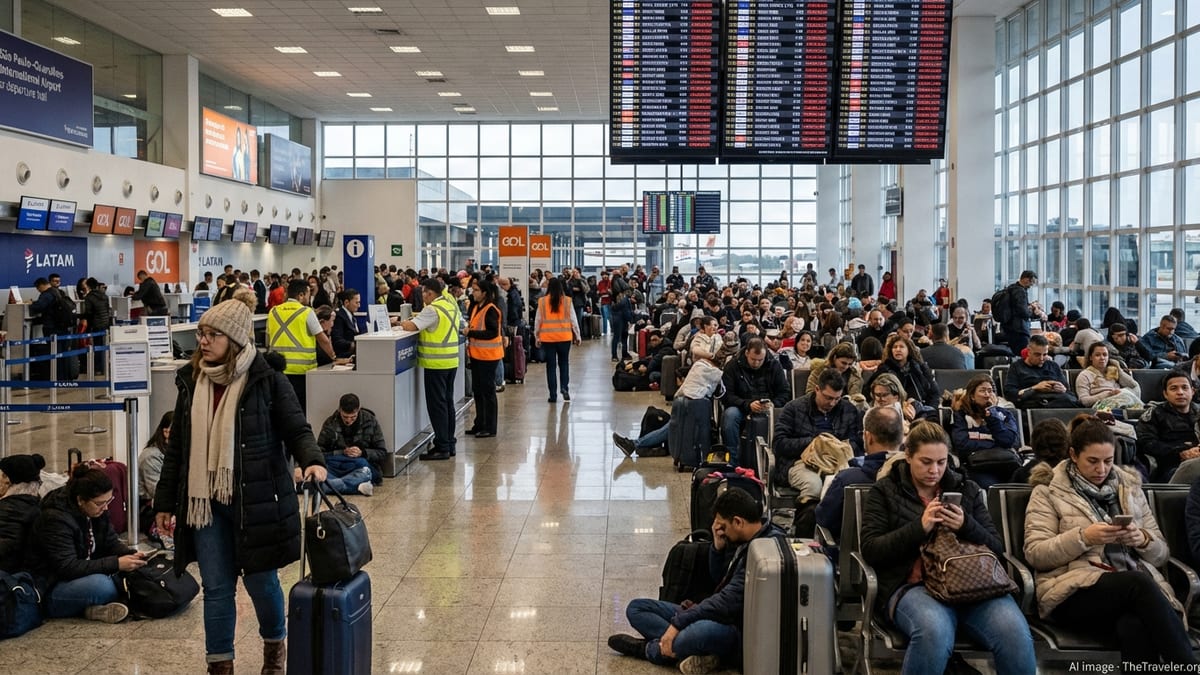
Hundreds of passengers were left stranded at São Paulo–Guarulhos International Airport on Sunday as a wave of disruptions led to 49 delayed flights and 10 cancellations, snarling Brazil’s busiest air hub and spilling over to international routes operated by LATAM, GOL, Delta, American Airlines and other major carriers.
Brazil’s Busiest Hub Hit by Fresh Wave of Disruptions
The latest disruption at São Paulo–Guarulhos, which serves as Brazil’s main international gateway and a critical domestic connector, added new pressure to an already stretched aviation network. Airport monitoring boards on Sunday showed a dense cluster of late departures and arrivals across terminals, with departure lounges filling up as rolling delays pushed many flights well beyond their scheduled times.
According to operational tallies, at least 49 flights experienced significant delays while 10 were cancelled outright, affecting both domestic hops to cities such as Rio de Janeiro, Brasília and Porto Alegre and long haul routes linking São Paulo to North America and Europe. The cancellations alone translated to several thousand disrupted seats, while the delayed services triggered missed connections and forced many travelers to seek overnight accommodation.
Guarulhos has seen recurrent strains in recent days as seasonal demand, weather issues elsewhere in the network and tight aircraft rotations combined to reduce schedule resilience. The airport handles more than 40 million passengers a year, and even a small percentage of cancellations or extended delays can quickly cascade into wider disruption, particularly at peak weekend travel times.
LATAM, GOL and Azul Bear the Brunt at Home
Domestic carriers LATAM Brasil, GOL Linhas Aéreas and Azul Brazilian Airlines once again found themselves at the center of the operational storm. Preliminary figures pointed to LATAM accounting for the largest share of cancellations at Guarulhos, with multiple departures scrubbed and dozens more pushed back by more than an hour as aircraft and crews fell out of position.
GOL also reported a string of late departures, including services to key business destinations, while a smaller number of its flights were removed from the schedule entirely. Azul, which relies heavily on connecting traffic through major Brazilian hubs, struggled with knock on delays even where outright cancellations were avoided, leaving aircraft waiting for connecting passengers and baggage that were stuck on late inbound services.
Airport staff said the disruption was most visible along the domestic concourses, where boarding gates cycling through repeated “new departure time” announcements became a familiar sight. Lines at customer service counters lengthened quickly as passengers sought rebooking options, with some travelers being shifted to flights from secondary airports or offered departures on later days when same day options were no longer available.
International Carriers Feel the Ripple Effect
International airlines serving Guarulhos, including Delta Air Lines and American Airlines, were drawn into the disruption as delays on domestic feeder flights led to missed connections on onward long haul journeys. Evening departures to major North American hubs, already facing pressure from a severe winter storm in the United States, were among those most heavily affected.
With the powerful blizzard system currently battering the northeastern United States, flights linking São Paulo to New York and other East Coast cities have been operating on tight margins or have been proactively cancelled to avoid leaving aircraft and crews stranded out of position. For passengers at Guarulhos, that meant some international flights never opened for check in, while others saw boarding delayed repeatedly as airlines awaited final clearance from overseas operations centers.
European carriers operating overnight services from São Paulo reported fewer outright cancellations but still faced knock on delays as connecting passengers from elsewhere in Brazil arrived late or not at all. Airline staff at transfer desks spent much of the day trying to rebook stranded travelers via alternative hubs, adding extra hours and, in some cases, an additional connection to itineraries that were already long and complex.
Storm Hernando in the U.S. Deepens Global Airline Strain
The turbulence at Guarulhos unfolded against a backdrop of major flight disruption in North America, where a powerful winter system known as Storm Hernando has forced airlines to cancel thousands of departures. That broader crisis has severely restricted the ability of U.S. carriers such as Delta and American Airlines to recover from any disruption at overseas outstations like São Paulo.
With airports from New York to Boston and Philadelphia reporting extremely high cancellation rates, many of the long haul aircraft and crews scheduled to operate transcontinental and transatlantic services are tied up in weather response operations. In practice, that means fewer spare aircraft are available to pick up delayed rotations or to operate rescue flights from Brazil when schedules slip.
For São Paulo based travelers bound for the United States, the combined effect has been particularly acute. Even passengers whose flights did depart Guarulhos faced uncertainty over onward connections, with large portions of the North American network operating on a skeleton schedule. Airline call centers were inundated with requests for rerouting through alternative hubs in the southern United States or via Europe, but availability remained limited as carriers prioritized safety and operational stability over capacity.
Recent Drone Incursion Highlights Fragility at Guarulhos
The latest bout of delays and cancellations comes just days after São Paulo–Guarulhos fully normalized operations following a serious drone incident that forced authorities to close both runways in mid February. That event led to more than 50 cancelled flights and hours long ground stops, pushing the airport’s contingency procedures and coordination with military and aviation regulators to the fore.
While Sunday’s disruptions were not attributed to another drone sighting, the recent incident has underscored how vulnerable high density hubs can be to external shocks. Airlines at Guarulhos have had to rebuild tightly interlocking schedules while simultaneously dealing with seasonal demand spikes and weather related turmoil elsewhere in their networks.
Industry analysts note that recovery from one major disruption often leaves operational buffers depleted. Aircraft and crews end up out of their usual rotations, leaving airlines with less flexibility to absorb subsequent delays or minor technical issues. For passengers, that translates into a greater likelihood that a localized issue at one end of a route will echo throughout the system, as appears to have happened this weekend.
Passengers Face Long Queues, Missed Connections and Limited Options
Inside the terminals, the impact on travelers was immediate and visible. Long lines formed at airline ticket counters and self service kiosks as stranded passengers rushed to secure remaining seats on later departures. Families returning home from holidays, corporate travelers and international tourists alike were left juggling hotel bookings, tour plans and connecting transport as departure boards filled with red “cancelled” and “delayed” notices.
With hotel capacity around the airport already tight due to previous days of disruption, some passengers reported being offered accommodation vouchers in districts further away within São Paulo or, in some cases, being asked to make their own arrangements with the promise of later reimbursement. Others opted to camp out in departure halls, surrounding themselves with carry on luggage as they waited for updates on rebooked flights.
Particularly hard hit were travelers with separate onward tickets or complex multi airline itineraries, who often found that protections and automatic rebooking options were limited. Without a single carrier overseeing their full journey, some passengers were forced to purchase last minute tickets on alternative airlines at higher fares simply to keep moving, while others resigned themselves to extended layovers of 24 hours or more.
Operational Pressures Expose Structural Weaknesses
The wave of delays and cancellations at Guarulhos has reignited debate over the capacity and resilience of major hubs amid increasingly volatile weather patterns and surging demand. Industry observers point out that while the headline figures 49 delays and 10 cancellations in a single window may appear modest compared with mass groundings seen during severe storms, the concentration of disruptions at critical peak times and on key routes magnifies their impact.
Many Latin American carriers continue to operate with lean fleets, leaving them more exposed when individual aircraft go out of service for maintenance or are stranded by weather and airspace closures abroad. Crew duty time limitations further constrain recovery efforts, particularly when disruptions cross time zones and require repositioning staff between continents.
At infrastructure level, airports such as Guarulhos must balance slot allocations, ground handling capacity and terminal space against rising passenger numbers. Any mismatch can quickly translate into extended turnaround times, delayed bag loading and longer queues at immigration and security, all of which feed into schedule slippage. The strain becomes especially visible when external shocks like the North American storm or a local drone incursion collide with already full schedules.
What Travelers Should Do If Their Flight Is Affected
As airlines at Guarulhos worked to stabilize their operations, passenger advocates urged travelers to act quickly and document everything when faced with disruptions. Those with flights listed as delayed or cancelled were advised to check their airline’s app or website before heading to the airport, as rebooking options can sometimes be processed digitally without waiting in line at crowded counters.
Travel experts recommend that affected passengers keep all receipts for meals, transportation and accommodation in case compensation or reimbursement is later offered under airline policies or applicable consumer protection rules. For long haul travelers, especially those connecting between separate tickets or carriers, monitoring the status of onward legs and proactively contacting all involved airlines can help minimize the risk of becoming stranded mid journey.
With weather related and operational disruptions becoming more frequent globally, seasoned travelers increasingly build extra buffer time into itineraries that involve major hubs like São Paulo–Guarulhos. Early morning departures, longer connection windows and flexible booking options, though sometimes more expensive upfront, can provide insurance against the type of cascading delays now affecting hundreds of passengers across Brazil’s primary international gateway.