

More news on this day
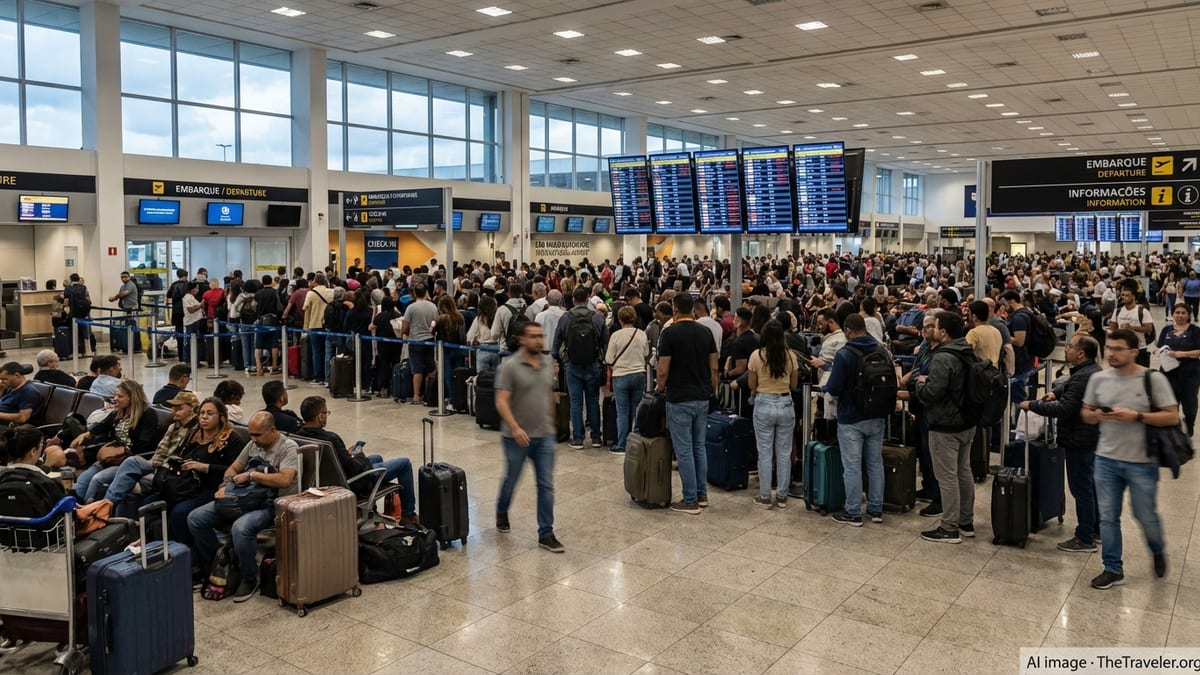
Hundreds of passengers were left stranded at São Paulo–Guarulhos International Airport on March 1 as at least 94 flights were delayed and 10 canceled, disrupting operations for GOL Linhas Aéreas, LATAM Airlines and other major carriers on busy domestic and long-haul routes to Europe.
Morning Disruptions Ripple Across Brazil’s Busiest Hub
Operational disruptions began building through the early hours of Sunday at Guarulhos, Brazil’s main international gateway, with delay statistics climbing steadily across terminals 2 and 3. By midday, airline and airport data indicated that more than 90 services had departed or were forecast to depart behind schedule, while at least 10 were canceled outright, affecting both domestic shuttles and intercontinental flights.
Passengers reported growing queues at airline counters and security checkpoints as rolling delays compounded congestion in check-in halls and departure lounges. Monitors showed departure times repeatedly pushed back in 15 to 60 minute increments, forcing travelers to regroup, rebook and, in some cases, rethink entire itineraries.
Airport staff increased public announcements advising travelers to remain close to their gates and to monitor airline communication channels for last-minute changes. While the terminal continued to operate, the combination of delayed departures and arriving flights created pinch points around boarding areas, food courts and baggage reclaim belts.
GOL and LATAM Bear Brunt of Schedule Upheaval
Homegrown carriers GOL Linhas Aéreas and LATAM Airlines, which together operate a significant share of Guarulhos traffic, were among the hardest hit as the disruption spread across their domestic and international networks. Heavily trafficked routes linking São Paulo with cities such as Rio de Janeiro, Porto Alegre, Fortaleza and Maceió faced knock-on delays as aircraft and crews fell out of position.
Some GOL services turned around later than planned, leaving passengers on connecting itineraries with tight or missed transfers. LATAM’s long-haul operations from Terminal 3, already operating at high load factors at the end of the Southern Hemisphere summer holiday period, were particularly sensitive to schedule slips, with any departure delay quickly cascading into missed onward connections in Europe and the Middle East.
Airline customer-service desks saw long lines as travelers sought rebooking options and hotel vouchers where eligible. While carriers opened additional service positions and digital self-service channels, many passengers still faced lengthy waits for assistance, especially those traveling in large family groups or with complex multi-stop tickets.
International Routes to Paris, London and Frankfurt Disrupted
The disruption was especially acute for intercontinental travelers bound for major European hubs, including Paris, London and Frankfurt. These routes, which rely on tightly coordinated departure banks to feed onward connections across Europe, were affected by a mixture of late departures, missed slots and equipment changes.
Airlines operating services between São Paulo and the French, British and German capitals adjusted timetables and, in some cases, consolidated lightly loaded departures into single flights in an effort to recover schedules. Passengers connecting from Brazilian domestic sectors into these long-haul services were among the most exposed, as earlier delays left insufficient buffer time to clear security and reach outbound gates.
Several travelers reported being rebooked onto next-day departures or rerouted via alternative European gateways when capacity allowed. Others were accommodated at airport-area hotels while they awaited fresh itineraries, particularly in cases where visas or documentation made immediate re-routing through third countries more complicated.
Operational Strain Follows Weeks of Interruptions
The latest wave of delays at Guarulhos came after a challenging February for airlines using the airport, marked by weather-related disruptions, equipment issues and wider geopolitical turbulence affecting intercontinental flight paths. Recent incidents, including precautionary returns and diversions involving long-haul services, have added further strain to already tight aircraft rotations.
Global airspace restrictions and the need to reroute some long-haul flights have lengthened block times and reduced schedule resilience on transcontinental routes. For carriers such as LATAM that use São Paulo as a primary hub, even minor operational hiccups can quickly multiply, especially during peak travel weekends at the close of Brazil’s summer holiday period.
Industry analysts note that while individual flights may appear to depart only slightly late, the cumulative impact on connections and crew duty limits can trigger cancellations later in the day. The imbalance created when aircraft and crews end up in the wrong place at the wrong time typically takes several rotations to correct.
Stranded Travelers Seek Clarity, Compensation and Alternatives
Inside the terminals, frustration grew as departure boards filled with delayed statuses. Families traveling with children stretched out on the floor near power outlets, business travelers worked on laptops from improvised seating and overnight bags piled up near airline counters as travelers braced for extended waits.
Passengers interviewed at the airport described conflicting information between airline apps, departure screens and gate announcements. While some praised staff for calm, professional handling amid the disruption, others expressed concern over limited updates and difficulty accessing clear guidance in languages other than Portuguese and English.
Consumer advocates reminded stranded travelers to keep boarding passes, receipts and written confirmation of delays or cancellations in order to support later claims for refunds, rebooking or expense reimbursements where regulations apply. Travelers were urged to stay in regular contact with their airlines, avoid passing through immigration controls unnecessarily and allow additional time for security and check-in until operations at Guarulhos stabilize.