

More news on this day
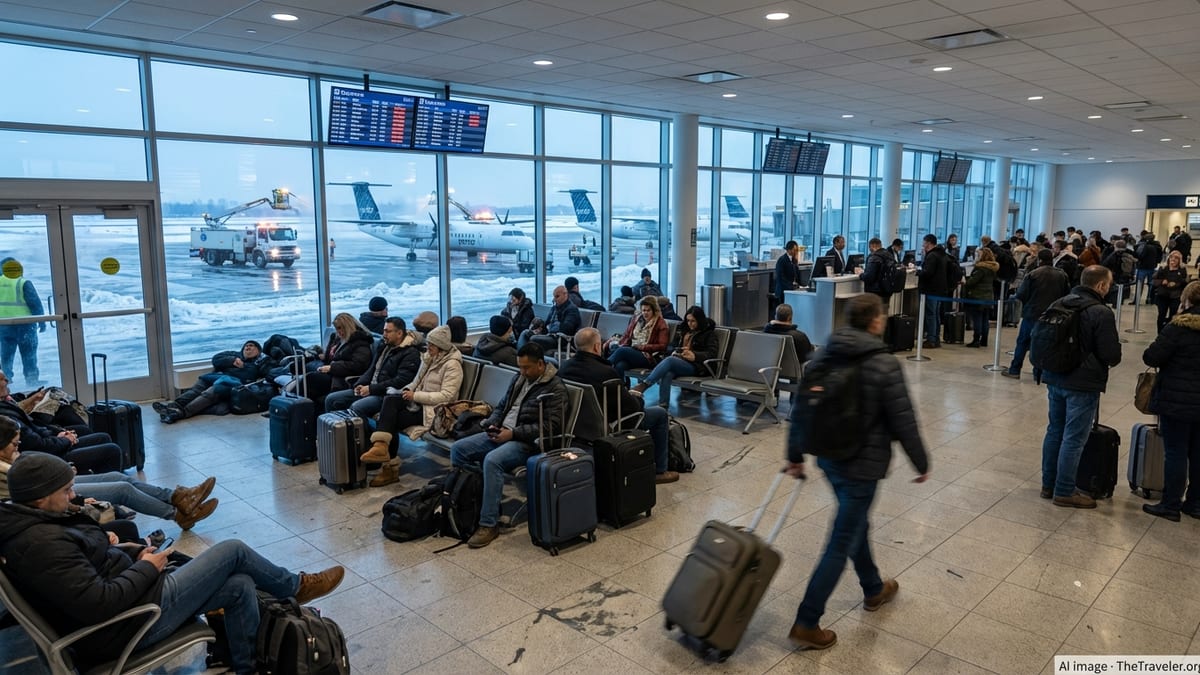
Hundreds of travelers were left stranded at Billy Bishop Toronto City Airport on Friday as severe winter weather triggered 39 flight delays and 3 cancellations, disrupting a busy schedule of domestic and international services to cities including Montreal, New York, Chicago, London, Vancouver, and Mexico City.
Severe Weather Batters Downtown Toronto Gateway
The disruption at Billy Bishop, also known as Toronto City Centre Airport, unfolded as another blast of winter weather swept across southern Ontario, bringing heavy snow, gusty winds, and poor visibility over Lake Ontario. The compact island airport, a favored gateway for business travelers and weekend visitors alike, saw operations slow sharply as airlines and air-traffic controllers worked to keep runways and taxiways safe.
Airport authorities said a combination of blowing snow and rapidly changing visibility made it difficult to maintain normal schedules. While the airport technically remained open, ground handling and de-icing operations were stretched, contributing to a knock-on effect of late departures and arrivals throughout the day.
The problems at Toronto City Centre came on the heels of a series of powerful winter systems that have battered North America this season, repeatedly straining airline schedules and airport infrastructure. The latest round again underscored how quickly weather conditions over Lake Ontario can disrupt traffic at one of Canada’s most conveniently located airports.
Air Canada, Porter and U.S. Carriers Hit Across Key Routes
Porter Airlines, the dominant carrier at Billy Bishop, bore the brunt of the disruption, alongside Air Canada and several U.S. and international partners operating codeshare and regional services. Flights connecting Toronto’s downtown airport to Montreal, Ottawa, and other eastern Canadian cities saw extensive delays, while transborder routes to New York and Chicago also faced rolling schedule changes.
International services were not spared. Selected flights linking Toronto City Centre to major long-haul gateways such as London and onward connections to Mexico City experienced significant knock-on delays as passengers missed tight connection windows. Airline staff spent much of the day rebooking affected travelers onto later departures or routing them through alternative hubs.
American carriers reported delays on their regional services feeding into New York and Chicago, where winter weather and congestion have also been an issue in recent weeks. With aircraft and crew already stretched thin across the continent, the Toronto disruption further complicated scheduling, forcing some rotations to be shortened or re-sequenced to keep aircraft in the right place.
Passengers Face Long Waits, Missed Connections and Full Hotels
Inside the terminal, scenes of overflowing seating areas and queues at customer-service counters became increasingly common as the day progressed. Many passengers who had planned quick business trips or weekend getaways instead found themselves anxiously refreshing departure boards and struggling to find clear information on revised timings.
Travelers heading to Montreal and Vancouver reported delays of several hours, with some flights repeatedly pushed back as ground crews juggled de-icing, snow clearance, and inbound aircraft arriving late from other cities. For those bound for New York, Chicago, and London, the delays translated into missed onward connections and rebookings stretching well into the next day.
With a surge in last-minute hotel bookings in downtown Toronto, some stranded passengers said they faced difficulty finding affordable accommodation within easy reach of the airport’s ferry and pedestrian tunnel. Others opted to return home or stay with friends and family, hoping to try their luck again when conditions improve and backlogs ease.
Airport and Airlines Scramble to Clear Backlog
Airport crews worked continuously to keep the single runway and apron areas operational, rotating snowplows and de-icing equipment to match the bursts of heavier snowfall. Ground handling teams focused on turning aircraft as quickly as safety allowed, but strong gusts over the water and intermittent low visibility repeatedly slowed operations.
Airlines moved to implement standard winter disruption protocols, including issuing travel waivers that allow affected customers to change bookings without additional fees. Staff at check-in counters and boarding gates were tasked with prioritizing passengers with tight connections and those traveling for urgent reasons, such as medical appointments or family emergencies.
Operational planners also looked ahead to the next 24 to 48 hours, warning that residual delays could linger even after the weather improves. With aircraft and crews out of their normal rotation, it may take multiple cycles to restore full schedule integrity across the network, particularly on busy corridors between Toronto, Montreal, New York, and Western Canada.
Advice for Travelers Heading to or Through Toronto City Centre
Travel experts urged passengers booked to fly in or out of Billy Bishop over the coming days to build in extra time for their journeys and to stay in close contact with their airlines. Official apps and airport displays were expected to be updated frequently as operations gradually stabilize, but schedules are likely to remain fluid while airlines work through the backlog.
Passengers were also encouraged to check the status of connecting flights before heading to the airport, particularly for long-haul itineraries involving London and onward destinations such as Mexico City or West Coast hubs like Vancouver. In many cases, carriers may be able to reroute travelers via larger hubs or alternative airports around the Greater Toronto Area.
For now, the disruption at Toronto City Centre serves as another reminder of how vulnerable even well-run airports are to abrupt winter weather shifts. As storm systems continue to track across North America in late February, both airlines and travelers are bracing for more days when patience and flexibility will be essential parts of any travel plan.