

More news on this day
Hundreds of passengers were left stranded at Vancouver International Airport on Wednesday as a new wave of flight disruptions rippled through Canada’s aviation network, with at least 101 departures and arrivals delayed and 11 cancelled, snarling operations for Air Canada, WestJet, American Airlines and other carriers across Vancouver, Toronto, Montreal, Calgary and Edmonton.
Fresh Turmoil Hits a Key Pacific Gateway
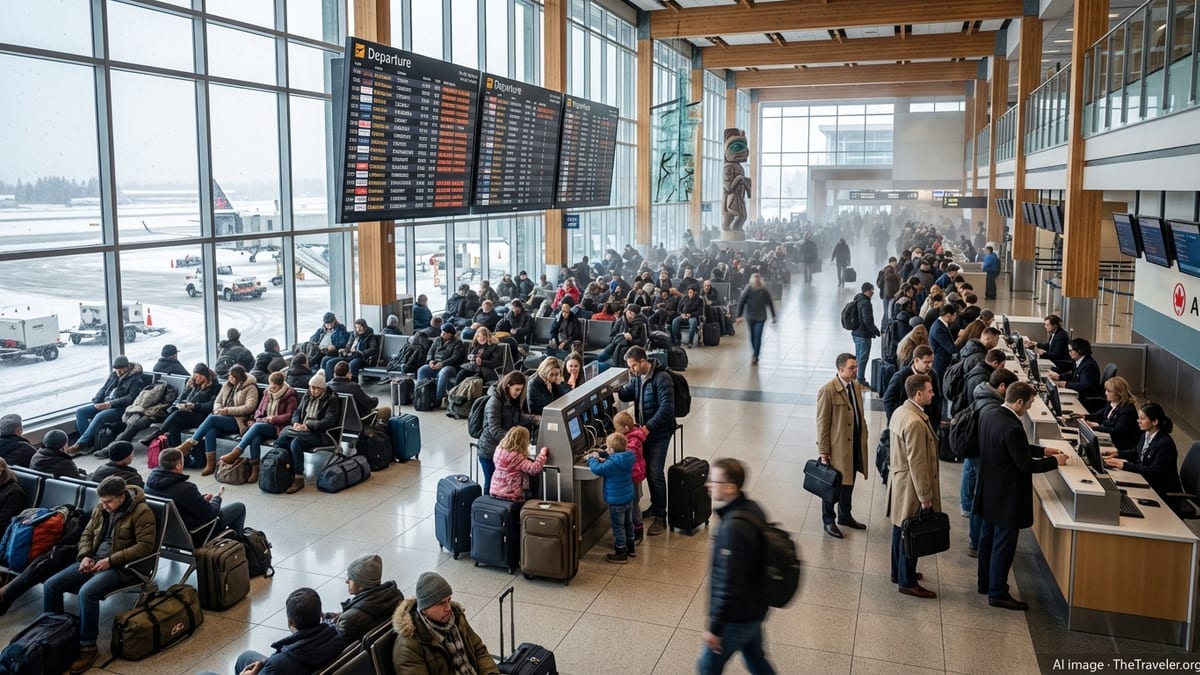
The latest disruptions at Vancouver International Airport, known by its code YVR, unfolded on the heels of a difficult winter for Canadian aviation, with recurring storms and lingering operational strains repeatedly testing airline resilience. On Wednesday, departure boards at YVR filled with delay notices, and clusters of passengers formed around customer service desks as airlines struggled to rebook travelers and reposition aircraft.
While precise passenger counts were not immediately available, airport staff said the impact reached well into the hundreds as affected flights linked Vancouver to major Canadian hubs and a mix of U.S. and international destinations. The 101 delays ranged from modest schedule slips of 30 to 45 minutes to multi-hour hold-ups, while the 11 cancellations forced some travelers into unplanned overnight stays or multi-stop reroutes.
Operations at Vancouver have already been strained this season by repeated bouts of wintry weather and the knock-on effects of system-wide schedule changes. Airlines headed into February with thinner buffers in their networks, leaving less room to absorb fresh disruption without more visible fallout for travelers.
Weather, Congestion and Thin Schedules Converge
The latest wave of delays and cancellations arrived against the backdrop of a harsh 2025 to 2026 winter across North America, where a prolonged cold pattern and multiple storm systems have repeatedly battered hubs in central and western Canada. Even when skies are relatively clear over Vancouver, ripple effects from earlier storms or operational bottlenecks in Toronto, Montreal, Calgary and Edmonton can cascade through tightly timed schedules.
Airlines in Canada have also been recalibrating their networks in response to shifting travel demand and higher operating costs, trimming some transborder and leisure routes while concentrating capacity on core domestic and transcontinental markets. That leaves fewer spare aircraft and crews available to recover quickly when fresh disruption hits, especially on busy days when planes and staff are already near full utilization.
Industry analysts note that the combination of winter weather, congested hubs and leaner schedules creates a fragile equilibrium. When an airport experiences a spike in de-icing times, a runway slowdown or even minor technical issues, delays can quickly propagate across multiple cities and carriers, stranding passengers far from the original source of the problem.
Major Carriers Face Knock-on Disruptions Nationwide
The operational strain was most visible at Vancouver, but the disruption radiated outward across the country as airlines adjusted their networks in real time. Air Canada, WestJet and American Airlines were among the most affected, along with a mix of regional and international partners whose aircraft and crews depend on precise handoffs through Canada’s major hubs.
In Toronto and Montreal, Canada’s busiest eastern gateways, travelers reported longer-than-usual lines at check-in and security as delayed inbound flights arrived in waves. Some connections from the west missed their planned departure windows, forcing rebookings onto later services and compressing already tight turnaround times for aircraft and ground crews.
Calgary and Edmonton, key bases for WestJet and important nodes for domestic and transborder traffic, also saw schedules reshuffled. Flights that were meant to feed onward services between western Canada, central Canada and the United States departed late or not at all, forcing carriers to decide between holding departures for connecting passengers or sending planes out under capacity to preserve the rest of the day’s schedule.
For American Airlines and other foreign carriers operating to and from Canada, the knock-on effect is particularly acute. Late departures from Vancouver or other Canadian cities can translate into missed curfews or crew duty time limits at downline airports in the United States, Europe or Asia, sometimes requiring last-minute cancellations or changes in aircraft routing.
Passengers Endure Long Queues, Thin Information
Inside Vancouver International Airport, the human impact of the disruption was quickly evident. Families with young children spread out on the floor near power outlets, solo travelers refreshed airline apps in rapid succession, and queues stretched from airline counters back into the main concourses as passengers sought clarity on their options.
Many frustrated travelers said the most difficult part of the day was the uncertainty. Flight statuses shifted from “on time” to “delayed,” then to later departure times, occasionally reverting to “boarding” only to be pushed back again. Some passengers learned of cancellations only after arriving at the airport, leaving them to scramble for last-minute hotel rooms as nearby accommodation filled up.
Customer service channels were also strained. Hold times on airline call centers stretched for an hour or more at peak moments, and social media teams were inundated with requests for help. Though most airlines waived change fees and offered to rebook affected travelers on the next available flight, limited remaining capacity in an already busy travel period meant some passengers were offered re-routes that turned straightforward journeys into multi-stop odysseys.
Airlines Balance Safety, Schedule Integrity and Costs
Carriers stressed that safety remained the paramount concern as they navigated the latest round of disruption. Winter operations at Vancouver and other Canadian airports routinely require additional time for de-icing, runway inspections and ground handling, all of which can slow the pace of departures and arrivals even when aircraft and crews are ready to operate.
At the same time, airlines face pressure to preserve their broader schedules and minimize cascading knock-on effects. In some cases, that means proactively cancelling a small number of flights to free up aircraft and crews for higher-demand routes or to maintain critical long-haul operations. While such decisions can frustrate passengers on affected services, they are often framed by airline managers as necessary trade-offs to limit the total number of travelers impacted.
Fuel, staffing and maintenance costs have also risen in recent years, leaving carriers less inclined to maintain large pools of spare aircraft or crews that can be deployed at short notice. The result is that when severe weather or technical issues occur, airlines have fewer tools at their disposal to quickly restore normal operations, and recovery often unfolds over several days rather than a few hours.
Canadian Hubs Under sustained Winter Pressure
Vancouver’s troubles came amid a broader season of volatility for Canada’s interlinked network of major airports. Toronto Pearson, Montreal Trudeau, Calgary International and Edmonton International have all weathered repeated waves of disruption since early January due to storms, prolonged cold and high winds affecting everything from runway friction to ground transport for staff.
When one major hub slows down or briefly suspends operations, the consequences flow through to others via shared aircraft rotations and connecting passengers. A delayed departure from Vancouver to Toronto, for instance, can arrive late and miss its window to continue on to Montreal or a U.S. city, prompting a domino effect of crew reassignments and aircraft swaps that can take days to fully unwind.
Airport authorities and airlines have responded by activating winter contingency plans more frequently this season, including pre-emptive schedule reductions during forecast storms and intensified coordination between air traffic control, ground handlers and airport operations teams. Yet despite these efforts, the underlying realities of winter weather and a busy travel market have made it difficult to avoid repeated episodes of large-scale delay.
Calls Grow for Better Communication and Passenger Protections
The latest disruption at Vancouver has renewed calls from consumer advocates for clearer rules around passenger compensation and care during widespread operational breakdowns. While Canada’s air passenger protection regulations set out some obligations for airlines in cases of controllable delays and cancellations, the boundaries can be less clear when events are linked to weather, air traffic control restrictions or other external factors.
Travelers caught up in the Vancouver delays reported mixed experiences when seeking meal vouchers, hotel accommodation or cash compensation, with some saying they received prompt assistance and others describing a patchwork of policies applied differently by various frontline staff. Those inconsistencies have added to pressure on regulators and airlines to clarify what passengers can expect when operations falter on such a large scale.
In the meantime, consumer groups continue to urge travelers to document their experiences carefully, retain receipts for unexpected expenses and follow up with airlines in writing if they believe they are entitled to compensation or reimbursement. They also recommend that passengers build additional buffer time into itineraries during the winter months and consider travel insurance policies that specifically address delays and missed connections.
What Travelers Can Expect in the Coming Days
Operational experts warn that the effects of the present wave of disruption are likely to linger beyond the day itself. With aircraft and crews displaced from their intended positions, airlines will be working through the remainder of the week to reset their schedules, rebalancing which planes and staff are assigned to which routes and times.
For travelers with upcoming departures from Vancouver, Toronto, Montreal, Calgary or Edmonton, that means flight times and aircraft types could continue to change, even if weather conditions improve. Airlines are advising passengers to monitor their reservations closely, ensure contact details are up to date in booking profiles and arrive at the airport early, given the potential for longer lines at check-in and security.
Despite the frustrations, the latest episode underscores both the importance and vulnerability of Canada’s aviation network, particularly during a winter marked by extreme conditions and shifting travel patterns. As airlines, airports and regulators reassess how to balance reliability, cost and passenger rights, travelers passing through Vancouver and other major hubs may continue to face a bumpy ride before operations fully stabilize.