

More news on this day
Passengers across Europe are facing a bruising April as a convergence of labor strikes, unsettled weather and lingering staffing shortages disrupts operations at major hubs, leaving thousands stranded from Frankfurt to Rome and London to Lisbon.
Get the latest news straight to your inbox!
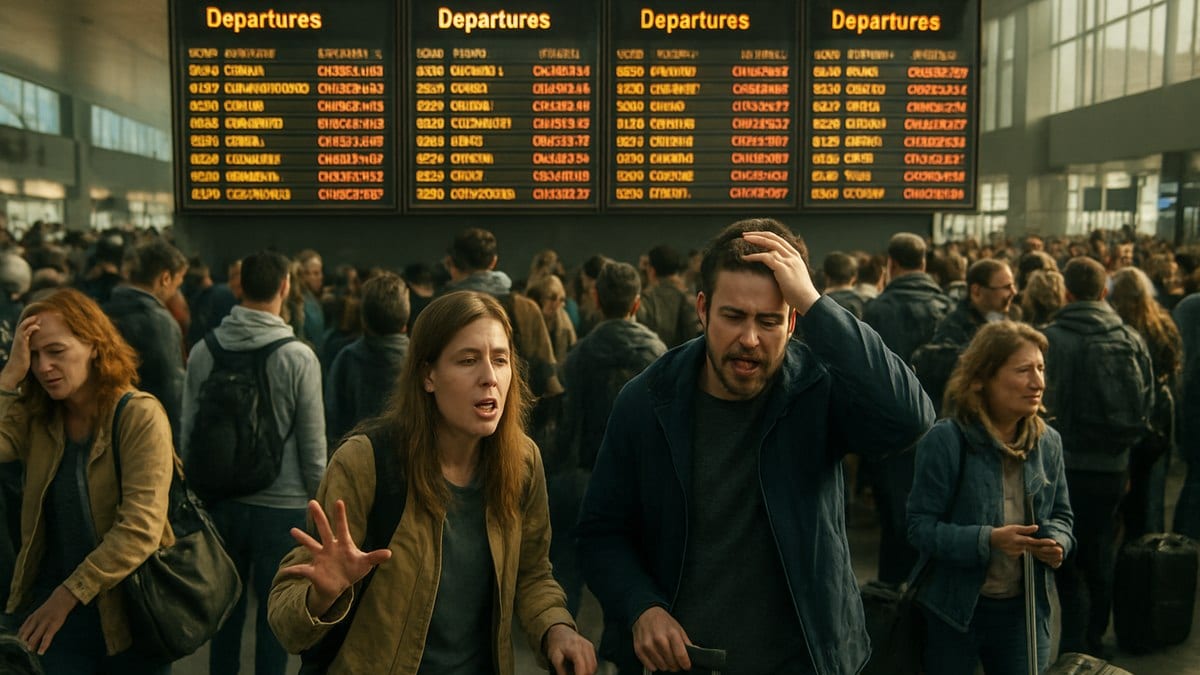
Strikes Hit Frankfurt, Munich and Rome at the Same Time
Germany and Italy have emerged as epicenters of disruption, with strike action targeting both cockpits and control towers just as spring travel demand accelerates. In Germany, reports from aviation industry trackers describe a new round of walkouts by Lufthansa pilots and related crews scheduled for April 13 and 14, 2026, on top of recent cabin crew stoppages that already forced the cancellation of hundreds of flights over the Easter return period. Frankfurt and Munich, the airline’s main hubs, are again bracing for severe schedule cuts, with tens of thousands of passengers expected to see trips postponed or rerouted.
In Italy, air traffic controllers have staged a four hour national strike centered on April 10, 2026, affecting key control centers in Rome, Milan and Naples. Airline advisories and local media coverage indicate that the walkout has triggered at least partial shutdowns of Italian airspace during the strike window, prompting widespread cancellations and forcing carriers to adjust routings across the central Mediterranean. Rome Fiumicino and Milan Malpensa have reported especially heavy disruption, with knock on effects on connecting traffic to the rest of Europe.
Travel industry summaries suggest that the combination of Germany’s airline strikes and Italy’s air traffic control stoppages has created a corridor of instability stretching across some of the continent’s busiest air routes. Flights between northern Europe and Mediterranean destinations have been particularly vulnerable, as aircraft and crews are left out of position and recovery schedules struggle to keep up with rolling strike calendars.
Ripple Effects at London, Paris and Other Key Gateways
Although the most visible strike action is focused on Germany and Italy, major hubs elsewhere in Europe are experiencing significant secondary disruption. According to aggregated flight tracking data and travel news analysis, airports handling large volumes of interline connections such as London Heathrow, Paris Charles de Gaulle, Amsterdam Schiphol and Zurich are absorbing waves of delayed and diverted services that originate from, or transit through, the German and Italian systems.
Travel and tourism outlets report that in mid April 2026, some long haul passengers arriving from North America and Asia have found themselves stranded overnight in London or Paris after missing onward connections to continental destinations. Airlines have scrambled to provide hotel rooms and rebook affected travelers, but high load factors in the busy spring period limit the availability of alternative seats. In many cases, travelers are being reprotected days later rather than hours.
Smaller but strategically important hubs, including Lisbon and Barcelona, are also under pressure. Portuguese media and regional travel reports describe public transport strikes in Lisbon that are disrupting access to the airport and complicating recovery operations for flights already impacted by weather and upstream delays. The result is a layered form of chaos, where even flights that manage to operate on time can leave passengers struggling to reach or depart the terminal.
Weather and a Fragile Network Compound the Crisis
Labor unrest is only one part of the story. Early 2026 has been marked by a series of strong Atlantic storm systems and unsettled conditions across western and southern Europe. Meteorological briefings and aviation operations summaries highlight repeated episodes of high winds, heavy rain and low cloud that have reduced runway capacity and forced flow restrictions at airports from Dublin and London to Paris and Madrid.
In early April, specialist delay trackers documented a spike of more than 1,600 flight delays and dozens of cancellations in a single day across European hubs, attributing the surge to a mix of poor weather, temporary airspace restrictions and chronic staffing strain in both ground handling and air traffic control. Even where strikes are not in effect, controllers and airline operations centers are often working close to their limits, leaving little resilience when storms or technical glitches occur.
Analysts point out that Europe’s air transport network is still recalibrating after the pandemic era, with airlines running leaner staffing models and airports facing recruitment challenges in security, baggage handling and ramp operations. When storms or strikes disrupt a single node, the impact rapidly cascades, turning isolated cancellations into rolling disruption that can strand passengers far from the original trouble spot.
Passengers Left Sleeping in Terminals and Searching for Rights
The human impact of April’s disruption is most visible in crowded terminal halls at the big hubs. Images and accounts shared across social media and reflected in travel press coverage show families stretched out on airport floors, lines snaking through customer service desks and departure boards filled with red and amber alerts. With hotels near major airports quickly filling up during large scale cancellations, many travelers are spending unplanned nights inside terminals.
Consumer advocacy groups and compensation specialists report rising interest from passengers trying to understand their rights under European Union rules. Under Regulation EC 261, travelers on flights departing from the EU, or operated by EU carriers, may be entitled to compensation when cancellations or long delays are within an airline’s control, such as crew rostering issues or certain technical problems. However, entitlement is more limited when disruptions are linked to extraordinary circumstances, a category that can include severe weather, certain forms of airspace closure or some industrial actions outside the airline itself.
This distinction has created confusion for passengers caught in the current wave of disruption, which often blends multiple causes. Travel law commentators note that in situations where airline specific strikes overlap with broader air traffic control action and difficult weather, eligibility may hinge on the dominant factor behind each individual flight’s delay. In practice, this can leave stranded travelers facing lengthy disputes or relying on third party services to assess and pursue potential claims.
What Travelers Can Expect for the Rest of April 2026
With April barely half finished, the outlook for European air travel remains uncertain. Labor disputes in Germany are not yet fully resolved, and additional strike dates by airline staff or airport workers cannot be ruled out. Italian unions have signaled that further action is possible if ongoing contract and pay negotiations stall, which could bring fresh rounds of air traffic control or ground handling stoppages later in the month.
Weather patterns also remain unsettled, with forecasters monitoring new Atlantic disturbances that could bring further wind and rain to key aviation corridors. Operations specialists caution that even short lived storms can trigger long lasting knock on effects in a network already stretched by industrial action and resource constraints.
For travelers planning to fly through Europe’s major hubs in the coming weeks, publicly available guidance from airlines and airports emphasizes preparation and flexibility. Passengers are being urged to monitor flight status frequently, allow extra time for connections, keep contact details updated in airline apps, and consider booking earlier departures when same day connections are tight. While most flights are still operating, the pattern of rolling disruption means that anyone transiting through hubs such as Frankfurt, Munich, Rome, London, Paris or Lisbon faces an elevated risk of delays or unexpected overnight stays as April 2026 unfolds.