

More news on this day
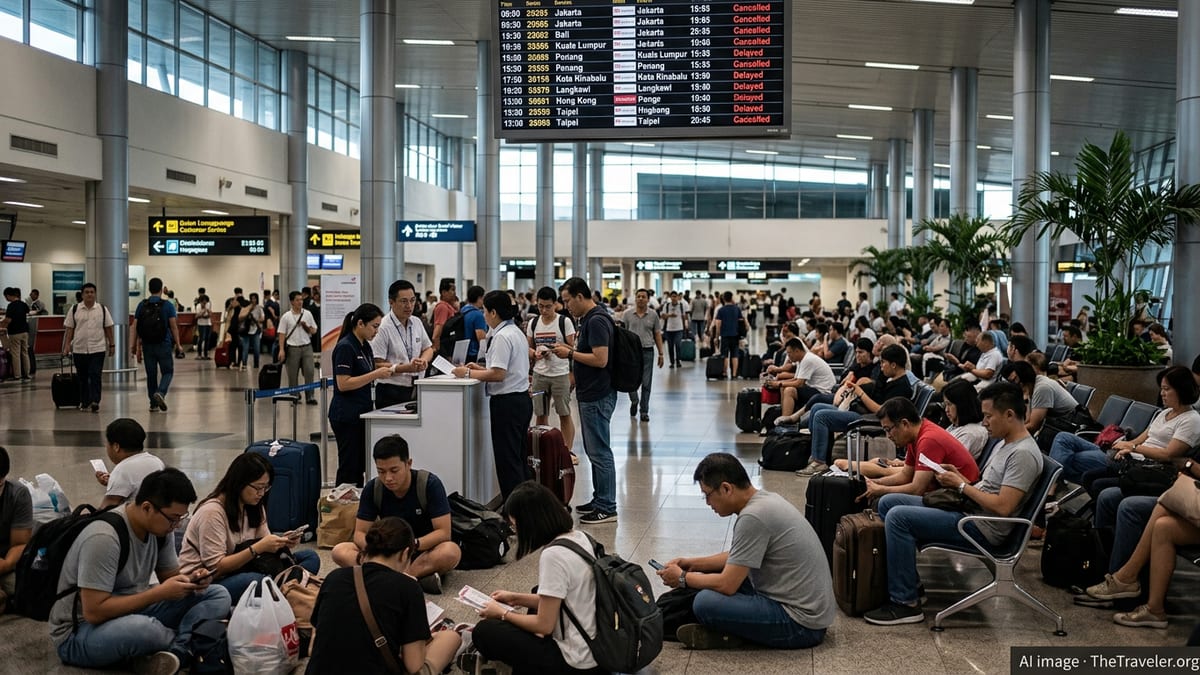
Hundreds of passengers were left stranded across some of China’s busiest airports as a wave of 42 flight cancellations and roughly 150 delays affected services operated by China Eastern, Air China, XiamenAir, Hainan Airlines and several other carriers, disrupting travel through Shanghai, Beijing, Nanjing, Chengdu, Changsha and additional hubs.
Get the latest news straight to your inbox!
Disruptions Ripple Through China’s Largest Air Hubs
According to live flight-tracking dashboards and aviation data platforms monitored on April 2, the disruption involved dozens of departures and arrivals scrubbed or significantly delayed across multiple Chinese cities. Shanghai’s two major airports, Beijing Capital, Nanjing Lukou, Chengdu Tianfu and Changsha Huanghua were among the locations reporting clusters of affected flights linked to leading domestic airlines.
Operational statistics for China’s aviation network show that the country’s largest carriers, including China Eastern and Air China, were handling thousands of scheduled services on the day, with pockets of irregular operations translating into 42 cancellations and around 150 late departures or arrivals tied to a mix of weather, flow-control and operational factors. Publicly available data indicates that these disruptions were concentrated on short and medium-haul domestic routes connecting key economic corridors.
Travel-industry monitoring sites describe how delays at major hubs such as Shanghai and Beijing can quickly cascade across the network, with late-arriving aircraft forcing subsequent departures to push back later than planned. Even when individual delay events are relatively modest, the cumulative impact can leave passengers stranded for hours or missing onward connections at intermediate hubs like Nanjing and Chengdu.
Observers note that irregular operations on this scale are not unprecedented in China’s fast-growing aviation market, particularly during periods of heavy travel demand or unstable weather. However, the clustering of delays and cancellations across several major carriers and cities on the same day has drawn renewed attention to the fragility of tight schedules and the limited spare capacity available at some of the country’s busiest airports.
Major Carriers Face Operational Strain
China Eastern, based in Shanghai, and Beijing-headquartered Air China were among the most visible airlines in the disruption, given their large presence at affected hubs. Flight-performance dashboards for these carriers on April 2 showed elevated delay levels on key trunk routes such as Shanghai to Beijing, where on-time performance can deteriorate quickly when congestion or control restrictions arise in the busy airspace linking the two cities.
Additional carriers, including XiamenAir and Hainan Airlines, also appeared on the lists of affected flights, reflecting the interconnected nature of China’s domestic network. Even airlines with smaller overall schedules can see a disproportionate impact when a hub experiences a cluster of late turnarounds, as a single grounded aircraft may be scheduled to operate multiple legs throughout the day.
Industry analyses of historical data at airports like Beijing Capital and Shanghai Hongqiao highlight that average delay times for several of these airlines already trend higher than global benchmarks during peak periods. Current disruption figures, though modest compared with historic mass-cancellation events, reinforce long-standing concerns about how quickly operations can become unruly when capacity is tight and recovery options are limited.
Aviation commentators point out that Chinese airlines are also operating in a challenging financial environment, with recent earnings reports showing pressure from fuel costs and intense competition on both domestic and international routes. In such conditions, schedules tend to be run with minimal slack, which can exacerbate the impact of any disruption and lengthen the time needed to restore normal operations once problems emerge.
Passenger Frustration at Packed Terminals
At the passenger level, the day’s figures translated into crowded departure halls and long waits at customer-service desks in multiple cities. Social media posts and user reports from travel forums described travelers in Shanghai, Beijing and Chengdu monitoring departure boards that shifted repeatedly, with flights moving from “on time” to delayed, then ultimately canceled, as airlines adjusted their operations.
For many travelers, the immediate challenge was securing new itineraries or accessing refunds. Chinese civil aviation rules generally provide for rebooking or refunds when flights are canceled, but the procedures and timelines vary by airline and by the cause of disruption. Publicly available guidance from carriers such as China Eastern and Air China indicates that travelers are typically encouraged to use official apps or customer hotlines, yet high call volumes during irregular operations often make these channels difficult to access quickly.
Stranded passengers also faced practical issues such as arranging extra accommodation, meals and ground transport when delays stretched into late evening or overnight hours. While some airlines provide limited meal vouchers or hotel arrangements in specific circumstances, published policies often differentiate between disruptions attributed to weather or air-traffic control and those linked to internal scheduling or maintenance, leaving some travelers uncertain about what assistance to expect.
Consumer advocates regularly advise passengers in such situations to document all expenses and retain boarding passes, delay notices and any written communication from airlines. This documentation can be important when seeking reimbursement from carriers or filing claims with travel insurers, especially on itineraries that involve multiple legs or codeshare partners within and beyond China.
Systemic Pressures on China’s Busy Skies
The latest wave of cancellations and delays underscores broader systemic pressures across China’s aviation system. Research on congestion at major metroplex areas such as Shanghai has documented how the combination of limited runway capacity, dense terminal airspace and growing traffic volumes can produce chronic delays if schedules are not carefully managed.
Studies of pre-pandemic operations at Beijing and Shanghai show that several major Chinese airlines, including China Eastern, Air China, XiamenAir and Hainan Airlines, frequently experienced double-digit average delay times at key hubs. While infrastructure upgrades and new airports such as Chengdu Tianfu have added capacity in recent years, demand has also rebounded quickly, particularly during peak travel seasons, putting renewed strain on air-traffic management systems.
On days when weather conditions or airspace restrictions reduce available capacity, airlines must juggle competing priorities: maintaining tightly timed bank structures at hubs, preserving connections for long-haul travelers and complying with slot-use obligations. When disruptions peak across several airports simultaneously, the resulting knock-on effects can reach secondary cities like Changsha and Nanjing, even if local weather and operations there appear stable.
Aviation analysts note that Chinese regulators and airport operators have been promoting collaborative decision-making tools and more sophisticated scheduling models designed to smooth flows into and out of major hubs. The recent cluster of cancellations and delays illustrates both the importance of these efforts and the scale of the challenge presented by one of the world’s busiest domestic aviation markets.
What Travelers Can Do When Flights Are Disrupted
With irregular operations increasingly common across global aviation, travel specialists recommend that passengers flying within or through China take proactive steps to prepare for potential delays and cancellations. These steps include downloading airline apps for real-time updates, ensuring contact information is up to date in reservations and allowing generous connection times between separate tickets, particularly when changing carriers or airports.
Publicly available guidance from travel-insurance providers suggests that policies covering trip interruption and delay can help offset the cost of unscheduled hotel stays, meals and rebooked transport when flights are significantly disrupted. However, coverage conditions vary, and travelers are advised in open-source consumer materials to review policy wording closely, paying particular attention to exclusions related to weather, air-traffic control and industrial action.
For those already stranded, experts in passenger-rights organizations emphasize the importance of staying within official communication channels, including airline counters, verified mobile apps and published customer-service numbers. While third-party agents and informal intermediaries sometimes offer quick fixes, publicly documented cases show that these options can carry high fees or create complications for subsequent segments of an itinerary.
As China’s aviation network continues to expand, episodes like the latest cancellations and delays across Shanghai, Beijing, Nanjing, Chengdu, Changsha and other hubs demonstrate the value of contingency planning for travelers. A combination of flexible itineraries, robust documentation and awareness of airline policies can help passengers navigate disruption when the tightly choreographed schedules of the country’s major carriers unravel.