

More news on this day
Hundreds of passengers at Memphis’ Frederick W. Smith International Airport faced hours of disruption today as at least 10 flights were delayed and 4 were canceled, snarling connections on major routes to Chicago, Atlanta, New York, and other US cities and impacting operations for carriers including Delta and FedEx.
Get the latest news straight to your inbox!
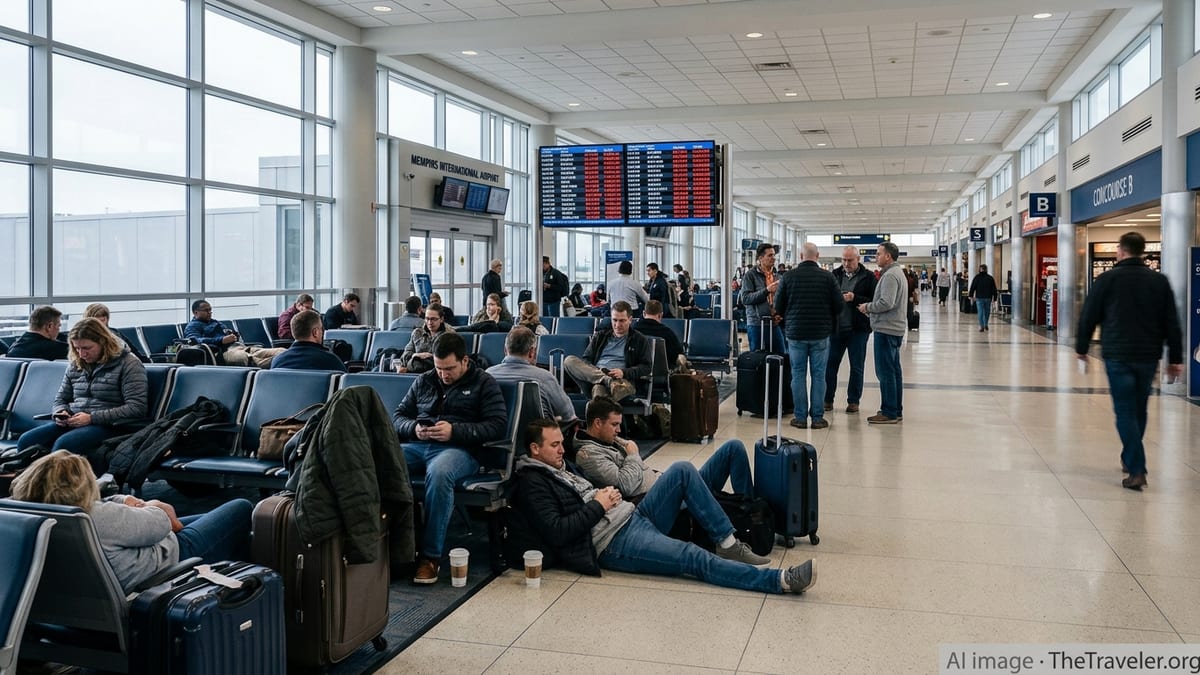
Delays and Cancellations Ripple Through Key Domestic Routes
Publicly available flight-tracking data for Sunday, March 22, 2026, shows a concentrated cluster of disruptions at Frederick W. Smith International Airport, better known as Memphis International Airport, with a mix of delays and cancellations affecting both early morning and midday departures. At least 10 flights were listed as delayed and 4 as canceled, disrupting itineraries for travelers heading to major hubs such as Chicago, Atlanta, and New York as well as secondary destinations across the Midwest and South.
The pattern of disruption follows several weeks of weather-related volatility and operational strain across the US air network, particularly during the active storm periods in February and March. Data from recent winter and late-season systems indicates that even moderate schedule changes in key regional hubs can produce outsized delays as aircraft and crews fall out of position, compounding the impact for passengers in cities like Memphis that depend heavily on connections through larger coastal and Midwestern airports.
While the total number of affected flights at Memphis is modest compared with the thousands of cancellations recorded during major nationwide storms, today’s disruptions were heavily concentrated on a small group of departures, magnifying the effect on local travelers and those relying on tight connections onward to other parts of the country.
Routes between Memphis and Chicago, Atlanta, and New York are especially important because they serve as feeders into some of the nation’s busiest hubs. When those flights are delayed or removed from the schedule, passengers can quickly lose access to same-day alternatives, leading to longer waits, overnight stays, or forced rebooking through entirely different cities.
Passengers Confront Long Waits and Limited Options
Reports from travelers and publicly available social media posts on Sunday described crowded gate areas and visible frustration as departure times at Memphis shifted repeatedly on information boards. Some passengers attempting to reach Chicago and New York reported rolling delays pushing departures back by several hours, while others on canceled services were told to expect rebooking into late Sunday night or Monday, depending on seat availability.
Memphis is typically known for relatively manageable security lines and shorter walks between check in and the gates, which can make disruptions stand out even more sharply when they occur. Recent online discussion among regular fliers through Memphis has highlighted how quickly the terminal can feel congested once multiple departures slip outside their planned windows, since travelers from several flights may be held at neighboring gates at the same time.
The timing of today’s delays is particularly challenging for travelers attempting to start spring break trips or return from weekend visits. With many flights in peak periods operating close to full, same day rebooking options were limited, especially for families seeking to stay together on a single aircraft. In some cases, passengers faced the choice of accepting lengthy layovers at distant hubs or pushing their travel back by 24 hours or more.
The disruption also complicates onward international journeys routed through domestic hubs. Travelers booked from Memphis to New York or Atlanta with onward connections to Europe or Latin America may find that a delay of even one or two hours at the origin airport is enough to miss long-haul departures, forcing complex and time consuming itinerary changes.
Operational Strain Touches Both Passenger and Cargo Carriers
Memphis holds a dual identity as both a mid sized passenger airport and one of the world’s most important cargo hubs, anchored by FedEx’s massive overnight operation. While much of the public attention centers on travelers stranded in terminals, disruptions to the airport’s schedule can also affect the timing of freight movements, particularly when aircraft and crews are shared across mixed passenger and cargo fleets or when airspace and runway capacity are constrained.
FedEx relies on Memphis as its primary sorting hub, with large volumes of freight connecting between domestic and international routes. When delays or irregular operations occur, even on a limited number of flights, packages may miss their planned transfer windows, forcing reroutes through alternative hubs or onto later departures. Recent online discussion about a chemical spill affecting a portion of the FedEx operation in Memphis earlier in March already highlighted how sensitive the network is to any localized disruption.
For passenger carriers such as Delta and other domestic airlines serving Memphis, a relatively small pool of daily frequencies magnifies the effect of a single delayed or canceled flight. Unlike larger coastal hubs that may see hourly departures on key routes, cities like Memphis often depend on a handful of flights spread throughout the day, so losing one segment or significantly delaying it can create gaps in the schedule that are difficult to bridge.
Industry data from recent federal transportation reports shows that when system wide irregular operations rise, smaller and medium sized airports are often the first to see thinning schedules, as airlines prioritize aircraft and crews for their largest hubs. That dynamic can leave Memphis more exposed to cascading disruptions during periods of weather or operational stress elsewhere in the network.
Weather, Infrastructure, and a Strained National System
Today’s travel problems in Memphis are unfolding against the backdrop of a turbulent winter and early spring for US aviation. Major storms in late January and February triggered tens of thousands of cancellations nationwide, while a March storm complex affected large parts of the Midwest and East, producing widespread power outages and transportation challenges. Although Memphis avoided the worst of some of these systems, the ripple effects have been felt in its flight schedules as aircraft cycle through affected hubs.
At the same time, the broader aviation system remains under pressure from staffing constraints and infrastructure limits. Recent coverage of air traffic control staffing shortages and the ongoing impact of a partial federal government shutdown in 2026 has emphasized how thinly stretched some key facilities have become. When staffing is tight and weather is marginal, regulators and traffic managers may introduce ground delays or flow restrictions, reducing the number of flights that can safely move through already congested airspace.
Memphis, sitting at a crossroads of north south and east west routes, is highly exposed to such measures. Flights bound for Chicago, Atlanta, and New York frequently pass through airspace corridors that are sensitive to storms, high winds, or traffic management initiatives. Even if conditions at Memphis itself are relatively calm, disruptions at those downstream hubs can trigger delays that propagate backward onto originating flights in Tennessee.
These factors help explain why passengers in Memphis are encountering difficulties today even without a single, obvious local trigger such as a major snowstorm. Instead, a combination of residual weather impacts, staffing constraints, and broader systemic strain appears to be converging into a localized pocket of disruption.
What Travelers Can Do If Their Memphis Flight Is Disrupted
For passengers caught in today’s delays and cancellations, practical steps can help reduce the stress and limit the fallout. Consumer advocates frequently recommend that travelers monitor their flight status through airline apps and independent tracking tools before leaving for the airport, since same day changes often appear there before they are widely announced in terminal displays.
When flights are canceled or significantly delayed, publicly available guidance from the US Department of Transportation and major airlines indicates that travelers may be eligible for rebooking at no additional cost, meal vouchers, or hotel accommodations in certain circumstances. Policies vary by carrier and by cause of disruption, but maintaining documentation of delay times and keeping boarding passes and receipts can be helpful when seeking assistance.
Travelers with tight connections through Chicago, Atlanta, or New York may wish to proactively contact their airline’s customer service channels to explore alternative routings, especially when forecasted delays suggest that onward long haul flights could be at risk. In some cases, airlines may be willing to reroute passengers through different hubs or onto earlier departures from Memphis to protect international or last flight of the day connections.
For those with flexible plans, shifting travel to less congested days or off peak times can reduce vulnerability to the kind of rolling disruptions seen in Memphis today. Recent months of turbulence in US aviation suggest that volatility may remain a feature of the system for some time, making proactive planning and real time monitoring increasingly important for anyone passing through Frederick W. Smith International Airport.