

More news on this day
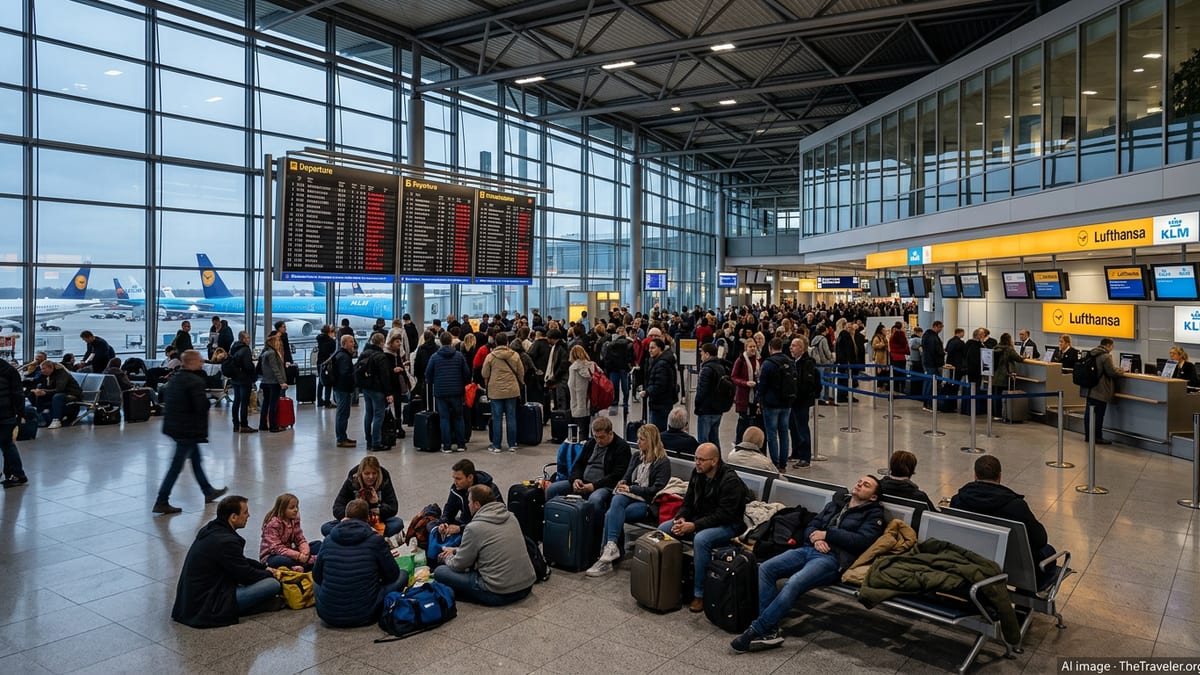
Hundreds of travelers were left stranded at Munich and Berlin Brandenburg airports after a fresh wave of flight disruptions saw at least 14 services cancelled and more than 80 delayed, affecting major international carriers and leaving passengers sleeping on terminal floors and scrambling for alternative routes across Europe.
Severe Disruptions Hit Key German Hubs
Munich and Berlin Brandenburg, two of Germany’s busiest air gateways, experienced significant flight disruption as a cluster of cancellations and rolling delays rippled through weekend schedules. Operational data and airport monitors on Saturday showed 14 flights cancelled and 82 delayed, with knock-on impacts spreading to connecting services across Europe and the Middle East.
Among the affected airlines were Lufthansa, KLM, Emirates, Eurowings and Qatar Airways, alongside several European partners and codeshare carriers. Long-haul departures to major hubs such as Dubai, Doha and Amsterdam were particularly disrupted, causing missed connections for passengers bound for Asia, North America and Africa.
The situation intensified throughout the day as early-morning delays cascaded into the afternoon and evening waves. While some flights eventually departed with passengers on board, others were pulled from the schedule at short notice, leaving travelers with few immediate options and long queues at service desks.
Airport authorities in both cities confirmed that operations remained technically open, but acknowledged a “highly irregular” day with persistent delays. Ground handling teams struggled to reposition aircraft and crew, while airlines faced capacity constraints in rebooking stranded passengers on already busy services.
Passengers Report Being “Abandoned” in Terminals
Across both airports, passengers described scenes of confusion and overcrowding as departure boards filled with red-highlighted delays and cancellations. Families with young children were seen sleeping on makeshift beds of jackets and carry-on bags, while business travelers and tourists lined up for hours at airline counters seeking rebooking, hotel vouchers or basic information.
Several travelers took to social media to complain that they felt “abandoned” by their airlines, citing a lack of clear updates and insufficient staff to handle the surge in disrupted itineraries. Some Lufthansa and Eurowings passengers in Munich reported receiving multiple rolling delay notifications via apps, followed by late-night cancellations when accommodation options near the airport were already scarce.
At Berlin Brandenburg, itineraries operated by or connecting to KLM, Emirates and Qatar Airways were among those affected, complicating onward journeys to long-haul destinations. Passengers arriving from other European cities found that their connecting flights out of Berlin had either departed without them after earlier delays or been cancelled outright.
In several instances, travelers said they were advised to arrange accommodation on their own and claim reimbursement later, a prospect many found daunting amid already rising out-of-pocket costs for last-minute hotels and meals near major transport hubs.
Weather, Congestion and Knock-On Effects Blamed
Airline and airport sources cited a combination of factors behind the disruption, including residual effects from adverse weather earlier in the week, congestion in European airspace and ongoing operational strains in ground handling and crew availability. Even when conditions improve at one hub, delayed aircraft and displaced crews can trigger a chain reaction of missed slots and late departures elsewhere.
Munich in particular has been vulnerable in recent seasons to weather-related disruption, with snow and low-visibility conditions frequently forcing temporary runway closures or reduced capacity. Berlin Brandenburg, while less prone to heavy snow than southern Germany, has nevertheless struggled at times with bottlenecks in passenger processing and ramp operations when multiple delayed flights arrive simultaneously.
The latest wave of problems followed a week in which other German airports, including Frankfurt and Düsseldorf, also reported elevated levels of delays and cancellations. That pattern has left airline networks under sustained pressure, meaning a disrupted aircraft or crew rotation in one city can quickly be felt in another.
Carriers including Lufthansa, KLM, Emirates, Eurowings and Qatar Airways have all emphasized their efforts to restore normal operations, but warned that schedules remain fragile and subject to change at short notice when adverse conditions or airspace restrictions occur.
What Stranded Travelers Can Do
Consumer advocates in Germany urged affected travelers to document their disruption and keep receipts for any expenses incurred while stranded, including meals, transport and accommodation. Under European passenger rights rules, many travelers on flights departing from or arriving in the European Union may be entitled to assistance, refunds or compensation, depending on the cause and length of the delay or cancellation.
Passengers were advised to first check their airline’s app or website to confirm the latest status of their booking and, where possible, select alternative flights digitally instead of waiting in airport queues. Some carriers have temporarily loosened their rebooking policies, allowing travelers caught in the disruption to change dates or routes without additional fees.
For those already at the airport, staff at official airline counters remain the primary point of contact for arranging re-routing and, where applicable, hotel accommodation and meal vouchers. Travel insurance providers may also offer additional benefits or reimbursement when itineraries are severely disrupted.
Authorities recommend that anyone with flights scheduled from Munich or Berlin in the coming days allow extra time to reach the airport, complete security checks and respond to any last-minute gate or schedule changes. Travelers are also encouraged to monitor notifications closely, as flights may shift from delayed to cancelled with little warning.
Ongoing Strain on European Air Travel
The latest disruption in Germany underscores the continuing fragility of European air travel, where high demand, tight staffing levels and persistent weather and airspace challenges have repeatedly exposed vulnerabilities in airline and airport operations. Even outside traditional peak holiday periods, passenger volumes at major hubs like Munich and Berlin now frequently approach or exceed pre-pandemic levels.
Aviation analysts note that large network carriers such as Lufthansa and their partners operate complex schedules that can be quickly thrown off balance by a single period of bad weather or an air traffic control restriction. Recovery often takes days, not hours, especially when aircraft and crew end up out of position and spare capacity is limited.
For travelers, the events in Munich and Berlin serve as a reminder to build flexibility into itineraries, particularly when relying on tight connections or traveling to long-haul destinations with limited daily frequencies. Booking longer layovers, carrying essential items in hand luggage and considering travel insurance that covers disruptions can help mitigate some of the risk.
As operations stabilize, airlines are expected to conduct internal reviews of their response to the latest wave of cancellations and delays, including communication with passengers left overnight in terminal buildings. For many of those who slept on benches and under departure screens this weekend, the experience will likely influence how they plan and book their next trip through Germany’s major hubs.