

More news on this day
Thousands of travelers have been left in limbo across China’s busiest airports this week as a wave of delays and cancellations ripples through major hubs from Beijing and Shanghai to Guangzhou, Shenzhen and Chengdu, disrupting domestic and international connections just days before a key holiday travel period.
Get the latest news straight to your inbox!
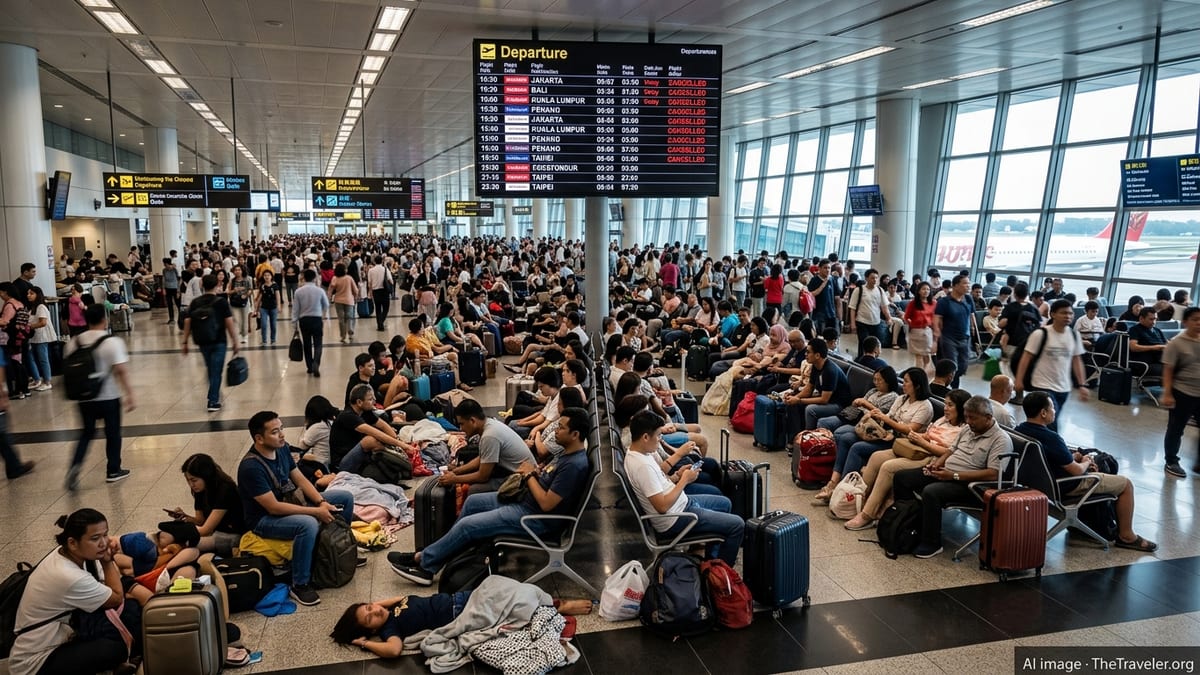
Widespread Disruptions Hit China’s Largest Airports
Publicly available flight tracking data and industry reports show that disruptions escalated sharply in recent days, with hundreds of flights canceled and thousands more delayed across the country. One recent tally indicated more than 5,400 delays and over 460 cancellations in a single day at Chinese airports, with the heaviest impact at Guangzhou Baiyun, Shenzhen Bao’an, Shanghai’s Pudong and Hongqiao, and the two main Beijing airports.
At Guangzhou Baiyun and Shenzhen Bao’an, which serve as critical hubs for China Southern Airlines and Shenzhen Airlines, operations have been heavily constrained, with some reports counting close to 1,000 delayed departures in Guangzhou alone on the worst affected day. Shanghai’s twin gateways, Pudong and Hongqiao, together recorded hundreds of delayed and canceled flights, affecting both long haul routes and high frequency domestic shuttle services.
Chengdu’s Shuangliu and Tianfu airports, along with major inland hubs such as Chongqing, Wuhan and Zhengzhou, have also reported significant knock-on disruption. The cascade of delays has rippled through China’s dense domestic network, forcing rolling schedule adjustments as aircraft and crews fall out of position and connecting passengers miss onward flights.
Industry coverage indicates that leading Chinese carriers including China Eastern, China Southern, Air China, Hainan Airlines, Spring Airlines and Sichuan Airlines have all faced substantial operational pressure, with regional players such as 9 Air and Juneyao Airlines also impacted.
Severe Weather Meets Pre-Holiday Travel Surge
Meteorological advisories and airline statements point to a spell of severe weather over parts of southern and eastern China as a primary trigger for the current wave of disruption. Thunderstorms and heavy rainfall in and around the Pearl River Delta have repeatedly interrupted traffic flows at Guangzhou and Shenzhen, two of the country’s busiest aviation gateways, while low cloud and poor visibility have affected airports around the Yangtze River Delta, including Shanghai and Hangzhou.
The timing of the weather pattern is especially challenging. China is preparing for the Qingming Festival holiday period from April 4 to 6, when cross border and domestic travel typically spike. Official forecasts for border crossings suggest that daily passenger volumes through major ports and airports could exceed 2.3 million over the break, with Shanghai Pudong, Guangzhou, Beijing, Chengdu and Shenzhen among the key gateways expected to see heavier flows.
Even before the holiday begins, domestic air travel demand has been running hot, with additional services added on popular corridors linking coastal megacities with inland provincial capitals and tourist destinations. The combination of strong demand and periodic weather closures means that recovery windows are short, and delays that might normally be absorbed within a day can persist across several rotations.
As aircraft are held on the ground or forced to divert, crew duty time limits further constrain the pace at which airlines can restore normal schedules. This creates a feedback loop in which a single day of intense storms can destabilize operations for several days in a row across a highly interconnected network.
Passenger Experience: Long Queues, Tight Rebooking Options
Images and accounts circulating in Chinese and international media describe crowded terminals, long lines at check in counters and boarding gates, and passengers resting in departure halls overnight as they wait for rebooked flights. With many services fully booked in the run up to Qingming, options for same day or next day rebooking have been limited on some routes.
In major hubs such as Shanghai, Beijing and Guangzhou, travelers connecting between domestic and international flights have faced particular challenges. When an incoming domestic leg is delayed or canceled, passengers may be forced to rebook not only their onward international segment, but also any subsequent domestic connections, compounding the cost and complexity of their journeys.
Publicly accessible guidance from airlines and travel industry sources notes that, in weather related disruptions, carriers typically prioritize rebooking on the next available flight operated by the same airline or alliance partners. However, when entire waves of departures are affected, available seats can quickly be exhausted, leaving some travelers with waits of many hours or, in the most congested cases, more than a day.
Consumer advocates and travel bloggers in the region are encouraging passengers to use multiple channels to manage their trips, including airline apps, customer service hotlines and on site airport service desks, while also keeping receipts for meals, transportation and accommodation that might be needed to support later insurance claims.
Operational Strain Highlights Systemic Pressures
Aviation analysts note that the current episode of disruption is unfolding against a backdrop of rising structural pressures on China’s air transport system. Since the full reopening of borders, demand for both domestic and international air travel has rebounded strongly, especially on routes linking major Chinese cities with Southeast Asia, Japan, South Korea, the Middle East and Europe.
At the same time, global supply chain shifts and heightened geopolitical tensions have driven up demand for air freight out of China. Industry commentary indicates that cargo rates from Chinese gateways to Europe and North America have surged since late February, in part because of capacity constraints and re routings linked to conflicts affecting key transit corridors. Passenger aircraft that also carry belly hold cargo have become even more important for maintaining supply chains, making cancellations and delays more costly for shippers as well as travelers.
Chinese airports have continued to expand infrastructure, as shown by recent announcements of new hub construction in the Pearl River Delta and additional international routes from inland cities. Yet peak hour congestion, airspace constraints and weather vulnerabilities remain significant operational challenges, particularly during holiday surges when load factors are high and buffers in the system are limited.
Observers argue that episodes like the current wave of chaos highlight the need for more flexible slot management, stronger coordination among airlines and airports, and improved communication tools for travelers, so that cascading delays can be contained more effectively when severe weather or other shocks hit key nodes in the network.
What Stranded Travelers Can Do Right Now
Travel specialists recommend that passengers caught up in the disruption focus first on securing an updated booking, preferably through airline digital channels that can process changes without requiring long waits at airport counters. Many carriers operating in China now allow same day or next day rebooking within a specified window directly in their apps when a flight is canceled or severely delayed.
For travelers who purchased travel insurance with trip delay or cancellation coverage, policy terms may provide for reimbursement of reasonable expenses such as hotel stays, meals and local transportation when flights are disrupted by weather or other covered events. Insurers typically require detailed documentation, so retaining boarding passes, booking confirmations and receipts is essential.
Passenger rights in China differ from those in regions such as the European Union, and financial compensation for weather related cancellations is not guaranteed. However, airlines may offer meal vouchers, hotel accommodation or complimentary rebooking in certain circumstances as a matter of customer service policy, especially when overnight delays are unavoidable.
With further storms and heavy traffic expected as the Qingming holiday approaches, aviation analysts suggest that travelers build additional margin into itineraries, avoid tight connections where possible, and monitor flight status frequently in the 24 hours before departure. For the thousands already stranded across China’s major hubs, recovery will depend on how quickly weather conditions stabilize and how effectively airlines and airports can clear the mounting backlog of delayed passengers.