

More news on this day
Thousands of air travelers across at least five US states have been left stranded in early April 2026 as a tangle of severe weather, staffing gaps and holiday crowds triggered cascading flight cancellations and delays across the national network.
Get the latest news straight to your inbox!
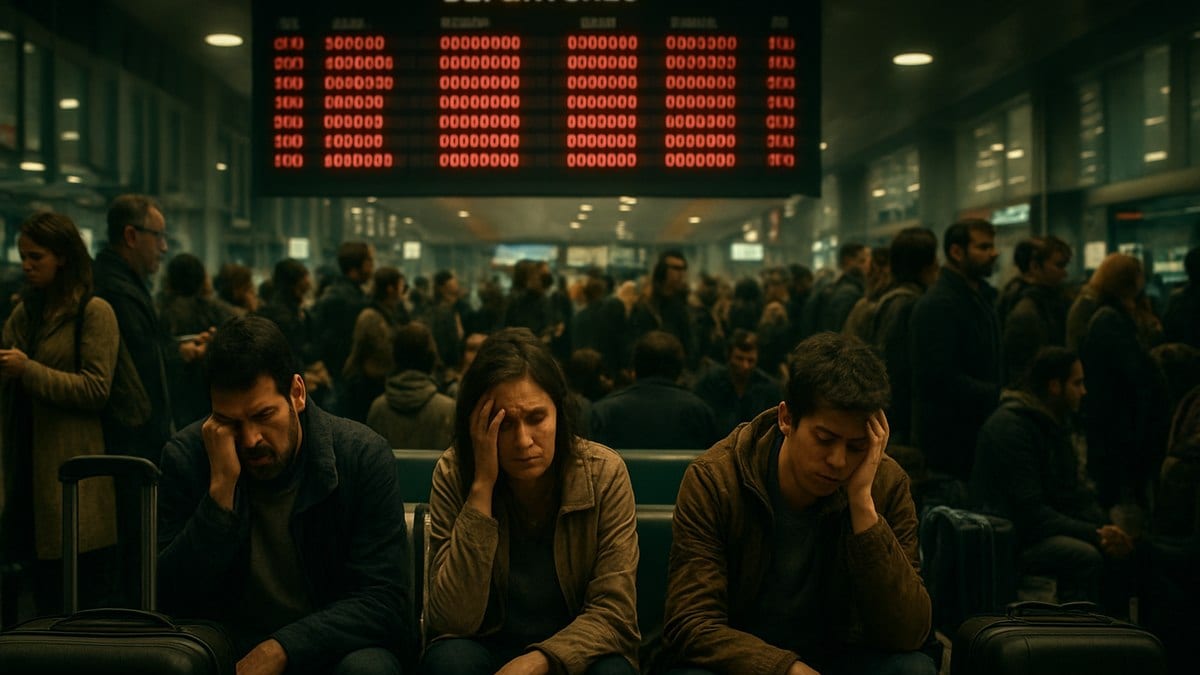
Storm Systems Turn Holiday Travel Into Gridlock
A volatile spring weather pattern has played a central role in the latest wave of disruption. Published coverage of aviation data shows that severe thunderstorms and low visibility in the first week of April forced airlines and air traffic controllers to slow or halt operations at multiple hubs, particularly in the Midwest and South. Airports in Chicago, Dallas, Detroit, Phoenix and El Paso were among those reporting widespread interruptions as lightning, crosswinds and saturated runways limited departures and arrivals.
On Easter Saturday, April 5, a particularly intense storm corridor intersected with one of the busiest travel days of the year. National tallies cited in industry reports indicate roughly 339 flight cancellations and more than 3,500 delays in the United States that day alone, leaving terminals jammed and connection banks in disarray. Travel-focused outlets describe Chicago, Dallas, Atlanta and Orlando as some of the hardest hit nodes, with passengers stuck overnight in gate areas as rolling delays turned into cancellations late in the evening.
These early April events came on the heels of a turbulent March, when a sequence of winter storms and severe weather outbreaks disrupted tens of thousands of flights across North America. Analysts note that March’s blizzards and thunderstorms left crews and aircraft out of position heading into April, creating a fragile operating environment where fresh storms in just a handful of states were enough to ripple across the wider network.
Weather specialists also point to a broad area of storm risk stretching from the Midwest to the Mid-Atlantic during the first week of April, with forecasts calling for repeated rounds of thunderstorms, heavy rain and localized flooding. That pattern effectively placed a weather bottleneck over several of the country’s most important hubs, compounding the strain on already stretched airlines.
Five States Emerge as Flashpoints of Disruption
While the latest chaos has affected airports nationwide, travel data and news reports highlight at least five states as particular flashpoints in April 2026: Illinois, Texas, Georgia, Florida and Arizona. In Illinois, Chicago O’Hare International has repeatedly surfaced as an epicenter of delay, with one April 1 thunderstorm outbreak prompting more than 100 cancellations and over 1,200 delays tied to that airport alone. Regional carriers feeding larger airlines, including Envoy Air, Republic Airways and SkyWest, were among those reported as heavily affected.
In Texas, a blend of stormy weather and congested holiday schedules has snarled traffic through Dallas area airports. Publicly available tracking data referenced by travel outlets shows hundreds of cancellations and thousands of delays during the first week of April across Dallas, Houston and other Texas cities, affecting major carriers along with their regional partners. The disruptions led many passengers bound for or connecting through the state to miss onward flights, leaving them scattered in hotels and terminal waiting areas.
Georgia and Florida have also seen repeated pressure as Atlanta and Orlando absorbed surging spring break and Easter traffic at the same time that weather systems passed through the Southeast. Atlanta, one of the world’s busiest hubs, has featured prominently in national disruption tallies since March, and coverage in early April reports fresh rounds of delays as storms flared along key flight corridors. Florida’s Orlando airport, a major gateway for theme park and cruise travelers, has been hampered by both weather-related slowdowns and knock-on effects from delays at out-of-state hubs.
In the Southwest, Arizona’s Phoenix Sky Harbor International has reported sizable pockets of delays as inbound aircraft from storm‑hit regions arrived late or not at all. While conditions in Phoenix itself have often remained flyable, airline operations there have been constrained by aircraft and crews stuck in other states, illustrating how a localized storm in the Midwest or South can strand travelers a thousand miles away.
Numbers Reveal Growing Scale of April Flight Chaos
Aggregated figures from flight-tracking services, cited across multiple travel and aviation outlets, underscore the scale of disruption confronting US passengers this April. In the final days of March and the opening days of April, one national review put the total at roughly 460 cancellations and around 5,500 delays over just a few days, as storms, staffing shortfalls and congestion converged on major hubs.
More granular snapshots paint an equally troubling picture. A report focused on early Easter week described 117 cancellations and more than 3,100 delays nationwide on March 31, setting the stage for the Easter weekend crunch. Another national roundup centering on April 5 highlighted nearly 400 cancellations and well over 3,200 delays, with thousands of travelers stranded as gate agents struggled to rebook passengers onto already crowded flights.
Separate coverage referencing a single April disruption day at Chicago O’Hare detailed more than 1,200 delays at that airport alone, underscoring how a concentrated storm cell over one hub can translate into missed connections and strandings for travelers flying between entirely different parts of the country. Data-driven analyses emphasize that many of those affected never intended to travel through the most storm‑affected cities, but were swept into the chaos because their aircraft or flight crews were scheduled to pass through them earlier in the day.
Aviation rights organizations point out that even a few hundred cancellations can translate into tens of thousands of disrupted passenger journeys once missed connections, rebookings and overnight stays are factored in. With April’s interruptions frequently measured in the high hundreds of cancellations and several thousand delays on peak days, the number of people facing extended airport stays across the five most affected states easily reaches into the many thousands.
Underlying Strains: Staffing, Congestion and Network Fragility
Weather may be the trigger, but reports throughout 2026 have consistently highlighted deeper weaknesses in the US aviation system that make each storm season more disruptive. Travel trade publications and consumer advocacy groups describe a network still working through pilot and crew shortages, air traffic control staffing gaps and limited slack in aircraft scheduling. The result is an environment where even routine thunderstorms can push schedules past their breaking point.
Several analyses note that airlines are operating near or at capacity on many routes to meet strong post‑pandemic demand, especially during peak travel windows such as spring break and the Easter holidays. With fewer spare aircraft and reserve crews available, carriers have less flexibility to recover when storms force ground stops or when lightning suspends ramp operations for extended periods. The ripple effects then cascade outward as delays compound over the course of the day.
Airport congestion is another significant factor. Large hubs in Chicago, Dallas and Atlanta function as critical connection points for domestic and international itineraries. Once departures there begin to stack up on the tarmac or in departure queues, downstream airports in smaller cities experience late arrivals, shorter connection windows and eventually missed flights. Experts cited in industry commentary describe it as a classic network problem, where strain at a small number of nodes produces outsized disruption across the entire grid.
Consumer advocates also observe that operational policies, such as tight turn times and aggressive scheduling, can sharpen the impact of bad weather. When aircraft are scheduled on back‑to‑back segments with limited buffers, even modest delays early in the day can create a rolling wave of missed slots and connection failures by evening. That is precisely the pattern described in many of the early April disruption accounts emerging from Illinois, Texas, Georgia, Florida and Arizona.
What Stranded Passengers Face on the Ground
For travelers caught in April’s flight chaos, the on‑the‑ground experience has varied widely from airport to airport and carrier to carrier. Published accounts describe crowded gate areas, lengthy lines at customer service desks and passengers sleeping on seats or floors as they wait for rebooking options. With hotels near major hubs filling quickly on peak disruption days, many stranded passengers report turning to airport seating or nearby friends and relatives for overnight shelter.
Guides from passenger rights groups emphasize that travelers in the United States are typically entitled to a refund if their flight is canceled and they choose not to travel. However, assistance such as hotel vouchers, meal credits or compensation for long delays depends heavily on individual airline policies and whether the disruption is framed as within the carrier’s control. In cases tied to severe weather, airlines often classify the disruption as outside their control, which can limit the support on offer.
Travel advisors recommend that passengers facing April’s volatile conditions build in additional buffers wherever possible. Suggestions commonly highlighted in consumer coverage include booking earlier flights in the day, opting for routes with multiple daily frequencies and avoiding tight connections through weather‑sensitive hubs when alternative routings exist. Those strategies cannot eliminate risk, but they can improve the chances of same‑day recovery when storms or staffing gaps hit.
As April 2026 progresses, airlines and airports across the five most affected states remain under close scrutiny from travelers and advocacy organizations. With tornado season and further spring storms still ahead, the recent wave of cancellations and delays is likely to intensify calls for greater resilience in the US aviation system and clearer communication to passengers when schedules begin to unravel.