

More news on this day
Thousands of travellers were stranded at Melbourne, Sydney, and Brisbane airports on Monday as a fresh wave of delays and cancellations rippled across global networks, with 542 flights delayed and 54 scrapped, disrupting services operated by Qantas, Cathay Pacific, Emirates and other carriers on routes linking Australia with New Zealand, the United States, Singapore and key hubs such as Los Angeles, Auckland and Dubai.
Severe Weather and System Strain Hit Australian Gateways
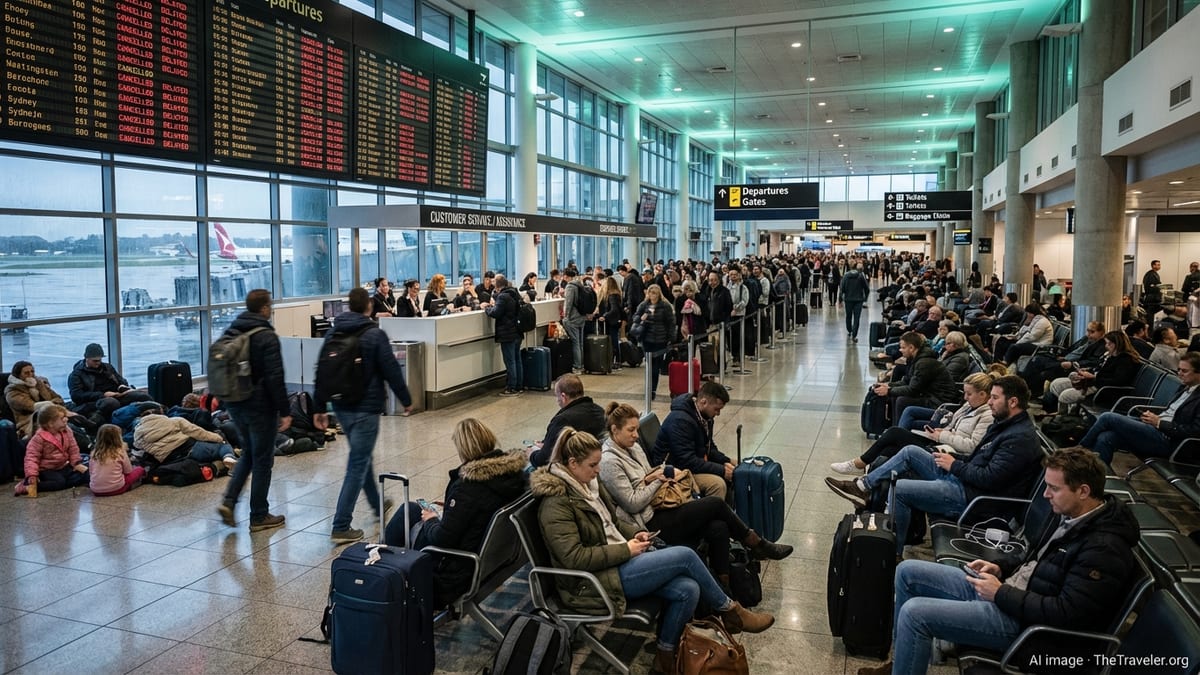
Australia’s three busiest east coast gateways, Sydney, Melbourne and Brisbane, reported mounting disruption as airlines struggled to keep schedules intact amid unsettled regional weather and knock-on operational challenges. Storm activity in parts of eastern Australia, combined with flow-on delays from earlier systems affecting Asia and the Pacific, slowed arrivals and departures and left terminals crowded with frustrated passengers.
Airport staff described heavy congestion around check-in zones and security lanes, as rolling delays pushed back departure times throughout the day. Flight information screens at all three hubs showed long lists of services to domestic and international destinations marked as delayed, with some long-haul departures facing hold-ups of several hours.
Capacity constraints on already busy corridors meant there was little room to recover the schedule quickly. Crews and aircraft were frequently out of position, forcing airlines to consolidate services or cancel select rotations altogether, further stretching passenger handling resources on the ground.
Major Carriers Including Qantas, Cathay Pacific and Emirates Affected
Flag carrier Qantas absorbed a significant share of the disruption, with delays and cancellations across both domestic and international operations from Sydney, Melbourne and Brisbane. Regional arm QantasLink and low-cost subsidiary Jetstar also faced schedule upheaval, complicating connections for travellers attempting to link from domestic services to long-haul departures.
Internationally, Cathay Pacific and Emirates were among the overseas airlines reporting delays on routes linking Australian hubs with Hong Kong and Dubai. Singapore Airlines and other Asian and Middle Eastern carriers also experienced timing slippages as congestion at Australian airports and weather-related air traffic control restrictions reduced available slots and slowed turnarounds.
Airline representatives said safety remained the overriding priority, stressing that services would not depart until weather and operating conditions met requirements. However, they acknowledged that the scale of the disruption, with 542 flights delayed and 54 cancelled in the current wave alone, had severely tested customer service and rebooking systems during peak travel periods.
Global Ripple Effects Reach Los Angeles, Auckland, Dubai and Beyond
The problems at Australian gateways quickly spread across international networks, creating a ripple effect that stretched from the Pacific to the Middle East and North America. Flights between Sydney and Los Angeles were among those affected, with late departures from Australia triggering missed connections and extended waits for onward services at US hubs.
Across the Tasman, travellers on services linking Melbourne, Sydney and Brisbane with Auckland and other New Zealand cities also faced disruption. Knock-on effects hit Air New Zealand and codeshare partners as aircraft arriving late from Australia compressed turnaround times and forced adjustments to later departures.
In Southeast Asia and the Gulf, services to and from Singapore and Dubai felt the impact of delayed inbound aircraft from Australia. Passengers connecting through these major transit hubs to Europe, Africa and other Asian destinations reported missed connections and unplanned overnight stays as airlines scrambled to rebook itineraries and find available seats on alternative flights.
Passengers Confront Long Queues, Sleepless Nights and Limited Options
At Melbourne Tullamarine, Sydney Kingsford Smith and Brisbane Airport, passengers described lengthy queues snaking through departure halls, with some forced to sleep in terminal seating after late-night cancellations left nearby accommodation fully booked. Families with young children, business travellers and tourists alike faced a familiar scramble for food vouchers, reissued boarding passes and scarce charging points for exhausted devices.
Ground staff urged travellers to remain in close contact with their airlines via mobile apps and SMS alerts, noting that departure times were shifting frequently as operations teams attempted to re-sequence schedules. Many passengers, however, reported difficulty reaching call centres or securing timely updates during peak periods, particularly when large groups of flights were retimed simultaneously.
Consumer advocates in Australia renewed calls for clearer communication standards and more consistent care provisions during major disruptions, including food, accommodation and rebooking support. While some travellers praised individual staff efforts at the gate, others expressed frustration at what they saw as patchy information and long waits for basic assistance.
Ongoing Recovery Efforts and Advice for Upcoming Travellers
By late evening, airlines were working to reposition aircraft and crews in an effort to stabilise schedules over the coming 24 to 48 hours. However, with so many services already affected, operations managers warned that residual delays were likely to persist, particularly on high-demand routes linking Australia with Los Angeles, Auckland, Singapore and Dubai.
Industry analysts noted that the episode underscored how vulnerable complex international networks remain to clusters of weather and operational issues, especially during busy travel windows. Even when conditions improve, the recovery period can extend across multiple days as carriers tackle backlogs of displaced passengers and out-of-position aircraft.
Travellers booked to fly into or out of Melbourne, Sydney or Brisbane in the coming days are being urged to check their flight status regularly before heading to the airport, allow extra time for check-in and security, and consider carrying essential items in hand luggage in case of unexpected overnight stays. With key long-haul and regional links still under strain, passengers are also advised to build additional buffer time into itineraries involving tight international connections.