

More news on this day
Hundreds of travelers were left stranded in Mexico after operational disruptions at Cancún and Monterrey airports delayed 141 flights and led to eight cancellations, snarling air traffic on busy routes linking Mexico City, New York, Houston, Los Angeles and Cancún itself.
Get the latest news straight to your inbox!
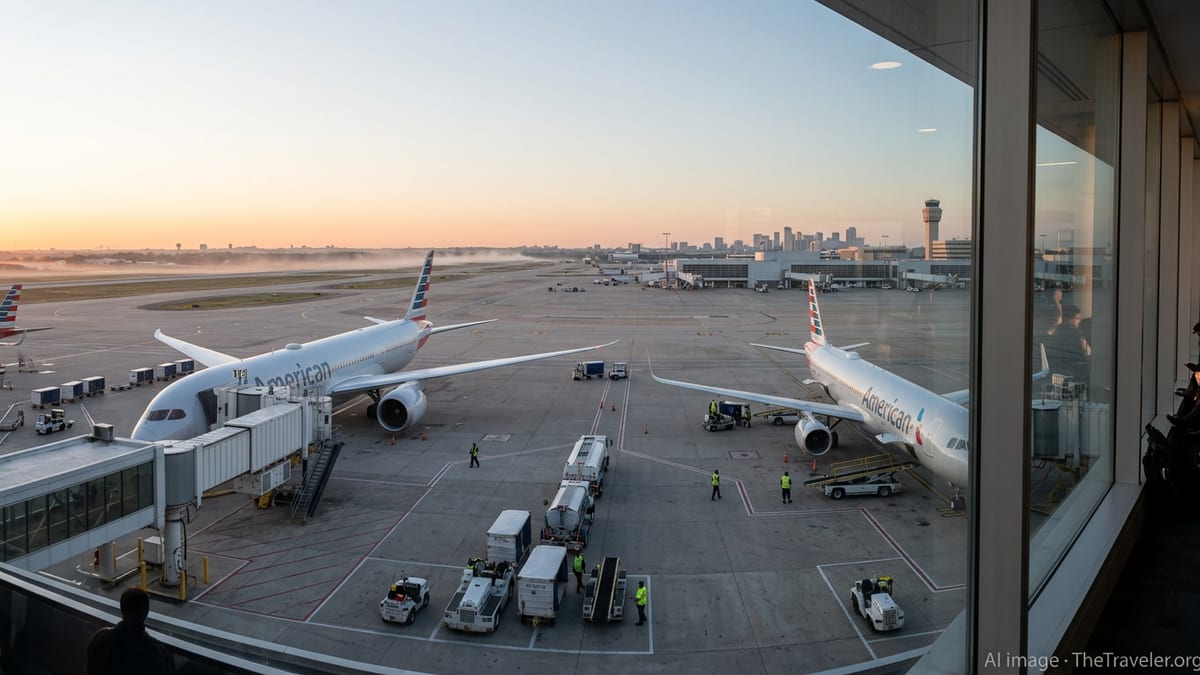
Widespread Delays Hit Two of Mexico’s Busiest Hubs
The disruption unfolded at Cancún International Airport in Quintana Roo and Monterrey International Airport in Nuevo León, two of Mexico’s key domestic and international gateways. Publicly available airport and flight-tracking data indicate a combined total of 141 delayed flights and eight outright cancellations over the course of the operational incident, with knock-on effects continuing into subsequent rotations.
The affected schedule covered a mix of domestic and cross-border services, underscoring how dependent regional connectivity has become on these two hubs. Cancún is a major entry point for leisure travelers from North America and Europe, while Monterrey functions as an important business and industrial gateway. The scale of the delays meant disruption for both holidaymakers and corporate passengers transiting through Mexico.
Although detailed minute-by-minute causes vary by flight, operational constraints at the airports, tight aircraft turnarounds, and congestion in peak travel periods combined to slow the system. The imbalance between arriving and departing aircraft further contributed to extended ground times, which then cascaded into missed slots and late departures.
Available airport statistics show that both Cancún and Monterrey have seen strong traffic growth heading into 2026, increasing the sensitivity of their operations to any unexpected bottlenecks. When delays begin to accumulate at high-volume hubs, recovery becomes more complex and travelers can quickly find themselves facing extended waits.
Major Airlines and Key North American Routes Affected
According to flight-status boards and independent tracking platforms, the disruption touched multiple carriers, including American Airlines, Aeromexico, Southwest, and other Mexican and U.S. operators. These airlines collectively operate dense schedules linking Cancún and Monterrey to major cities in Mexico and the United States, so even a limited number of cancellations had outsized effects on passenger flows.
Routes between Monterrey and Mexico City experienced notable schedule changes, with several departures pushed back beyond their planned times. Flights linking Cancún with key U.S. gateways such as New York, Houston and Los Angeles also saw delays as aircraft arrived late, crews reached duty-time limits, or ground handling operations struggled to keep pace with the day’s compressed schedule.
For American travelers, this meant disruptions not only on nonstop flights into Mexico but also on onward journeys using Cancún or Monterrey as connection points to the wider region. Missed connections, rebookings and extended layovers became common themes as airlines worked within available capacity to accommodate stranded passengers on later services.
While the total number of cancellations remained well below the volume of delays, the eight flights that were removed from the schedule had significant individual impacts. On heavily booked leisure and business routes, a single cancellation can translate into hundreds of displaced passengers competing for limited seats on subsequent departures.
Knock-on Effects for Travelers Across Mexico and the United States
The operational problems in Cancún and Monterrey rippled quickly across networks in both countries. Because many aircraft operate multiple legs per day, delays on early sectors into or out of these airports propagated into later flights, including evening departures back to Mexico City and onward services to New York, Houston and Los Angeles.
Travelers reported extended waits in terminals, last-minute gate changes and shifting estimated departure times as airlines adjusted their operations in real time. In some cases, inbound aircraft diverted from tight turnarounds, leaving little margin to recover once flights had fallen behind schedule. As a result, even passengers departing from other Mexican airports, but connecting through Cancún or Monterrey, experienced unexpected schedule changes.
For U.S.-bound travelers, the disruption meant increased risk of missing onward North American connections. Flights arriving late into hubs such as New York or Houston can jeopardize same-day itineraries onward to smaller U.S. cities, particularly in the evening when alternative options become scarce. Passengers on itineraries combining multiple carriers or separate tickets were especially vulnerable to extended disruptions.
Domestic passengers within Mexico also faced challenges. With Monterrey playing a central role in linking northern industrial centers to Mexico City and other regions, delays there complicated same-day business trips and regional meetings, forcing some travelers to overnight unexpectedly or rework plans around the altered flight schedules.
Growing Pressure on Mexico’s High-Growth Airports
The episode highlights broader capacity and resilience questions for Mexico’s busiest airports as traffic continues to recover and surpass pre-pandemic levels. Data published on airport performance show Cancún and Monterrey among the country’s top facilities by passenger throughput, with robust growth driven by both tourism and business travel.
High utilization levels mean that airports and airlines have less buffer when irregular operations occur, whether due to weather, congestion, ground handling constraints or airspace flow restrictions. Once multiple departures are pushed back, stands fill, and arriving aircraft can encounter further delays securing parking positions and passengers disembarking.
Industry analysis frequently points to the importance of modernized terminals, sufficient runway and taxiway capacity, and efficient ground services to keep punctuality within acceptable ranges. Even short-lived operational issues can result in a backlog that takes several hours to clear, particularly in peak travel seasons when load factors are high and spare seats on later flights are limited.
The pattern of this disruption in Cancún and Monterrey reflects that challenge. With tight schedules and strong demand on routes to Mexico City, New York, Houston, Los Angeles and intra-Caribbean or regional destinations, any disturbance rapidly affects a broad swath of travelers and itineraries.
What Travelers Can Do When Disruptions Strike
Publicly available guidance from airlines and travel-industry observers suggests that passengers facing large-scale delays or cancellations in Mexico can take several practical steps to reduce the impact. Monitoring airline apps and airport displays, checking flight trackers for inbound aircraft status, and enrolling in notification services can help travelers react quickly when schedules begin to slip.
When flights are significantly delayed or canceled, travelers are typically advised to contact their airline as soon as possible through digital channels, customer-service centers or airport service desks to request rebooking options. On days when many flights are disrupted at once, acting early can improve the chances of securing seats on the next available departures to key hubs such as Mexico City, New York or Houston.
Travel experts also recommend that passengers build extra time into itineraries involving transfers through busy hubs like Cancún and Monterrey, particularly during high season or periods of known operational strain. Allowing a wider connection window can make the difference between a tight but workable transfer and an unplanned overnight stay.
For now, operations at Mexican airports continue to draw heightened attention from travelers who rely on these gateways for both holidays and business trips. The wave of 141 delays and eight cancellations at Cancún and Monterrey serves as a reminder of how quickly conditions can shift and how important it is for passengers to remain informed and flexible when flying through the region.