

More news on this day
Hundreds of passengers were left stranded at Deer Lake Regional Airport in western Newfoundland on Friday as six flights were delayed and seven others canceled, disrupting Air Canada, WestJet and other carriers on key domestic and international routes to Toronto, Montreal, St. John’s, London and Vancouver.
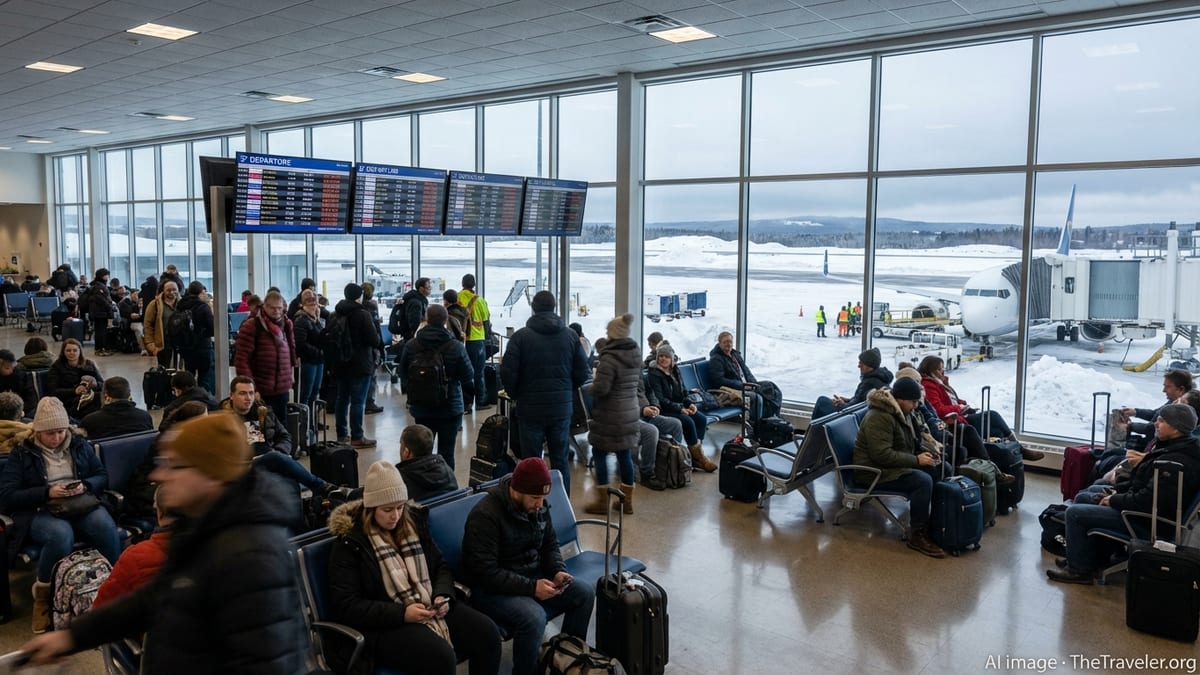
Weather Turmoil and Network Strain Hit Small Hub Hard
The disruption at Deer Lake unfolded against a backdrop of turbulent winter weather across Atlantic Canada and ongoing strain on airline networks following a series of powerful storms in late February. While the heaviest snow and strongest winds pounded the Avalon Peninsula and major hubs like St. John’s earlier in the week, residual operational challenges rippled through smaller regional airports, where limited runway capacity and tight aircraft rotations leave little room for recovery when schedules slip.
On Friday morning, departures to Toronto and Montreal were among the first to be affected, with ground handlers reporting de-icing backlogs and aircraft arriving late from storm battered airports further west. As the day wore on, what initially appeared to be a handful of extended delays cascaded into outright cancellations, with evening departures to St. John’s and overnight services to London and Vancouver scrubbed from the board.
Staff at the terminal said the combination of weather related restrictions, crew duty time limits and aircraft being out of position elsewhere in the country made it impossible to recover the schedule before the end of the operating day. For a regional gateway that usually prides itself on moving visitors efficiently to and from western Newfoundland’s national parks and coastal communities, the sight of packed waiting areas and snaking rebooking lines marked a stark contrast to a typical late winter Friday.
Air Canada, WestJet and Partners Scramble to Rebook
Air Canada and WestJet bore the brunt of Friday’s disruptions, as their Deer Lake services feed into national and transatlantic networks through Toronto, Montreal and western Canadian hubs. The canceled and delayed flights included mainline and regional operations, affecting both point to point travelers and those booked on onward connections to London and Vancouver.
Throughout the afternoon, airline agents at Deer Lake worked to reassign seats on the limited remaining departures and to secure hotel rooms for those who could not be moved until Saturday. Passengers with international itineraries faced some of the most complex rebookings, with missed overnight connections in Toronto and Montreal forcing complete itinerary rewrites and, in some cases, multi day delays in reaching final destinations.
Airlines encouraged customers to use mobile apps and call centers to manage changes, but many at the airport reported long hold times and limited seat availability on alternative flights out of Newfoundland. With winter schedules already lean on transcontinental and transatlantic frequencies, options for rerouting via other Atlantic Canadian airports or larger hubs in central Canada quickly filled up.
Travelers Endure Long Waits, Thin Options
Inside the compact Deer Lake terminal, departure lounges and café seating filled early as word spread that multiple flights would not be leaving on time. Families returning from school breaks, workers commuting to offshore and construction jobs, and international tourists heading home after winter trips to Gros Morne National Park shared power outlets and airport benches as they awaited updates.
Some passengers were offered meal vouchers, while others purchased what they could from limited food concessions that briefly struggled to keep up with the sudden surge in demand. With local hotel capacity in the Deer Lake and nearby Corner Brook area quickly tightening, late arriving travelers confronted the prospect of overnight stays far from the airport or sleeping in terminal chairs if rooms could not be secured.
For visitors unfamiliar with western Newfoundland’s winter conditions, the disruption underscored how quickly travel plans can unravel when storms and operational knock on effects converge. Several international travelers expressed concern about missed workdays and additional costs piled on to what were supposed to be straightforward journeys home through Canadian hubs.
Broader Strains on Atlantic Canada Air Travel
The problems at Deer Lake added to a challenging week for air travel across Atlantic Canada, where a sequence of powerful winter systems has repeatedly disrupted schedules at St. John’s, Halifax and other key airports. Airlines are still working through the backlog created by those storms, and the tight coupling of regional schedules means a delay or cancellation at one end of a route can easily propagate to smaller communities hours later.
Aviation analysts note that regional airports like Deer Lake are particularly vulnerable when major hubs face prolonged weather related disruption. Aircraft and crew tend to be prioritized for the densest routes, leaving thinner regional links exposed when equipment becomes scarce. As carriers adjust spring and summer schedules, they are also juggling aircraft maintenance, staffing and new route launches, all of which can constrain flexibility during irregular operations.
For western Newfoundland’s tourism and business communities, the latest wave of cancellations has renewed calls for continued investment in winter resilience, including expanded de-icing capacity, more robust contingency planning with airlines and better real time communication with passengers when weather threatens to shut down key corridors.
Advice for Passengers Planning Upcoming Trips
With winter conditions likely to persist across much of Canada into March, travel experts urge passengers flying to or from Deer Lake and other Atlantic Canadian airports to build additional buffer time into their itineraries. That includes avoiding tight connections on international routes, allowing at least several hours between domestic and long haul legs and, where possible, planning overnight stays at major hubs rather than relying on same day turnarounds.
Travelers are also advised to monitor weather forecasts closely in the days leading up to departure and to keep a close eye on airline notifications, which may offer voluntary rebooking options before a storm hits. Flexible tickets, travel insurance that covers weather related disruptions and packing essentials such as medications, chargers and a change of clothes in carry on bags can all help ease the strain if long delays materialize.
For now, operations at Deer Lake Regional Airport were expected to stabilize gradually as airlines brought aircraft and crews back into position. However, the day’s events offered a clear reminder that even a relatively small number of disrupted flights can have an outsized impact on a community where air service is a lifeline for residents, workers and visitors alike.