

More news on this day
More than 183 flight cancellations and 6,611 delays have snarled air travel across the United States today, as major carriers including United, American, Delta, Southwest, Alaska and Horizon grapple with weather disruptions, staffing constraints and air traffic control pressures at key hubs from Atlanta and Minneapolis to Salt Lake City, Denver, Miami and Chicago.
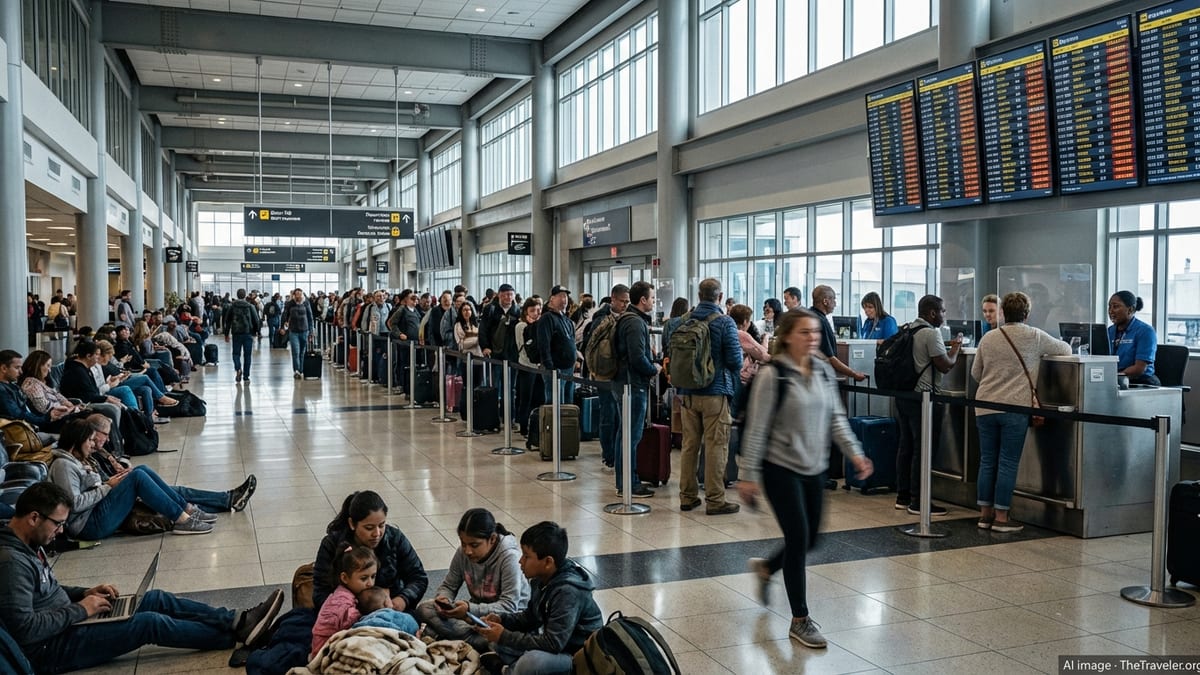
Disruptions Mount Across Major US Airports
The latest figures, compiled from flight-tracking data and airline reports, show disruption radiating through the country’s busiest hubs, with knock-on effects at scores of regional airports. While the total number of cancellations remains below the worst holiday meltdowns of recent years, the sheer volume of delays has pushed terminal operations to the limit and left passengers facing hours-long waits at gates and rebooking counters.
Atlanta, Chicago, Denver and Minneapolis are bearing a particularly heavy share of the strain, thanks to their roles as core connecting hubs for Delta, United and American’s networks. Departure banks that normally turn over in tightly choreographed waves are instead stretching far into subsequent time blocks, forcing airlines to juggle aircraft and crew at short notice to keep at least a reduced schedule moving.
Farther south and east, Miami and other Florida gateways are reporting rolling departure holds as carriers work through congested traffic flows. At the same time, knock-on delays are now being logged at midsize airports that feed into these hubs, intensifying the experience of a nationwide slowdown even for travelers on short domestic hops.
Weather and FAA Capacity Limits Drive Operational Stress
The current wave of disruption is being fueled in part by active winter systems impacting the Rockies, Upper Midwest and interior West. In Salt Lake City, persistent snowfall has repeatedly forced runway plowing operations and deicing holds, with airport officials reporting hundreds of delayed flights and dozens of cancellations concentrated among hub carriers such as Delta and regional partners that operate smaller jets.
In Denver, where cold temperatures and intermittent snow have combined with already busy winter traffic, delays have become a familiar feature of the daily schedule. Recent data from airport and flight-tracking dashboards point to roughly one in four flights experiencing some form of delay, as airlines slow operations for deicing and to route aircraft around weather systems moving across the central United States.
Layered on top of the weather is a tighter operating environment for air traffic control, particularly at large coastal and hub airports. In recent months the Federal Aviation Administration has ordered capacity reductions at dozens of major fields to keep traffic moving safely during a prolonged government funding crunch and controller staffing shortages. Those cuts, though modest on paper, leave airlines with less margin when storms or congestion flare up, making delays and cancellations more likely to cascade.
Major Carriers Struggle to Contain Knock-On Effects
United Airlines, American Airlines and Delta Air Lines, which together account for a significant share of departures at Atlanta, Chicago, Denver, Minneapolis and other hubs, have all been forced to trim schedules and hold flights as the system buckles. These carriers typically rely on complex hub-and-spoke networks that can recover quickly from isolated disruptions but are more vulnerable when multiple hubs are hit at once.
Southwest, Alaska and regional operators such as Horizon are facing their own challenges. Southwest’s dense point-to-point network means that a localized problem at one or two airports can ripple through dozens of city pairs over the course of a day. Alaska and Horizon, which serve weather-sensitive markets in the Pacific Northwest and Alaska as well as key western hubs, are confronting both winter storms and capacity limits at connecting airports, squeezing their ability to reposition crews and aircraft.
As delays mount, airlines have been leaning on standard mitigation strategies such as proactive rebooking and schedule thinning. In some cases they have opted to cancel flights early to free up aircraft and crews for the rest of the day, a tactic that can blunt the absolute number of disruptions but leaves travelers on canceled flights scrambling for alternatives. For passengers connecting through major hubs, even a relatively short delay on an inbound leg can now easily turn into a missed connection and an unplanned overnight stay.
Scenes of Congestion From Atlanta to Chicago and Miami
At Atlanta’s Hartsfield-Jackson International Airport, one of the world’s busiest hubs, travelers have reported long lines at check in and security as well as packed gate areas during traditional midmorning and late-afternoon peaks. With Delta and other carriers adjusting departure times, banks of flights that normally clear the concourses in waves are lingering, leading to crowded boarding zones and limited seating.
Chicago O’Hare and Minneapolis-St. Paul are wrestling with their own winter-weather and congestion mix. Periodic snow and ice events have triggered ground delays and deicing queues, pushing average departure waits higher and leaving arrival gates occupied longer than scheduled. Travelers describe tight squeezes even at off-peak hours as delayed inbound aircraft arrive simultaneously, compressing passenger flows in terminals that are finely tuned to normal traffic patterns.
In Miami, the story is less about snow and more about the ripple effects of upstream disruption. Delayed departures from northern hubs have backed up arriving traffic into South Florida, while heavy demand for warm-weather getaways keeps planes full and leaves little slack in seating. Gate agents for American, Delta and low-cost carriers have been repeatedly calling for volunteers to accept rebookings or travel vouchers as oversold flights collide with rolling delays.
Passenger Frustration Grows as Travel Plans Unravel
For travelers, the practical effects of more than 183 cancellations and thousands of delays are playing out in missed events, disrupted business trips and shortened vacations. Families connecting through multiple hubs report losing entire days of their itineraries as each new delay or missed connection forces another round of rebooking. Some passengers have turned to rental cars or overnight bus services when same-day flight options disappeared.
Social media feeds from affected airports are filled with images of departure boards dense with yellow and red notations, along with long queues at customer service desks. While many passengers acknowledge that winter weather and safety concerns are legitimate reasons for disruption, frustrations are rising around communication lapses and limited meal or hotel vouchers when delays stretch late into the night.
Consumer advocates note that the increasingly fragile state of the system, where relatively routine storms or staffing hiccups can generate nationwide slowdowns, places a growing burden on travelers to manage risk. They argue that airlines and regulators should provide clearer, more standardized compensation rules for significant delays and cancellations, particularly when disruptions are linked to schedule planning or resource constraints rather than purely uncontrollable weather.
What Airlines Are Advising Impacted Travelers
Airlines are urging passengers with upcoming trips to monitor their reservations closely, use mobile apps for real-time updates and consider moving travel to off-peak times where possible. Many major carriers have posted travel waivers for certain routes and dates, allowing customers to change flights without paying traditional change fees, provided they keep the same origin and destination.
Gate and call center staff have been advising travelers to check in early and build extra time into connections, especially when itineraries run through busy hubs like Atlanta, Chicago, Denver or Dallas. Some carriers are recommending that passengers avoid tight layovers and, where possible, book longer connection windows or nonstop options that lessen exposure to the most constrained airports.
Frequent travelers are also leaning on strategies that have become familiar during past disruption waves: traveling with only carry on luggage to facilitate quick rebooking, enabling flight alerts on multiple devices and proactively searching for alternative routings through less congested airports before long lines form at service counters.
Regulators Increase Scrutiny on Reliability and Scheduling
The latest flare up in delays comes against a backdrop of heightened regulatory attention to airline reliability and scheduling practices. The US Department of Transportation has, in recent years, stepped up investigations and fines related to chronically delayed flights and patterns of cancellations it views as linked to unrealistic scheduling. Several major carriers have already faced penalties for persistent late operations on specific routes.
Regulators have also pressed airlines to strengthen their customer service commitments, including clearer disclosures on when passengers are entitled to refunds or accommodations for cancellations and extended delays. Updated airline dashboards now spell out compensation and rebooking policies in plain language, though advocates say many travelers remain unaware of their rights until they are already stranded at the airport.
At the same time, the FAA’s efforts to manage traffic volumes at tightly constrained airports by ordering schedule cuts at peak times have introduced new tension between safety, capacity and commercial demands. Airline executives have warned that sustained cuts will limit growth and squeeze already tight margins, while regulators maintain that reduced schedules are necessary to maintain safety and reduce the risk of larger systemwide breakdowns.
How Travelers Can Prepare for a Volatile Flying Season
With winter weather still in play across large parts of the country and structural pressures on air traffic control and staffing unresolved, aviation analysts say travelers should brace for continued bouts of volatility in the weeks ahead. While not every day will resemble the current wave of disruption, the conditions that produced more than 6,600 delays are likely to recur when storms, staffing constraints and heavy demand coincide.
Experts recommend that passengers booking critical trips, such as weddings, cruises or international connections, aim to arrive at their destination at least one day before must-attend events. Choosing morning departures, which are less likely to be affected by the day’s accumulating delays, can also improve the odds of on-time arrival.
Finally, while no airline is immune to weather and airspace constraints, travelers with flexibility may wish to weigh recent on-time performance data and hub exposure when selecting carriers and routings. As today’s disruptions show, the combination of busy mega-hubs, winter storms and reduced capacity margins can quickly turn a routine travel day into a nationwide scramble for seats.