

More news on this day
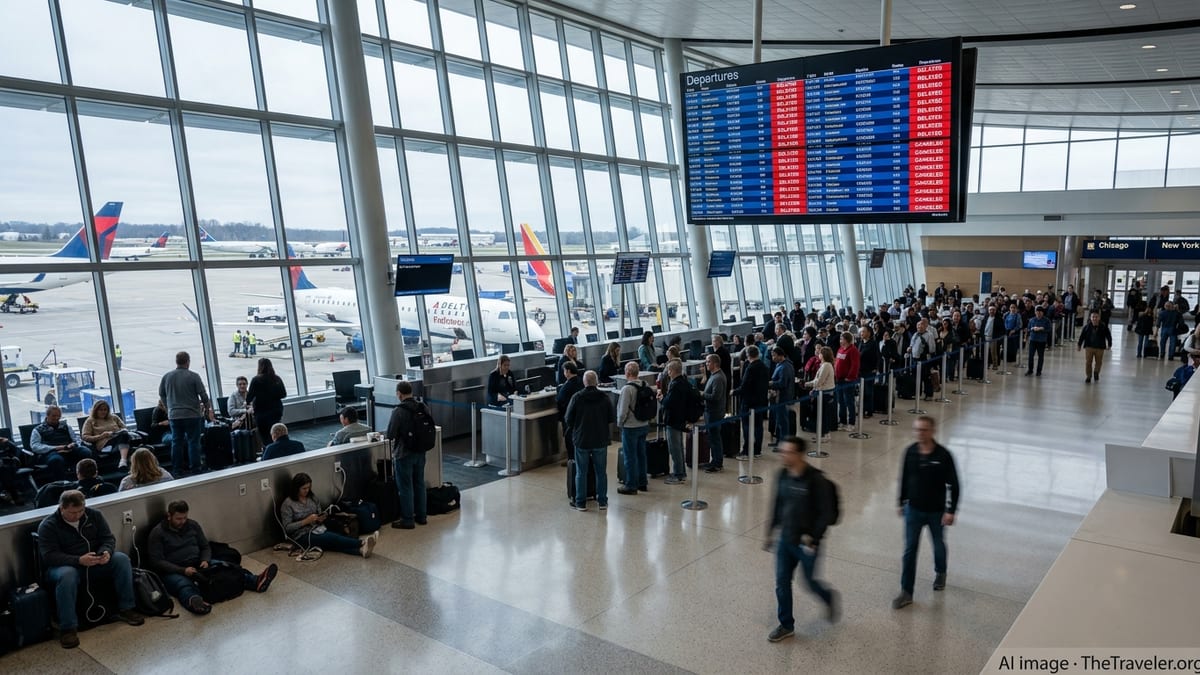
Travel across key U.S. routes faced new disruption on March 26, 2026, as Cincinnati/Northern Kentucky International Airport reported 25 flight delays and 6 cancellations affecting services to Chicago, New York and multiple major domestic cities operated by Endeavor Air, Delta Air Lines and Southwest Airlines.
Get the latest news straight to your inbox!
Disruptions Ripple Out from a Key Midwest Gateway
The latest operational difficulties at Cincinnati/Northern Kentucky International Airport, commonly known by its code CVG, underscored the vulnerability of the U.S. domestic network to localized problems at regional hubs. Publicly available flight tracking data for March 26 showed delays accumulating through the morning and early afternoon on a mix of regional and mainline services, particularly those operated by Delta and its regional affiliate Endeavor Air, along with several Southwest Airlines departures.
Although the total of 25 delays and 6 cancellations represents a fraction of CVG’s daily traffic, the impact on travelers was amplified because many of the affected flights connect into larger hub airports. Passengers heading for onward connections at Chicago and New York area airports, including Chicago O’Hare, Chicago Midway, New York LaGuardia and John F. Kennedy International, faced missed links, extended layovers and last minute rebookings.
The pattern follows a broader trend in U.S. aviation in which relatively small numbers of disrupted departures at secondary hubs can create outsized knock-on effects across the national network. Federal data and recent air travel consumer reports highlight that regional carriers and short-haul routes often bear the brunt of schedule adjustments during periods of strain, while mainline services attempt to preserve long‑haul connectivity.
Routes to Chicago, New York and Other Hubs Most Affected
Reports indicate that the bulk of the disruptions at CVG on March 26 centered on high‑frequency business and leisure corridors linking Cincinnati with major metropolitan areas. Services to Chicago and New York, normally among the most heavily used connections from CVG, saw a concentration of late departures as crews, aircraft rotations and ground handling struggled to recover from earlier delays.
Endeavor Air, operating regional jets for Delta, featured prominently among the delayed flights, particularly on shuttle‑style legs into Chicago and New York where tight turnarounds leave limited buffer for operational hiccups. These routes are especially sensitive because even short delays can cause missed connections for travelers heading onward to the West Coast, the Southeast or international destinations via hub banks.
Southwest Airlines, which uses CVG primarily for domestic point‑to‑point service, also recorded schedule disruptions on departures to large U.S. cities. For many passengers relying on single‑ticket itineraries without traditional interline protections, a cancellation or long delay can mean same‑day travel plans are no longer viable, prompting last‑minute hotel stays or complete trip changes.
Published airport statistics show that CVG plays an important role as both an origin and connecting point in the Ohio–Kentucky–Indiana region. When multiple carriers simultaneously encounter operational challenges there, the effect is quickly felt in gate areas at both departure and arrival airports across the Midwest and East Coast.
Operational Strain Adds to a Season of Weather and System Pressures
The disruptions at CVG on March 26 are unfolding against a backdrop of wider strain on the North American air network in March 2026. A major blizzard and associated severe weather system earlier in the month brought heavy snow, ice and strong winds to large parts of the Midwest and Great Lakes, contributing to thousands of delays and cancellations and leaving airlines to work through lingering crew and aircraft displacements in the weeks that followed.
According to published coverage and government summaries of recent travel performance, carriers across the United States have been juggling a combination of weather‑related recovery, crew scheduling constraints and ongoing efforts to stabilize operations following several years of elevated disruption. These challenges have often been most visible at connection‑heavy airports where regional and mainline operations intersect, a description that fits CVG’s evolving role between local and national traffic flows.
Historical data from air travel consumer reports also indicate that regional partners such as Endeavor Air are frequently tasked with absorbing schedule changes when conditions deteriorate, either through targeted cancellations or rolling delays intended to protect larger aircraft and long‑haul itineraries. This dynamic can leave travelers on shorter domestic legs especially vulnerable when irregular operations arise.
Passengers Confront Missed Connections and Longer Journey Times
For travelers moving through CVG, the immediate impact of 25 delays and 6 cancellations is measured in longer lines, crowded gate areas and changing departure boards. Those booked on early‑day flights to Chicago or New York may be reprotected onto later departures, sometimes with new routings through alternative hubs such as Atlanta, Detroit or Denver to reach their final destinations.
Industry analyses of past disruption episodes show that even modest clusters of delays can translate into significant additional travel time once missed connections, rebookings and overnight stays are factored in. In practice, a 60‑ to 90‑minute delay out of CVG may lead to many more hours added to a journey if the original connecting bank at a major hub has already closed when passengers arrive.
Publicly available consumer guidance from transportation agencies emphasizes that travelers affected by same‑day cancellations or substantial delays should check airline communications frequently, monitor flight status tools and review carrier policies for rebooking and service recovery. Many major airlines now publish service commitment dashboards that outline meals, hotel and transportation options when disruptions fall within the carrier’s control.
What the Disruptions Reveal About CVG’s Growing Role
Beyond the immediate inconvenience for hundreds of passengers, the day’s disruptions at CVG highlight how the airport’s network has evolved. Once known primarily as a large hub for a single legacy carrier, CVG has in recent years diversified its mix of airlines and routes, adding services from low‑cost and ultra‑low‑cost carriers alongside long‑standing operations from Delta and its partners.
Industry observers note that this diversification has generally improved connectivity and fare competition for travelers in the Cincinnati region, but it has also introduced additional complexity on the airfield and in terminal operations. Coordinating multiple carriers with different scheduling philosophies, fleet mixes and turnaround practices can make recovery from irregular operations more challenging, especially when several airlines are contending with delays at the same time.
As Endeavor Air, Delta and Southwest work through the effects of the 25 delays and 6 cancellations recorded on March 26, attention is likely to focus on how quickly the local system returns to normal and whether residual impacts continue into subsequent days. For travelers planning to pass through CVG or connect onward to Chicago, New York and other major U.S. cities, monitoring flight status closely and allowing extra time for connections may remain prudent in the short term.