

More news on this day
Canadian air travel has stumbled into April 2026 with a fresh wave of disruption, as publicly available data and media tallies point to more than 300 flight delays sweeping major hubs in the first week alone.
Get the latest news straight to your inbox!
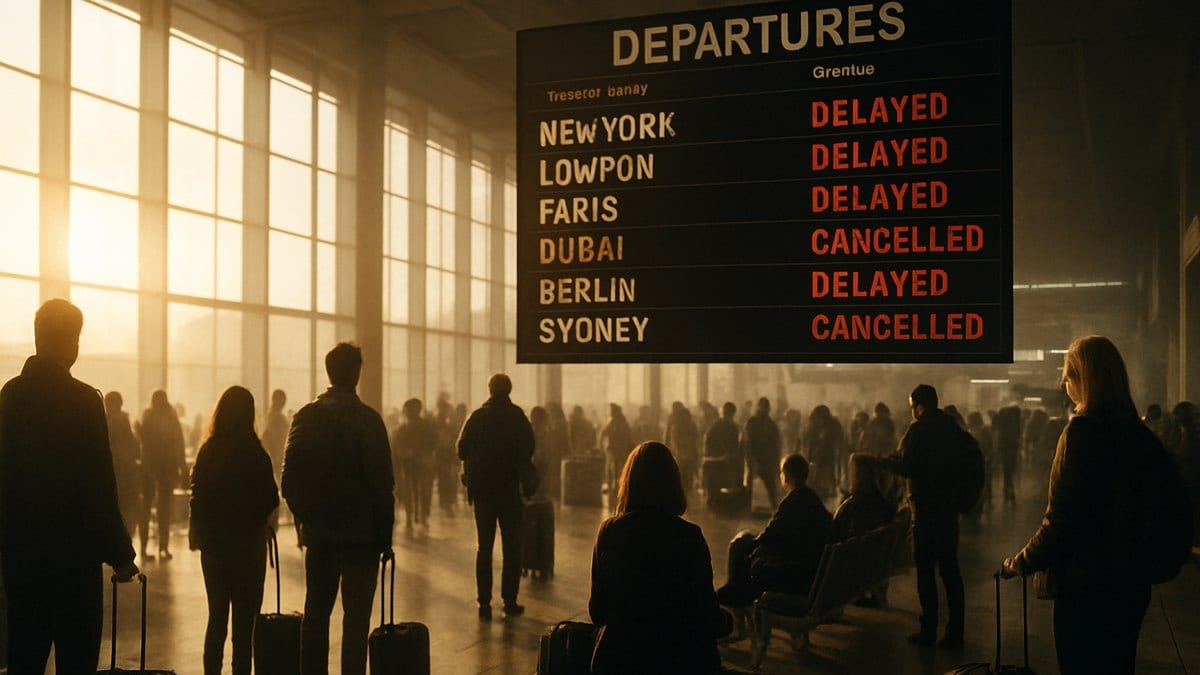
Early April Brings a New Disruption Wave
Reports from aviation trackers and travel industry outlets show that Canadian hubs have experienced repeated turbulence in the opening days of April 2026. A succession of late-season winter systems and knock-on effects from stormy conditions over the United States have driven day-after-day irregular operations, particularly at Toronto Pearson, Vancouver, Montreal Trudeau, Calgary and Winnipeg.
On 3 April, one set of figures cited by industry coverage described 174 delays and 13 cancellations tied largely to Air Canada services across Toronto, Montreal, Vancouver, Ottawa and Calgary, underscoring how a single carrier’s network challenges can ripple through multiple airports in the same day.
Another snapshot two days later highlighted 224 delays and 24 cancellations across Calgary, Montreal, Toronto, Vancouver and Winnipeg on 4 April, as delays stacked up and aircraft and crews struggled to return to regular rotations. By 6 April, travel outlets were reporting totals in the range of 312 delays and around 70 cancellations nationwide, meaning that within a short span in early April, Canadian hubs had already seen well over 300 delayed flights.
Taken together, these tallies outline a disruptive start to April, with at least 311 delays recorded across multiple days and airports, and show how quickly minor schedule slippage can snowball into large-scale network congestion.
Toronto, Montreal and Vancouver Bear the Brunt
Toronto Pearson has again emerged as the focal point of disruption, reflecting its role as Canada’s largest and busiest hub. Published breakdowns for 4 April indicate that Pearson alone accounted for about 100 delays and 11 cancellations that day, far more than any other airport in the country. Average departure delays at Toronto were reported at more than an hour during some peaks, amplifying the strain on aircraft turnaround times and connection windows.
Montreal Trudeau and Vancouver International also faced sustained irregular operations. On 4 April, Montreal was associated with roughly 45 delays and 9 cancellations, while Vancouver logged a similar delay count and a smaller number of cancellations. Even when outright cancellations remained limited, rolling departure pushes of 30 to 60 minutes compounded crowding at gates and security lines.
Calgary and Winnipeg, though smaller in volume, were not spared. Data collated in travel-industry reporting for the same period pointed to nearly 30 delays and a handful of cancellations in Calgary on 4 April, and a modest but still disruptive cluster of schedule changes in Winnipeg. Additional coverage from early April singled out Halifax and other regional gateways as feeling secondary impacts when delayed aircraft failed to arrive from the big hubs on time.
The pattern reflects a familiar hierarchy: when disruptions hit, the country’s core hubs absorb the largest share of delays and cancellations, and smaller airports feel the aftershocks later in the day as aircraft and crews arrive out of sequence.
Weather, U.S. Storms and Staffing Pressures Intersect
Several overlapping forces are driving the current wave of disruptions. Late-season winter weather remains an important factor, with snow, freezing rain and high winds still affecting runways and de-icing operations in parts of Canada and the northern United States well into April. One analysis of early April performance linked hundreds of Canadian delays directly or indirectly to severe storms over the U.S. Midwest and Northeast, which slowed or shut down key cross-border corridors.
Because Canadian airlines lean heavily on U.S. connections for both business and leisure traffic, closures or ground delays at major American hubs quickly feed back into Canadian schedules. Flights to U.S. cities that are held or cancelled can leave aircraft and crews stranded on either side of the border, resulting in knock-on delays for purely domestic routes later in the day.
Operational and staffing constraints are compounding the weather effects. Public commentary from aviation observers has pointed to continuing pressure on staffing levels at security, customs and ground-handling operations, particularly during holiday periods such as Easter. When large numbers of passengers arrive at once after a bank of delayed flights, already thin staffing can translate into long queues and additional missed connections, even after weather-related restrictions ease.
Industry-focused publications have also highlighted that Canadian carriers are still fine-tuning schedules after several years of pandemic-era shifts, labor disputes and cost-cutting. With little spare capacity in the system, even modest weather or technical issues can trigger disproportionate disruption.
Impact on Travellers Across the Country
The practical effect for travellers in early April has been a familiar mix of long lines, crowded terminals and uncertain departure times. Reports from passengers at Toronto, Montreal and Vancouver describe hours-long waits to rebook missed connections after evening banks of flights departed late or were cancelled outright.
Travel coverage detailing conditions on 3 and 4 April noted that lounges, boarding areas and customer service desks at major hubs were quickly overwhelmed once delays climbed into the triple digits. Families returning from spring break holidays, business travellers on tight schedules and international passengers with onward connections all appeared among those searching for scarce alternative seats.
Even where flights operated, late departures often meant disrupted onward plans. In some cases, passengers who had booked same-day domestic connections through Toronto or Montreal reported having to stay overnight after inbound flights from the United States or Europe arrived significantly behind schedule. Others faced long ground holds while aircraft awaited de-icing or fresh crew, extending total journey times by several hours.
Regional travellers have also felt the ripple effect. When aircraft departing from major hubs to smaller cities such as Halifax, Ottawa or Kelowna pushed back late or were cancelled, local communities saw reduced service for the remainder of the day, with some routes consolidated or rescheduled to the following morning.
What Travellers Can Expect Through April
Looking ahead through the rest of April 2026, publicly available forecasts and recent performance trends suggest that travellers should prepare for continued pockets of disruption, even as winter conditions gradually ease. Climate data and recent storm patterns indicate that significant snowfall and freezing rain can still occur in parts of Canada in mid to late April, and aviation analysts note that spring often brings volatile weather that complicates planning.
At the same time, demand remains robust, especially on domestic and transborder routes. Industry analysis has pointed to strong spring travel interest despite some softening in U.S.-bound traffic overall, meaning that many flights are operating close to capacity. In a full aircraft environment, there is limited flexibility to re-accommodate passengers when delays accumulate.
Consumer-focused travel reporting emphasizes that passengers flying through Canadian hubs this month should build extra time into connections, particularly when changing terminals or clearing customs. Monitoring flight status and airport conditions before leaving for the airport can help travellers adjust plans if a wave of delays begins to build.
For airlines and airports, the early-April disruption numbers are a reminder that resilience remains a central challenge. With at least 311 recorded delays across a handful of days and hubs, April 2026 is underscoring how Canada’s aviation network continues to walk a narrow line between normal operations and widespread disruption whenever weather, staffing and capacity pressures converge.