

More news on this day
Flight delays in the United States are quietly draining travelers’ wallets, with recent analyses suggesting passengers shoulder roughly $18 billion a year in hidden expenses ranging from lost time to unexpected meals and hotels.
Get the latest news straight to your inbox!
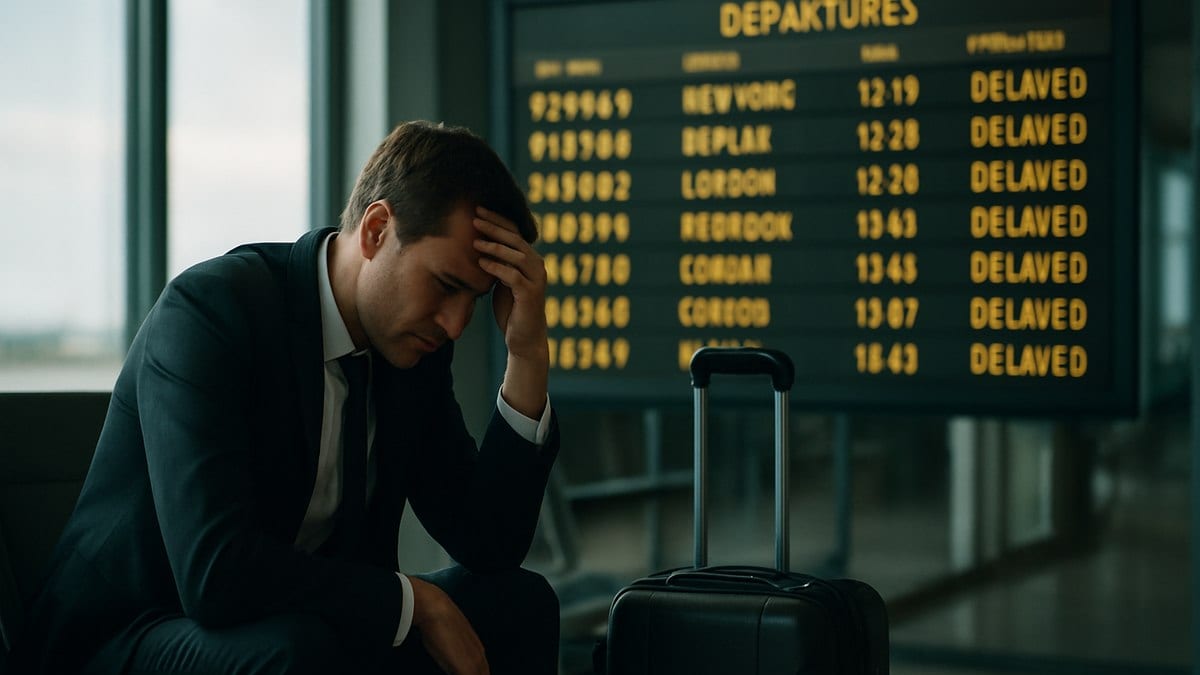
A Growing Economic Drag Hidden in Plain Sight
Publicly available economic studies and industry filings paint a picture of flight delays as a persistent drag on the U.S. economy, with total annual costs commonly estimated in the range of 30 billion to 34 billion dollars when airline operations, passenger time and wider knock-on effects are combined. Within that total, researchers and industry groups have singled out the loss of passenger time as a major component, valued at tens of billions of dollars per year when measured against average hourly wages and productivity benchmarks.
Analysts often treat the value of passengers’ time as a distinct category because it captures hours spent in terminals, on tarmacs or rebooking affected trips rather than working, resting or spending time at destinations. Using time-value assumptions commonly employed by U.S. transportation agencies, several recent data-driven summaries place passenger time losses in the low tens of billions annually. When combined with out-of-pocket spending on hotels, ground transport, food and replacement flights, that burden on individual travelers approaches an estimated 18 billion dollars per year in hidden costs.
The figure is considered “hidden” because much of it never appears on a ticket or airline balance sheet. Instead, it surfaces as missed meetings, extra child-care hours, last-minute airport hotels or nonrefundable reservations at destinations that go unused when connections fail. For leisure travelers, those losses are often absorbed as disappointment; for business travelers, they can ripple into missed deals or delayed projects.
Although the exact totals vary by methodology and year, the broad trend from government-sponsored research, airline trade group data and independent market reports points in the same direction: delays remain structurally costly, and a substantial share of that cost has been shifted onto passengers.
How Delay Costs Add Up for Individual Travelers
For a single disrupted itinerary, the extra costs can escalate quickly. Regulatory filings and consumer-focused analyses released over the past year indicate that travelers facing a significant delay or cancellation typically incur several hundred dollars in additional expenses. One recent filing cited survey data suggesting an average of roughly 385 dollars in added spending and lost value per disruption, including hotel stays, airport meals, ride-hailing to and from alternate airports and, in some cases, paying out of pocket for new tickets on other carriers.
Even when airlines provide vouchers or rebooking assistance, those benefits seldom cover secondary costs such as missed prepaid tours, event tickets or nights at vacation rentals. Families traveling together can see their expenses multiply across several passengers at once, while solo travelers may have to absorb the full cost of a hotel room or rideshare they had not budgeted for. For those on tight budgets, an overnight delay can turn a carefully planned low-cost trip into a financially stressful experience.
Time is an equally significant factor. Studies that assign a dollar value to delay hours show that even relatively short disruptions, when repeated across millions of passengers, translate into billions in aggregate costs. Commuters relying on air shuttles, small business owners and professionals with tightly timed meetings are particularly exposed. The lost time is rarely compensated in the U.S. system, and it often falls into a gray area between personal and professional loss.
Insurance products and premium credit cards promise some relief, but recent market reports highlight that many travelers either do not purchase coverage or misunderstand the conditions needed to trigger claims. As a result, a large share of the financial fallout from delays remains effectively uninsured and borne directly by passengers.
Systemic Strains Behind Rising Disruption
The surge in hidden costs has coincided with a period of intense strain on the U.S. air travel system. Industry and central bank research published in 2024 and 2025 describe a network operating close to capacity at many major hubs, with limited slack to absorb bad weather, air traffic control constraints or technical issues. When a single storm or software problem hits a key hub or a large carrier, disruptions can cascade throughout the network for days.
Past episodes, such as holiday-period meltdowns and large-scale scheduling crises at major airlines, have demonstrated how quickly operational failures translate into significant financial losses for carriers and mass inconvenience for passengers. Company filings and regulatory settlements following such events have detailed hundreds of millions of dollars in airline costs for reimbursement, overtime and corrective measures. For travelers, those same episodes often involved long lines, scarce hotel rooms and expensive last-minute rebookings, even when carriers eventually provided vouchers or partial compensation.
Recent analyses of delay patterns show that late-arriving aircraft and carrier-related issues, including staff shortages and maintenance-driven groundings, account for a substantial share of delay hours on top of weather-related disruptions. This mix makes it difficult for travelers to predict which flights are most at risk, and leaves many exposed to unplanned overnight stays or missed connections despite building extra buffer time into their itineraries.
Infrastructure and staffing constraints in air traffic control have also been cited in recent research as contributing factors. Studies focusing on specific events, including government shutdowns, have quantified sharp spikes in delay costs when key federal aviation services are limited. Those findings underscore how dependent the system is on well-resourced, continuously functioning control and safety operations.
Limited Passenger Protections Keep Costs on Travelers
The policy environment in the United States plays a central role in determining who bears the cost of disruption. Unlike in the European Union and some other jurisdictions, U.S. rules generally do not require airlines to pay standardized cash compensation for long delays or cancellations that are within a carrier’s control. Attempts in recent years to strengthen passenger rights, including proposals for automatic cash reimbursements in certain delay scenarios, have stalled or been scaled back, according to regulatory documents and public reporting.
Where new protections have emerged, they have tended to be narrow. Settlements after major operational breakdowns at individual airlines have led to targeted voucher programs and civil penalties, but those remedies typically apply only to specific events and often rely on future travel credits rather than direct cash payments. Consumer advocates note that travel credits effectively keep the funds within the airline ecosystem and may not fully offset the real-world cash expenses travelers incurred during the disruption.
Industry groups argue in public filings that imposing broad mandatory compensation for delays would raise operating costs and ticket prices, potentially reducing service on marginal routes. Consumer organizations counter that current rules leave passengers with limited leverage and poor visibility into their true financial exposure when they book a ticket. In that environment, the hidden 18 billion dollar burden on travelers persists as a structural feature of the U.S. air travel market.
Some airlines have voluntarily expanded commitments on items such as hotel rooms and meal vouchers when disruptions are within their control, especially following high-profile breakdowns and political pressure. However, publicly available comparison tools from federal agencies and consumer groups show that coverage still varies significantly by carrier and circumstance, and many situations remain uncovered.
Travelers Adapt With Workarounds, but Exposure Remains High
With systemic reforms uncertain, many frequent flyers have turned to personal strategies to manage the risk. Travel advisors and consumer reports increasingly recommend booking earlier flights in the day, avoiding short connection windows at busy hubs and monitoring weather and operational data before departure. Some travelers split itineraries or choose flexible hotel and rental car rates to reduce the financial impact if flight plans unravel.
Corporate travel departments have also tightened policies in response to disruption data, building additional buffer days into critical trips, encouraging virtual meetings when feasible and purchasing more comprehensive travel insurance for key staff. These measures can limit the worst-case scenarios for some travelers, but they also add indirect costs as trips lengthen and per-diem and accommodation budgets rise.
Despite these adaptations, the underlying numbers suggest that exposure to delay-related losses remains widespread. With roughly one in five U.S. flights in recent years experiencing significant delays according to aggregated market statistics, the probability that a regular traveler will face a costly disruption over the course of a year is high. For occasional travelers who lack elite status or travel management support, the likelihood of absorbing unplanned expenses is even greater.
As demand for air travel continues to rebound and the nation’s aviation infrastructure strains under record passenger volumes, the estimated 18 billion dollars in hidden passenger costs is likely to remain a feature of the landscape. For now, U.S. travelers navigate that reality with a mix of caution, contingency planning and acceptance that the true price of a ticket may extend far beyond the initial fare.