

More news on this day
Travelers across South America faced a difficult weekend as São Paulo Guarulhos International Airport registered dozens of delayed departures and several cancellations on services operated by LATAM, Azul, and GOL, disrupting connections to key regional hubs including Rio de Janeiro, Buenos Aires, and Lima.
Get the latest news straight to your inbox!
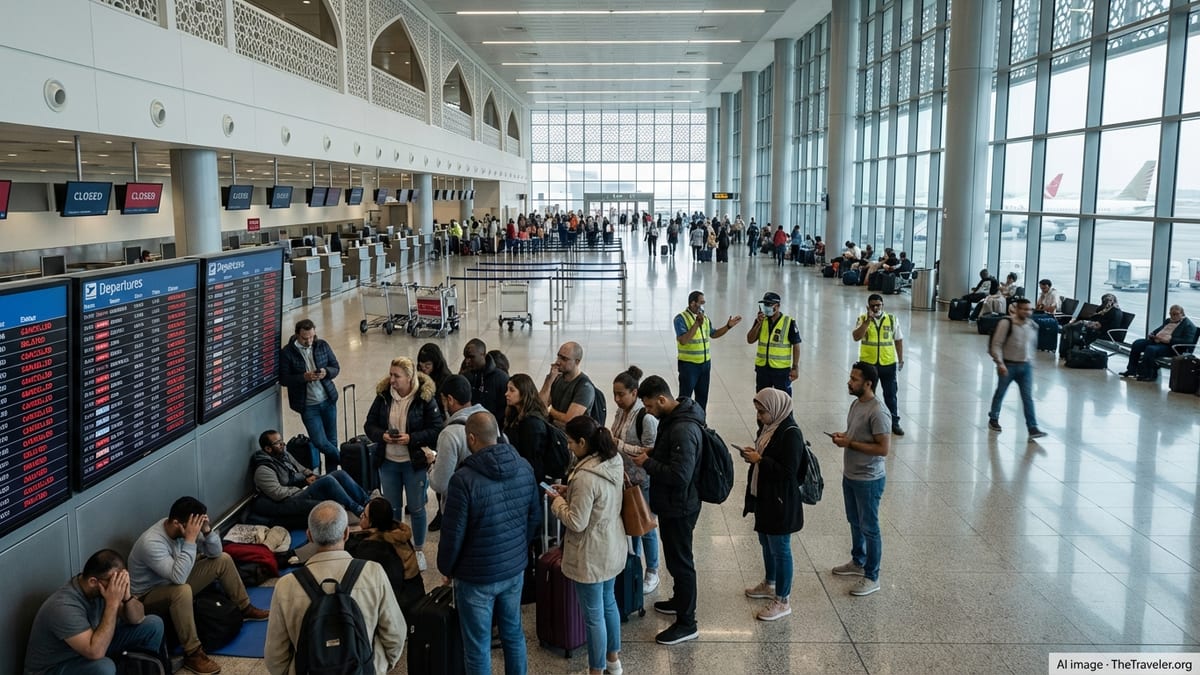
Guarulhos Becomes Focal Point for Regional Flight Disruptions
Operational data from Brazil’s main aviation tracking platforms and media monitoring on April 11 and 12 indicate that São Paulo Guarulhos International Airport recorded 53 delayed flights and 3 cancellations within a short window, concentrating disruption on routes served by LATAM Airlines Brasil, Azul Brazilian Airlines, and GOL Linhas Aéreas. These irregularities affected both domestic and international departures and arrivals, including services connecting Brazil with Argentina and Peru.
Publicly available reporting notes that Guarulhos has already been under pressure from a broader wave of delays across the Brazilian network, with São Paulo and Rio de Janeiro among the hardest hit cities. Within this context, the additional disruptions at Guarulhos over the weekend added strain to a hub that handles some of the region’s most heavily traveled corridors linking São Paulo with Rio de Janeiro, Buenos Aires, and Lima.
While the exact mix of operational and weather related causes has not been fully detailed in public sources, schedule tracking platforms show knock on effects across multiple time bands, particularly during peak travel periods. These compounding delays created challenges for travelers relying on Guarulhos as a key transfer point for onward regional flights.
Guarulhos is the primary international gateway for São Paulo and one of Latin America’s busiest airports, handling extensive networks for LATAM, Azul, and GOL. The concentration of operations for these carriers means that any period of disruption can escalate quickly, affecting both point to point passengers and those making same day connections to neighboring countries.
Impact on Routes to Rio de Janeiro, Buenos Aires, and Lima
Across the disrupted period, the bulk of delays and cancellations were linked to high frequency routes that connect São Paulo with other major South American hubs. Published schedules show dense traffic between Guarulhos and Rio de Janeiro’s Galeão and Santos Dumont airports, as well as multiple daily services to Buenos Aires and Lima operated primarily by LATAM and GOL, with Azul contributing additional domestic feed.
On the Rio de Janeiro corridor, these irregularities translated into late departures and arrivals on shuttle style services that normally support business and leisure flows between Brazil’s two largest cities. Delayed Guarulhos departures to Galeão and return services reduced flexibility for travelers aiming to complete same day round trips or secure onward international connections via either city.
Traffic between São Paulo and Buenos Aires also faced pressure. According to publicly available flight status data, services on this route were already running close to capacity at the start of the weekend, which left limited room to re accommodate passengers from late or canceled flights. This created longer waits at airport check in and customer service counters and forced some travelers to accept rerouting options through alternative Brazilian or Argentine cities.
Links between São Paulo and Lima were likewise affected, particularly for travelers using LATAM’s Lima hub for onward connections to other Peruvian destinations and the wider Andean region. Even modest schedule slippage at Guarulhos can cause passengers on these routes to miss late evening or overnight departures from Lima, resulting in extended layovers or the need for overnight stays.
Passenger Experience: Missed Connections and Longer Airport Stays
The combination of 53 delays and 3 cancellations across LATAM, Azul, and GOL translated into hours of additional waiting time for many travelers. Reports from flight tracking and consumer platforms on April 11 and 12 highlight a pattern of rolling delays, where departure times were repeatedly pushed back in small increments, contributing to uncertainty at the gate and in terminal areas.
For passengers connecting through Guarulhos from secondary Brazilian cities, even short hold ups on inbound flights had outsized consequences. Tight connection windows to international services bound for Buenos Aires and Lima meant that a delay of 30 to 60 minutes on a domestic leg could render onward boarding impossible, particularly where security and immigration checks were involved.
Travelers who missed connections in São Paulo often encountered limited same day alternatives, as many South American routes operate in concentrated waves rather than evenly across the day. In several cases, publicly available schedules show that disrupted passengers needed to shift to next day departures or accept rebooking through other hubs, including Rio de Janeiro or alternative Argentine airports.
Extended waiting times inside terminals also added to the strain, with peak hour congestion at check in counters and boarding gates. Families traveling with children and elderly passengers faced particular inconvenience during evening periods when delays tended to cluster and services were already operating close to capacity.
Airline Operations Under Pressure Across Brazil
The disruptions at Guarulhos did not occur in isolation. Recent coverage from Brazilian travel and business media outlines a broader pattern of operational stress affecting major airports in São Paulo, Rio de Janeiro, and Florianópolis, with more than 200 delays and several dozen cancellations reported nationwide on April 11 alone involving LATAM, GOL, Azul, and other carriers.
In this environment, airlines have been working with reduced flexibility to absorb unplanned schedule changes. Networks operated by LATAM, Azul, and GOL rely heavily on fast aircraft turnarounds at hubs such as Guarulhos and Galeão, so even short ground handling or crew related delays can trigger a ripple effect across multiple flight rotations during the day.
Operational data from recent weeks also indicate higher load factors on many domestic and regional routes, a sign of resilient demand as travelers continue to move between Brazil and neighboring countries. While strong demand is generally positive for airlines, it also limits the availability of spare seats for rebooking affected passengers when irregular operations occur.
Observers of Brazil’s aviation sector note that seasonal factors, staffing constraints, and air traffic management challenges have periodically converged to create pockets of disruption, especially during weekends and holiday periods. The pattern seen at Guarulhos over the latest weekend fits within this wider context, highlighting the sensitivity of regional air travel to operational bottlenecks.
What Travelers Can Do When Disruptions Hit Guarulhos
Given the recent wave of delays and cancellations, travel advisories from consumer organizations and frequent flyer communities emphasize the importance of building extra connection time when planning itineraries through São Paulo Guarulhos, especially for links to Rio de Janeiro, Buenos Aires, and Lima. Longer layovers can provide a buffer when domestic segments run late or when immigration and security queues are longer than expected.
Travel experts commonly recommend monitoring flight status through airline apps and independent tracking platforms on the day of travel. Real time updates can help passengers anticipate timing changes, adjust ground transport to and from the airport, and, in some cases, contact airlines earlier to explore rebooking options before flights are fully disrupted.
Passengers facing significant delays or cancellations are also encouraged to review their rights under Brazilian consumer protection rules and the specific conditions of carriage of LATAM, Azul, and GOL. Depending on the length and cause of the delay, travelers may be entitled to assistance at the airport, such as refreshments, communication support, or accommodation, as provided for in each carrier’s policies and local regulations.
For the coming days, travelers using Guarulhos as a departure or connection point to Rio de Janeiro, Buenos Aires, or Lima may wish to factor recent disruption patterns into their plans. Building additional time into itineraries and preparing contingency options can help mitigate the impact if further operational challenges arise across Brazil’s busiest air hub.