

More news on this day
Travel across Türkiye has been hit by a new wave of disruption as major Istanbul airports report 141 flight delays and nine cancellations, affecting services by Pegasus Airlines, Gulf Air, Qatar Airways and several other international carriers and forcing thousands of passengers to adjust or abandon their plans at short notice.
Get the latest news straight to your inbox!
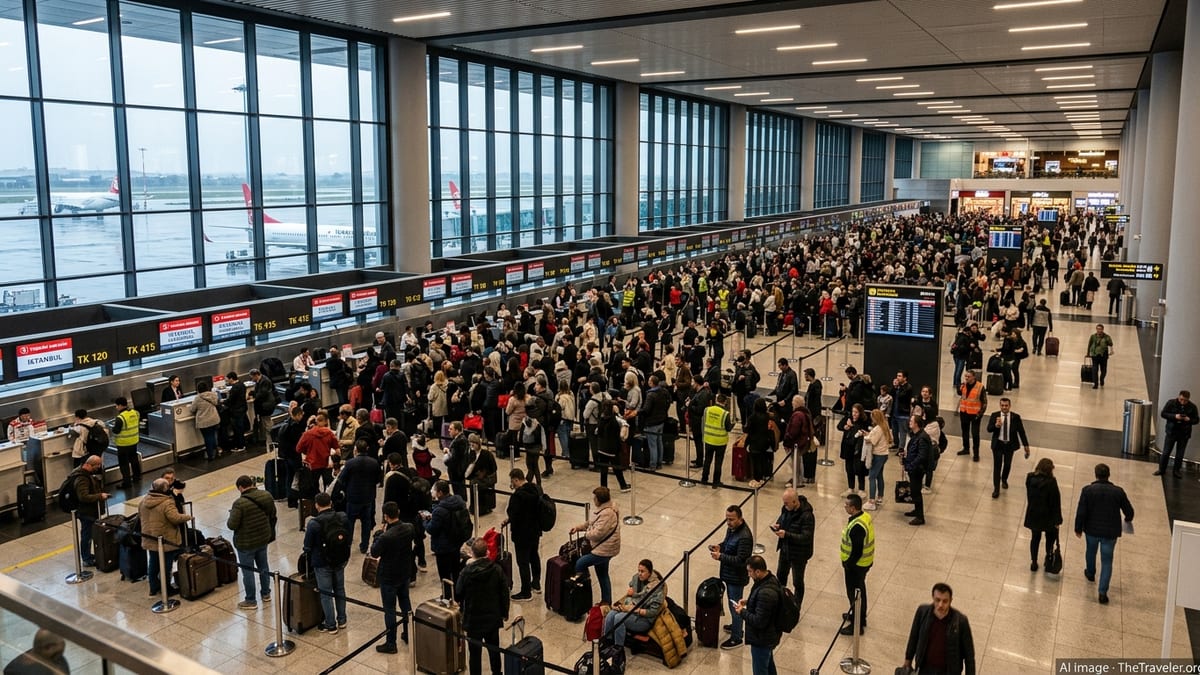
Wide-Ranging Disruptions at Istanbul’s Main Gateways
Published flight-status dashboards and airport data for Istanbul’s main gateways show a pronounced build-up of delays and cancellations, with 141 flights running behind schedule and nine services cancelled. The impact is concentrated at the city’s busiest hubs, where domestic and international operations intersect, creating knock-on effects throughout Türkiye’s aviation network.
The disruption affects a mix of short-haul and long-haul routes, including intra-Türkiye connections, regional services across the Middle East and Europe, and select intercontinental links. As aircraft arrive late into Istanbul, outbound rotations are pushed back, generating rolling delays across the day and into the evening peak.
While the number of outright cancellations remains limited compared with the overall schedule, the high volume of delayed departures has led to extended queueing at check-in, security and rebooking desks, as travelers seek alternative connections or overnight options.
Multiple Airlines, Shared Operational Strain
Operational data and publicly available tracking services indicate that Pegasus Airlines, Gulf Air and Qatar Airways are among the carriers with delayed or cancelled operations at Istanbul, alongside other regional and European airlines. The pattern suggests a shared strain on capacity rather than a single airline-specific issue, with carriers adjusting rotations, swapping aircraft and consolidating services to maintain core connectivity.
Pegasus Airlines, a major low-cost operator in Türkiye, has seen several of its domestic and regional flights from Istanbul affected, disrupting popular leisure and business routes. Gulf Air and Qatar Airways, which rely on Istanbul as a key spoke in their wider hub-and-spoke systems, are contending with schedule changes that can ripple through their networks, influencing onward connections to the Gulf, Asia and Africa.
Industry trackers show that other carriers with a strong presence in Istanbul, including European and Middle Eastern airlines, have also adjusted timings. This mix of late arrivals, aircraft repositioning and crew-availability challenges has contributed to an uneven operating day at the airports, with some flights departing near on time while others face multi-hour delays.
Weather, Congested Airspace and Knock-On Effects
Reports from aviation analysts and regional media point to a combination of factors behind the latest disruption. Periods of reduced visibility and changing wind conditions over northwestern Türkiye, along with broader congestion in regional airspace, have constrained the number of takeoff and landing slots available during peak periods at Istanbul’s main airports.
When weather or air-traffic limitations reduce runway throughput, even for a few hours, tightly scheduled operations at large hubs can quickly fall behind. Aircraft are held in departure queues, re-sequenced for arrival, or placed in holding patterns, which in turn pushes back aircraft turnaround times on the ground. Given Istanbul’s role as a major transfer point between Europe, the Middle East and Asia, even small operational slowdowns can reverberate across dozens of routes.
These effects are particularly visible on multi-leg itineraries involving Gulf hubs. A delayed arrival into Istanbul can cause missed connections onward, prompting airlines to rebook passengers on later services or, in some cases, cancel lightly booked flights and consolidate customers onto remaining departures.
Passenger Experience: Long Queues and Rapidly Changing Information
Social media posts and traveler forums describe crowded departure halls, long lines at service desks and frequent schedule updates on information screens as airlines and airport handlers work through the backlog. Many passengers report being notified of revised departure times multiple times in a single day, reflecting a fluid operational environment where estimated off-block times are adjusted as slots become available.
Some travelers have chosen to re-route via alternative hubs in Europe or the Middle East to avoid uncertainties in Istanbul, while others have opted to delay or cancel trips altogether. For passengers with tight onward connections, especially those traveling long-haul, even modest delays can require complete itinerary changes, leading to increased demand at airline call centers and online support channels.
Airport services such as lounges, food outlets and airport hotels are also experiencing heightened demand as travelers face longer dwell times. Families with children and passengers on overnight layovers are particularly affected, with many seeking quiet areas or accommodation as delays stretch into late-night hours.
What Travelers Through Türkiye Should Expect Next
Travel experts note that flight operations typically take several hours, and sometimes an entire operational day, to fully recover after a concentrated period of delays and cancellations at a major hub. As airlines reposition aircraft and crews, schedules in and out of Istanbul may remain fragile, with further minor adjustments likely even as the number of outright cancellations stabilizes.
Publicly available guidance from aviation and consumer organizations emphasizes the importance for passengers of monitoring flight status frequently on the day of departure, arriving at the airport earlier than usual, and preparing for possible extended waits at security and border controls. Travelers connecting through Istanbul are being advised to allow more generous minimum connection times or, where possible, to select itineraries with longer layovers.
For affected passengers, consumer-rights frameworks in Türkiye and the wider region may offer entitlements to rebooking, care and in some cases financial compensation, depending on the cause and length of delay, the operating carrier, and the origin and destination of the journey. Travelers are encouraged to retain boarding passes and any written confirmation of delays or cancellations so they can pursue claims with airlines once their journeys are complete.