

More news on this day
Persistent flight delays across the United States are quietly stripping an estimated $18 billion a year from travelers, as lost time, missed connections and mounting out-of-pocket costs turn routine disruptions into a significant drain on household budgets.
Get the latest news straight to your inbox!
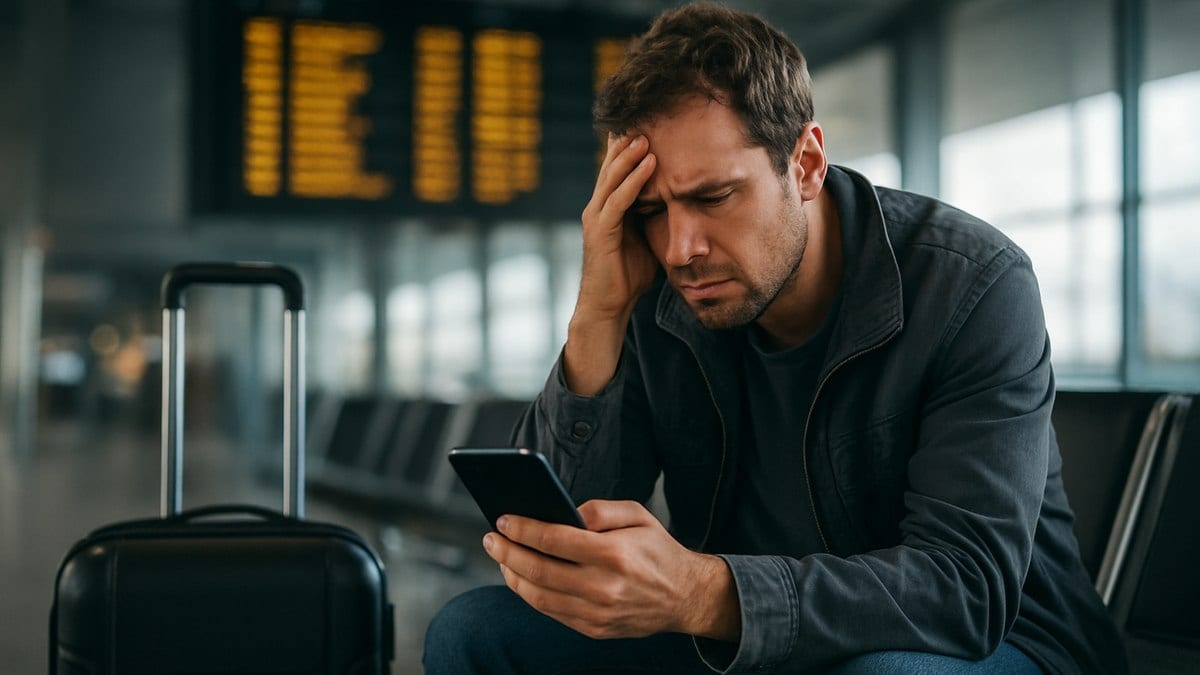
New Estimates Put Passenger Losses in the Billions
The multibillion-dollar price tag attached to U.S. flight delays is built on a growing body of research into the value of passengers’ time and the ripple effects of disrupted trips. Earlier academic work prepared for federal transportation officials placed the annual cost of delays to passengers at about $16.7 billion, using data from the late 2000s. Subsequent analyses of passenger delay, cited in transportation research summaries, have pushed that figure closer to $18 billion when adjusted for inflation and today’s traffic volumes.
Recent industry and policy reports indicate that delays now touch a substantial share of U.S. air travel. Bureau of Transportation Statistics data show that roughly one in five domestic flights arrived at least 15 minutes late in 2023, while other market analyses suggest more than 23 percent of U.S. passengers experienced some form of disruption in 2024. When those delays are multiplied across hundreds of millions of trips, even modest setbacks add up to enormous losses in time and productivity.
To translate minutes into money, several studies apply a standard value for an hour of passenger time, similar to methods used in transportation planning. Airlines for America has highlighted calculations using a value in the range of several dozen dollars per hour, which, when applied to millions of delay hours, produces an annual burden to travelers measured in the tens of billions. Within that broader figure, a conservative band around $18 billion is frequently cited as a reasonable estimate for the share directly borne by passengers in lost time and related costs, separate from what airlines and the wider economy absorb.
The $18 billion estimate does not attempt to capture every indirect consequence, such as missed medical appointments, family events or job opportunities. Researchers note that those impacts are far harder to quantify, suggesting that the real cost to travelers’ lives likely extends beyond the headline number.
Lost Time, Missed Plans and Extra Spending
For individual travelers, the economic drain from delays often begins with simple lost time. Market data compiled in 2026 reports that average arrival delays for U.S. carriers typically run in the 20 to 25 minute range for late flights, with far longer waits during peak disruption periods or major storms. For many passengers, that means additional hours in terminals, on tarmacs or in rebooking queues that were never budgeted into their schedules.
Business travelers are among those most exposed. Recent studies of corporate travel patterns indicate that roughly one in eight business trips saw meetings canceled outright in 2023 because flights did not arrive on time. That translates into lost deals, wasted preparation and additional rebooking expenses that are often only partially reimbursed. Analysts who track delay-related spending estimate that rebooking and schedule changes alone cost U.S. passengers billions of dollars annually.
Leisure travelers feel the impact differently but no less acutely. Consumer surveys summarized in recent flight disruption reports show that missed hotel nights, nonrefundable attraction tickets and prepaid tours routinely turn delays into direct financial losses. For families traveling during school holidays, even short delays can cause missed cruise departures or tour starts, forcing expensive last-minute fixes.
There are also the quieter costs: extra airport meals, rideshare trips after public transit shuts down, and overnight stays when cancellations push travel into the next day. While each incident may represent only tens or hundreds of dollars, aggregated across tens of millions of affected customers, the added spending becomes a major component of the estimated $18 billion passengers lose each year.
Airlines and Infrastructure Struggle With Systemic Strain
Behind the passenger experience lies a system that has been operating under sustained strain. Data compiled from government and industry sources show that air carrier issues, such as maintenance, crew scheduling and aircraft rotations, account for a large share of delays in both 2022 and 2023. National aviation system factors, including congestion, air traffic control constraints and routine weather, contribute another significant portion.
Industry analyses released over the last year estimate that delays cost U.S. airlines more than $50 billion in 2023 when operational expenses such as crew overtime, fuel burn during taxi and gate congestion are included. While those figures represent costs to carriers rather than passengers, they illustrate how tightly the system is stretched and how even small disruptions can cascade throughout the network, creating longer waits and more missed connections for travelers.
The federal government shutdown in late 2025 highlighted the system’s fragility. Public reporting from that period described widespread delays tied to staffing shortages in air traffic control, with thousands of daily disruptions at major hubs over several days. Winter storms in early 2026 brought similar widespread knock-on effects, with tracking services counting thousands of delayed flights in a single weekend.
Airports are also feeling the pressure. Analyses of on-time performance at major U.S. hubs show wide variation: some airports manage to get more than four out of five flights out on time, while heavily congested facilities report delay rates above 30 percent. Capacity constraints at busy hubs, combined with tight airline schedules and strong post-pandemic demand, make it difficult to build the buffers that might shield passengers from routine disruptions.
Policy Shifts and New Rules Aim to Protect Passengers
Regulators have begun to respond to the scale of traveler disruption and its economic toll. The U.S. Department of Transportation has stepped up publication of detailed consumer reports on delays, cancellations and mishandled baggage, providing travelers with more visibility into airline performance. Recent rulemaking proposals seek to clarify when passengers are owed refunds or compensation for significant schedule changes and lengthy delays.
Draft regulatory language released in late 2024 underscores that more than 1.4 million domestic flights in a single recent year arrived 15 minutes or more behind schedule, affecting tens of millions of passengers. Policy summaries prepared for these rulemakings reference external research that pegs the wider economic cost of disruptions to the U.S. economy at between $30 billion and $34 billion annually, underlining the argument that stronger consumer protections could have broader benefits.
At the same time, the Federal Aviation Administration and industry groups are promoting investments in air traffic control modernization and airport infrastructure. Technical papers and policy briefs have cited previous estimates that delays across the national airspace system cost tens of billions of dollars a year when airline, passenger and productivity impacts are combined. Supporters of modernization argue that upgrading systems and adding capacity could cut into the $18 billion borne directly by travelers.
However, some analysts caution that regulatory changes alone may not quickly ease the burden on passengers. They note that structural factors such as weather vulnerability, hub congestion and labor shortages in key aviation roles remain difficult to resolve, suggesting that delays will continue to impose substantial costs on travelers for years to come.
What Travelers Can and Cannot Control
While the scale of the problem is largely systemic, some of the latest data offer guidance on how travelers might reduce their exposure to the worst disruptions. Rankings of airport on-time performance published this year show that certain mid-sized hubs consistently outperform larger coastal gateways, with higher percentages of punctual departures and arrivals. Choosing itineraries that connect through these more reliable airports can, in some cases, lower the risk of long delays.
Analyses of airline performance similarly reveal that some U.S. carriers maintain stronger on-time records than others, even when operating in the same congested airspace. For passengers with flexibility, selecting flights earlier in the day, flying nonstop where possible and avoiding extremely tight connections can all improve the odds of arriving as planned, though they do not eliminate the risk.
Consumer advocates point out that, in contrast to travelers in the European Union, most U.S. passengers have limited rights to financial compensation when delays are not tied to tarmac-time rules or cancellations that clearly trigger refund requirements. As a result, a significant portion of the $18 billion in annual losses is effectively absorbed by the public, whether in the form of unpaid time, nonrefundable purchases or additional spending to salvage disrupted trips.
With demand for air travel expected to remain strong, researchers anticipate that the economic burden of delays on U.S. travelers will persist unless major investments or policy shifts meaningfully change how the system operates. For now, the billions in lost time and added costs remain an embedded, if often invisible, surcharge on flying in the United States.