

More news on this day
Flight delays in the United States are quietly stripping an estimated $18 billion a year from travelers, as missed connections, lost time and mounting out-of-pocket costs turn routine disruptions into a major economic drain on passengers.
Get the latest news straight to your inbox!
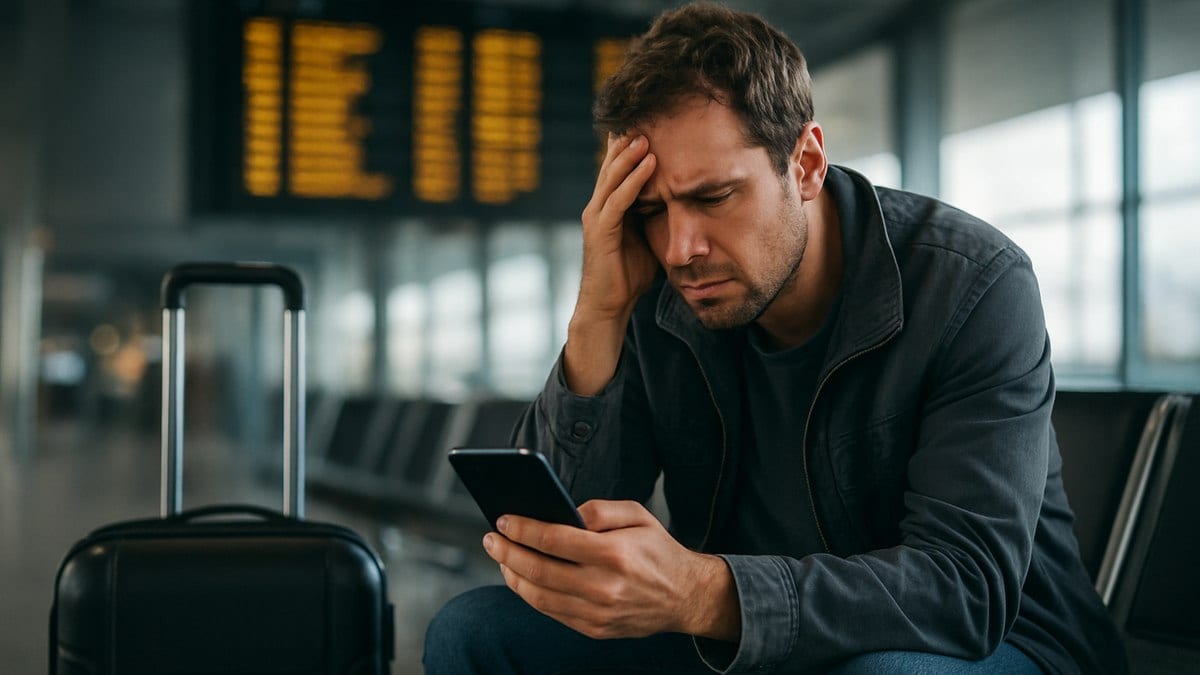
A Growing Price Tag on Passenger Time
Recent assessments of air traffic performance indicate that the cost of delays borne directly by U.S. passengers has climbed into the range of roughly $18 billion annually. That figure reflects not only the inconvenience of sitting in terminals or on taxiways, but a calculated value of travelers’ time based on average hourly wages and productivity benchmarks used in transportation economics.
Government-linked analyses of the national airspace system show that total delay costs, including airlines’ operational expenses and wider economic knock-on effects, have exceeded $30 billion in some recent years. Within that total, the passenger component has been estimated at just over half, yielding an annual burden for travelers that falls near the 18 billion dollar mark, even as overall on-time arrival rates show periods of modest improvement.
The methodology behind these estimates typically combines data from the Bureau of Transportation Statistics with economic models that assign a dollar value to each minute of delay beyond a reasonable schedule buffer. Time lost to missed connections, cancellations that force overnight stays, and rerouting through additional hubs is converted into monetary terms, illustrating how small disruptions at the flight level accumulate into a nationwide cost measured in billions.
Analysts note that these costs are not evenly distributed. Business travelers who lose working hours, families juggling nonrefundable hotel bookings, and passengers traveling to time-sensitive events can experience outsized impacts compared with the averages underpinning national estimates.
How Delays Turn Into Hidden Out-of-Pocket Costs
Behind the headline figure is a cascade of smaller expenses that typically fall on passengers rather than airlines. Travel media and consumer advocacy reporting indicate that delayed or canceled flights frequently require last-minute hotel bookings, airport meals, rebooked ground transportation and change fees on connecting rail or bus services, most of which are paid directly by travelers.
Survey work cited in aviation industry coverage shows that a significant share of passengers discover disruptions only after arriving at the airport, limiting their options to replan itineraries at lower cost. When delays stretch into multiple hours or roll into the next day, travelers often end up paying for rideshare trips home and back again, additional childcare, or missed pre-paid activities at their destination, none of which appear in standard statistics about airline performance.
Consumer data gathered by passenger-rights firms suggest the financial toll per disrupted traveler can be substantial. Recent analysis reported by travel outlets found that average disruption-related losses, including both direct spending and the value of time, can exceed several hundred dollars per person on heavily impacted itineraries. Multiplied by the tens of millions of U.S. passengers who experience delays or cancellations each year, those averages help explain how individual anecdotes of inconvenience scale into multi-billion-dollar national costs.
Compounding the problem, many of these expenditures are not recoverable. While some airlines provide meal vouchers or hotel rooms during severe disruptions, especially when the cause is within the carrier’s control, policy trackers show that assistance is inconsistent, and current U.S. rules do not guarantee blanket compensation for most delays.
Congested Skies, Weather Shocks and System Failures
The 18 billion dollar figure emerges against a backdrop of persistent stress in the U.S. aviation system. Analyses of delay data from 2010 through the post-pandemic years highlight the role of chronic congestion at major hubs, tight scheduling that leaves little room for recovery, and a rising sensitivity to weather and air traffic control constraints.
Research drawing on Bureau of Transportation Statistics records indicates that late-arriving aircraft, airspace congestion and weather remain the dominant drivers of delays, with security holds and ground operations also contributing. As airlines have rebuilt networks after the sharp pandemic downturn, high load factors and fuller schedules mean that a single disruption can ripple through dozens of subsequent flights, magnifying passenger impacts.
Recent high-profile meltdowns underscore the scale of potential fallout. Coverage of the 2022 Southwest Airlines scheduling crisis and the 2024 Delta Air Lines technology disruption shows that individual events can affect more than a million passengers and cost airlines hundreds of millions of dollars in operational and compensation expenses. For travelers, such episodes translate into mass cancellations, widespread overnight strandings and significant additional spending on alternative transport and accommodation.
Infrastructure and modernization programs, including the long-running Next Generation Air Transportation System initiative, are intended to reduce congestion and improve routing efficiency. Planning documents describe potential savings from shorter flight paths, more precise spacing and better weather information. However, implementation has been gradual, and recent traffic rebounds have kept pressure on key choke points in the system.
Policy Debate Over Who Should Pay
The scale of passenger-borne costs has renewed debate in Washington and across the aviation sector over how responsibility for delays should be shared. Congressional reports dating back more than a decade have placed the total economic cost of air traffic delays at over $40 billion in certain years, sparking periodic calls for stronger consumer protections and greater investment in air traffic management.
In recent years, the U.S. Department of Transportation has published public dashboards comparing airline customer service commitments, including when carriers voluntarily offer meal vouchers, hotel stays or rebooking assistance. Yet guidance issued around disruptions related to aircraft safety inspections has clarified that airlines are not always required to cover passenger expenses when delays stem from circumstances such as manufacturer recalls or mandated software checks.
Some lawmakers and advocacy groups have argued that this patchwork approach leaves too many costs falling on travelers, particularly in cases where staffing choices, scheduling practices or outdated technology play a role in cascading delays. They point to compensation regimes in regions such as the European Union, where long delays and cancellations can trigger fixed cash payments to passengers, as a possible model for shifting some of the economic burden away from consumers.
Airlines, for their part, have highlighted rising operating costs, supply chain constraints and mandatory safety investments, warning that broad new compensation requirements could push fares higher or reduce service to smaller communities. Industry associations emphasize that carriers already absorb billions of dollars in delay-related expenses and that reductions in congestion will depend heavily on public-sector upgrades to runways, navigation systems and staffing.
What Travelers Can Do to Limit the Damage
While structural reforms will take time, analysts say individual travelers can take limited steps to reduce their exposure to the hidden costs that make up the 18 billion dollar annual drain. Historical delay statistics published by transportation agencies show that some airports and routes experience more frequent disruptions than others, which can inform choices about connections and travel times.
Travel advisors often recommend booking nonstop flights where possible, opting for earlier departures that leave room for same-day recovery, and avoiding tight layovers at chronically congested hubs. Flexible hotel bookings and refundable ground transport options can also reduce the financial sting when plans unravel at the last minute.
Consumer coverage further suggests that understanding airline policies is critical. Some carriers offer automatic rebooking tools, meal credits in app-based wallets, or vouchers when delays meet certain thresholds, while others require passengers to request assistance at the airport. Knowing the contours of travel insurance coverage, particularly around missed connections and trip interruption, can also influence how much of a disruption’s financial impact ultimately falls on the traveler.
Even with careful planning, however, the latest economic estimates make clear that U.S. passengers collectively bear a substantial share of the modern aviation system’s inefficiencies. Until investments, policies and operations align to reduce systemic delays, the true cost of flying will remain higher than advertised ticket prices suggest.