

More news on this day
Flight delays in the United States are costing travelers far more than lost time at the gate, with recent analyses indicating an annual hit of about $18 billion to passengers alone once missed meetings, extra expenses and abandoned trips are counted.
Get the latest news straight to your inbox!
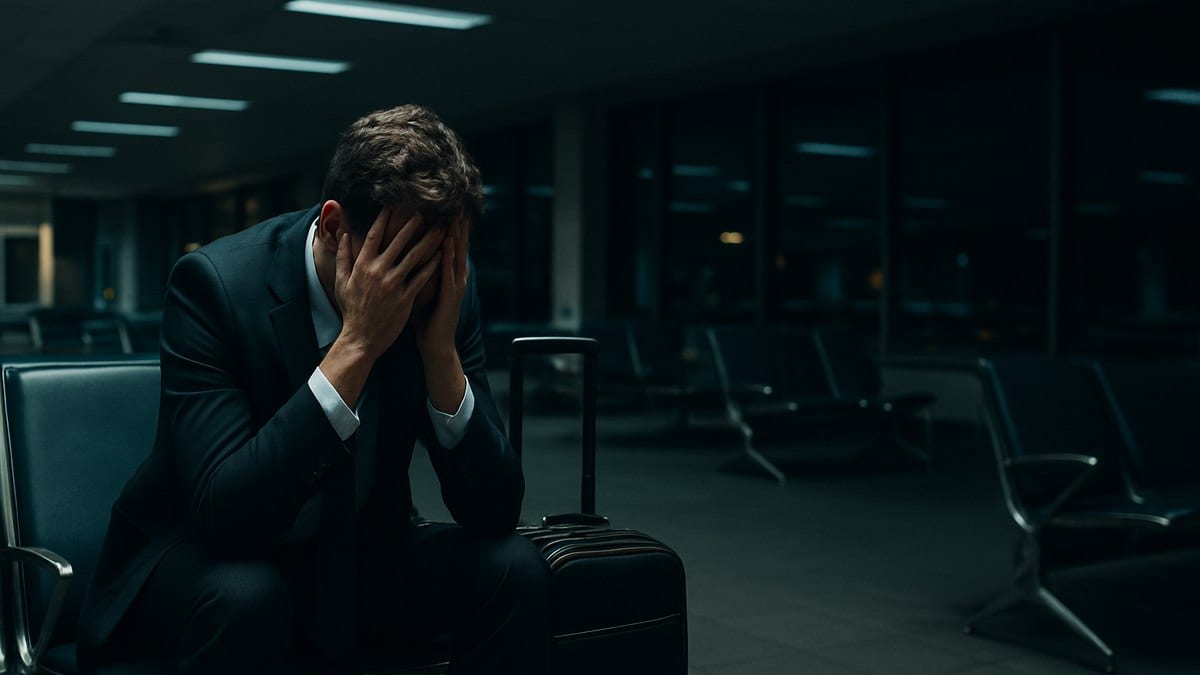
A Growing Bill Hidden Behind Every Departure Board Alert
Flight delays have long been treated as an inconvenience built into modern air travel, but recent assessments of the U.S. aviation system suggest they now represent a substantial and rising financial burden for travelers. Federal, academic and industry studies over the past several years point to a pattern in which the direct and indirect costs of delays are increasingly borne by passengers rather than airlines or airports.
Research drawing on Federal Aviation Administration and Bureau of Transportation Statistics data has tracked a steady rise in the total economic cost of congestion and delays in the national airspace system. Earlier work by the Joint Economic Committee and the Department of Transportation estimated nationwide delay costs in the tens of billions of dollars annually, including lost productivity, wasted fuel and business disruption. More recent modeling of delay costs indicates that the largest share of that burden now falls on travelers, with passenger impacts climbing from roughly $16 billion to more than $18 billion a year.
These findings line up with a growing body of consumer-focused analyses. Surveys and reports released in 2024 and 2025 by travel data firms and passenger-rights organizations describe an environment in which more than one in five U.S. flights arrives late and hundreds of millions of passenger journeys are disrupted each year. When researchers convert that disruption into out-of-pocket spending and lost time, the resulting total for travelers alone reaches into the high teens of billions of dollars annually.
Published coverage from outlets including Travel + Leisure, FinanceBuzz and industry market reports has amplified these figures in recent months, framing them as a warning sign that delay-related costs are no longer a marginal issue but a structural feature of the U.S. air travel experience.
Where the $18 Billion Comes From: Time, Money and Missed Plans
The estimated $18 billion annual hit to U.S. travelers reflects a mix of visible and less obvious costs. On the surface are the expenses most passengers recognize immediately: last-minute hotel rooms, rebooked flights, airport meals, ride-hailing trips and parking extensions when a delay stretches overnight. Recent consumer surveys put typical out-of-pocket spending for a major disruption in the hundreds of dollars per passenger.
However, analysts say the largest portion of the bill is tied to time. Studies commissioned for federal agencies and summarized in aviation cost-of-delay briefs assign a monetary value to the hours passengers spend waiting in terminals, rerouting through distant hubs or sitting in aircraft that depart late and arrive even later. When calculated across the millions of delayed flights recorded each year, those lost hours translate into a multibillion-dollar annual cost shouldered by travelers.
There are also ripple effects that are harder to quantify but increasingly factored into economic models. Business travelers may miss client meetings or conferences, leading to lost deals or reduced productivity that does not appear on any airline balance sheet. Leisure travelers may forfeit prepaid hotel nights, event tickets or tours that are nonrefundable. Some passengers report deciding to cancel or avoid future trips entirely after severe disruptions, a behavior that federal outlook reports describe as “lost demand” and treat as an additional welfare cost to travelers.
Analyses released over the past year by corporate travel platforms add another layer. Those reports estimate that U.S. companies are spending more than $17 billion annually to cover the fallout from disrupted business trips, including overtime, alternative transport and extra accommodation. While those figures are counted on company ledgers, the people experiencing the missed time with family, jet lag and work stress are the travelers themselves, further illustrating how widely the costs of delays are distributed.
Why Delays Persist Despite Record Demand and Investment
The persistence of costly delays comes at a time when U.S. air travel demand is rebounding and, in many cases, surpassing pre-pandemic levels. Airlines have reported record or near-record passenger volumes, while airports across the country are undertaking multi-billion-dollar modernization projects funded partly through passenger facility charges and federal grants.
Yet congestion, staffing constraints and weather-related disruptions continue to strain the system. Federal analyses of the National Airspace System describe a complex web of causes behind delays, ranging from thunderstorms and winter storms to aging infrastructure, maintenance issues, crew scheduling, tight turn times and crowded runways and taxiways at major hubs. Regular data releases from the Bureau of Transportation Statistics show that carrier-controlled issues, such as aircraft preparation and crew availability, account for a significant share of delay minutes, even in years with fewer headline-grabbing meltdowns.
Technology investments are intended to help. The multiyear Next Generation Air Transportation System program aims to reduce congestion by using satellite-based navigation, more precise routing and better real-time data sharing among airlines, air traffic control and airports. Department of Transportation planning documents forecast sizable savings in passenger time and airline operating costs if these upgrades are fully implemented. However, progress has been gradual, and the system remains vulnerable to shocks such as major storms, large-scale IT outages and government shutdowns that can trigger nationwide slowdowns.
Recent high-profile disruptions underscore the fragility of the network. A scheduling crisis at a major U.S. carrier in 2022 and a separate global technology outage in 2024 both produced days of mass cancellations, with subsequent filings and public statements indicating combined impacts in the hundreds of millions of dollars for a single airline and more than a million affected passengers. Analysts say those events are extreme examples of a broader pattern in which even routine delays compound quickly when the system is operating near capacity.
U.S. Travelers Face Thinner Protection Than Many Overseas
For most U.S. passengers, the financial consequences of a delay are only partially offset, if at all, by compensation or refunds. Consumer advocates note that, unlike in the European Union, there is no nationwide rule requiring airlines to pay standardized cash compensation for long delays or cancellations caused by factors under carrier control.
According to publicly available information from the Department of Transportation, U.S. rules guarantee specific payments only in limited situations, such as involuntary bumping from oversold flights. Airlines are generally required to offer refunds when they cancel a flight or make a significant schedule change that a passenger declines, but they have broad discretion in how they respond to weather-related delays, air traffic control issues or many operational problems.
In practice, most major carriers rely on their own customer service commitments, which may include meal vouchers, hotel accommodations or rebooking on later flights when disruptions are within the airline’s control. These policies vary by airline and situation and are often not legally binding. Travel insurance can cover some delay-related expenses, but policies differ widely, and many travelers choose not to purchase them or discover exclusions only after a disruption occurs.
Passenger-rights organizations and some lawmakers have used the recent $18 billion figure to argue that U.S. travelers are bearing a disproportionate share of delay-related costs compared with their counterparts in regions with stronger compensation regimes. Proposals in Washington have floated tighter refund rules and clearer standards for what airlines must provide during controllable delays, though any sweeping overhaul of airline consumer protections would face significant industry and political debate.
How Travelers and the Industry Are Responding
The mounting evidence of high traveler costs is beginning to influence both consumer behavior and industry strategy. Data from travel search platforms and airline earnings reports indicate that some passengers are shifting toward earlier flights, avoiding tight connections and favoring carriers and routes with stronger on-time records, even if tickets are slightly more expensive.
Corporate travel managers, reacting to studies on disruption costs, are revisiting policies that once prioritized minimal travel time above all else. Some companies are building in wider buffers before key meetings, encouraging same-day arrivals only when risk is low, or mandating specific connection times and hub choices for critical trips. These adjustments aim to reduce the likelihood that delays will lead to missed events and expensive rebookings.
On the industry side, airlines and airports are experimenting with tools intended to reduce the sting of inevitable disruptions. Mobile apps that provide more accurate real-time information, automated rebooking, and digital meal vouchers are becoming more common. Several carriers and airport authorities have also highlighted investments in gate management systems, de-icing capacity and staffing aimed at cutting turnaround times and improving resilience during peak periods.
Even with these changes, analysts suggest that the underlying math is unlikely to shift dramatically in the near term. As long as demand for air travel continues to grow faster than the capacity of runways, gates and air traffic control systems, delays will remain a costly feature of flying in the United States. For now, the latest estimates that U.S. travelers are absorbing roughly $18 billion a year in delay-related costs serve as a stark reminder that the true price of a ticket often extends far beyond the fare.