

More news on this day
Flight delays in the United States are quietly extracting an estimated $18 billion a year from travelers, as wasted hours, missed connections and unexpected expenses compound across a system where more than one in five domestic flights arrives late.
Get the latest news straight to your inbox!
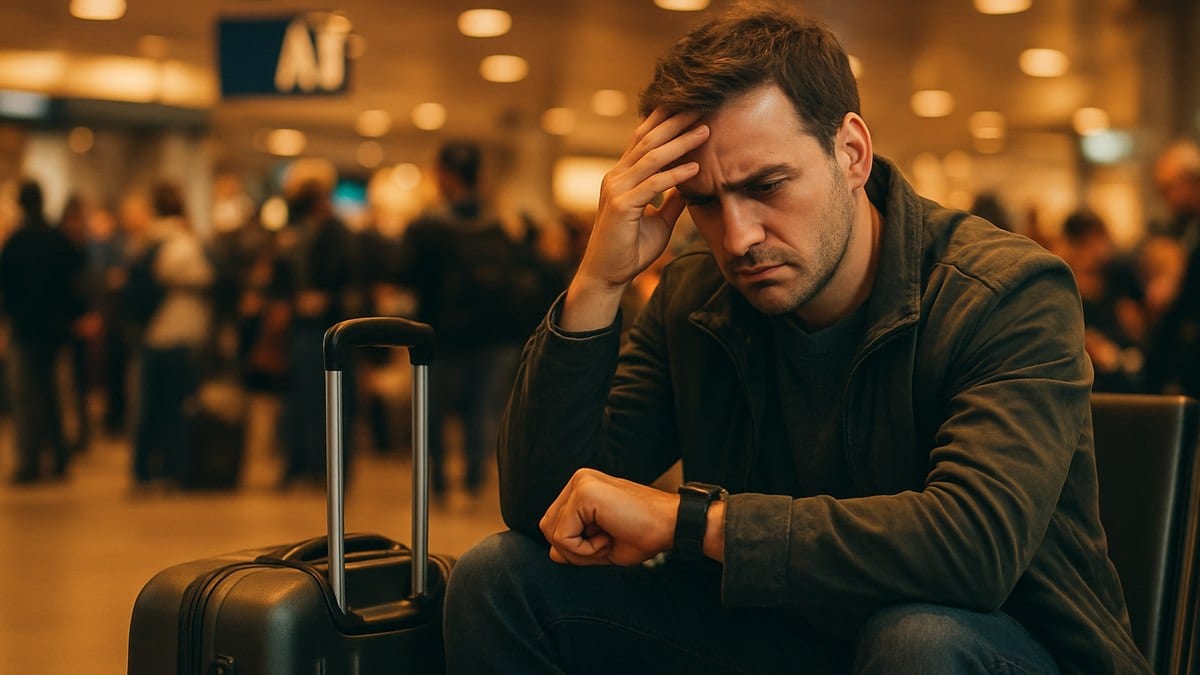
A Hidden Price Tag on America’s Flight Delays
Recent market data and economic analyses indicate that U.S. air travelers collectively lose more than $18 billion annually because of flight delays, a figure that captures both the value of passengers’ time and the direct costs of disrupted trips. One 2026 industry report estimates passengers alone are forfeiting about $18.1 billion each year to delays, not counting the separate hit to airline operating budgets and the wider economy.
Researchers commonly assign an hourly value to a traveler’s time, often between 47 and 50 dollars, then multiply that by hundreds of millions of hours spent waiting in terminals or sitting on tarmacs. Earlier work funded by the Federal Aviation Administration for 2007, for example, put passenger delay costs at roughly 16.7 to 18 billion dollars, illustrating that the scale of the burden has been large for well over a decade, even before the current travel boom.
Airlines for America has reported that when passenger time, lost demand and indirect effects are included, total delay costs to the U.S. system can exceed 30 billion dollars in a single year. More recent compilations of federal statistics and private-sector data suggest that the passenger share alone is at least 18 billion dollars annually and growing alongside record volumes of domestic travelers.
Separate estimates for 2023 and 2024 show that when delays, cancellations and knock-on disruptions are factored together, the overall drag on the U.S. economy may reach 30 to 34 billion dollars a year. That broader tally includes lost productivity for business travelers, missed tourism spending at destinations and additional costs for hospitality and ground transportation providers forced to absorb last-minute changes.
Delay Rates Rising as Demand Surges
Government transportation statistics show that flight delays remain a persistent feature of U.S. air travel, even as the industry rebounds from the pandemic. In 2023, more than one in five domestic flights arrived more than 15 minutes late, according to compiled Bureau of Transportation Statistics data, with some summaries putting the delay share at about 21 percent.
Those percentages translate into enormous amounts of time on a national scale. One set of 2026 figures cites a total passenger wait time of roughly 300 million hours tied to delays in 2023, based on departure and arrival data reported to federal regulators. With an assumed value of about 50 dollars per hour, that volume of lost time helps explain how passenger delay costs alone can climb into the tens of billions of dollars.
Individual airlines and airports show wide variations in performance, but for many travelers the experience is similar: long security lines, gate holds, rolling departure estimates and tight connections that suddenly evaporate. A recent consumer analysis of major U.S. carriers, drawing on the same federal databases, calculated billions of minutes of collective delay across tens of millions of passengers, with average waits for delayed flights often exceeding one hour.
Airport rankings compiled in early 2026 underscore how entrenched the problem has become at some hubs. At several of the country’s busiest airports, including major gateways in the Northeast and Texas, on-time performance last year hovered around 70 percent, meaning close to one in three flights arrived or departed late. For travelers, that statistical reality translates into a meaningful chance of disruption on any given trip.
Why Delays Cost Travelers So Much
The 18 billion dollar figure for U.S. passengers captures more than inconvenience. Analysts fold in the value of extra time spent waiting, expenses for meals and hotels when travelers are stranded, and the impact of missed business meetings or shortened vacations. For connecting passengers, the cost can multiply quickly once a single delay cascades into rerouted itineraries and overnight stays.
Earlier economic work on flight delays for the federal government found that passenger delay costs represent a significant share of the total burden created by congestion in the National Airspace System. Studies using millions of flight records have shown that when delays trigger missed connections, the effective cost per minute of disruption rises sharply, because a single late arrival can invalidate entire itineraries for dozens of people.
Consumer surveys also highlight the out-of-pocket dimension of the problem. Research commissioned by travel data firms has found that a sizable share of U.S. passengers who experience a delay or cancellation end up paying more to change plans, book new tickets or secure last-minute accommodation. Many say they receive limited or late information about disruptions, leaving them little time to find lower-cost alternatives.
In addition, analysts point to the emotional and logistical toll that is not fully captured by dollar figures. Families on tight schedules lose vacation days, students miss critical exams and medical appointments are postponed. While such consequences are difficult to price, they help explain why the underlying statistics on delay costs resonate so strongly with the traveling public.
System Strains: Weather, Staffing and Infrastructure Gaps
Behind the national totals, a web of contributing factors continues to strain the U.S. aviation system. Federal data on delay causes typically group problems into categories such as weather, late-arriving aircraft, air traffic control constraints, carrier-related issues and security events. None dominates every year, but together they produce a steady pattern of disruption, particularly during holiday peaks and storm seasons.
Recent coverage of the 2025 federal government shutdown, for example, documented how reduced staffing and operational constraints at air traffic control facilities led to more congestion and longer average delays at several major airports. Economic researchers analyzing those weeks of data estimated tens of millions of dollars in added passenger delay costs in just over a month, underscoring how sensitive the system is to workforce and funding shocks.
At the same time, industry reports draw attention to structural issues such as aging airport infrastructure, limited runway capacity at high-demand hubs and the slow rollout of modernization programs intended to streamline air traffic flows. The federal Next Generation Air Transportation System initiative has cited reduced delays and more efficient routing among its key benefits, but implementation and investment have stretched over many years.
Airlines, for their part, continue to run tightly scheduled networks that leave little buffer when storms or technical problems arise. When one flight arrives late, the aircraft and crew often cycle that delay through multiple subsequent legs. Analysts note that in these circumstances, a relatively small disruption in one part of the network can ripple quickly, affecting thousands of passengers across the country.
Calls for Transparency and Traveler Protections
As the scale of the delay bill comes into sharper focus, travel advocates are increasingly focused on transparency and passenger protections. Publicly available guidance from the Department of Transportation outlines when travelers may be entitled to refunds or compensation for cancellations, but rules around delays are narrower in the United States than in some other regions, such as the European Union.
Recent guidance following high-profile disruption episodes has clarified that airlines do not always have to cover expenses like hotels and meals, particularly when delays are linked to safety-related recalls or air traffic control constraints. That leaves many travelers bearing the financial brunt of multi-hour waits or overnight stranding, even when circumstances are beyond their control.
Consumer-facing studies continue to find that passengers often learn about delays only after reaching the airport and that rebooking can be difficult and costly. Advocates for travelers argue that clearer communication about flight status, standardized minimum care commitments and faster refunds could reduce both the financial cost and the stress associated with disruptions.
Policy analysts also point to the potential economic dividend from cutting even a fraction of today’s delay burden. If modernization efforts, better staffing and more resilient airline scheduling trimmed the national passenger delay bill by several billion dollars a year, they note, the effective gain in productive time and spending power for U.S. travelers would be significant. For now, however, the 18 billion dollar annual cost remains largely hidden in the fine print of itineraries and the lost hours of millions of passengers.