

More news on this day
Flight delays in the United States are quietly stripping roughly $18 billion a year from travelers’ wallets and schedules, as a packed 2026 flight calendar collides with lingering operational strains across the aviation system.
Get the latest news straight to your inbox!
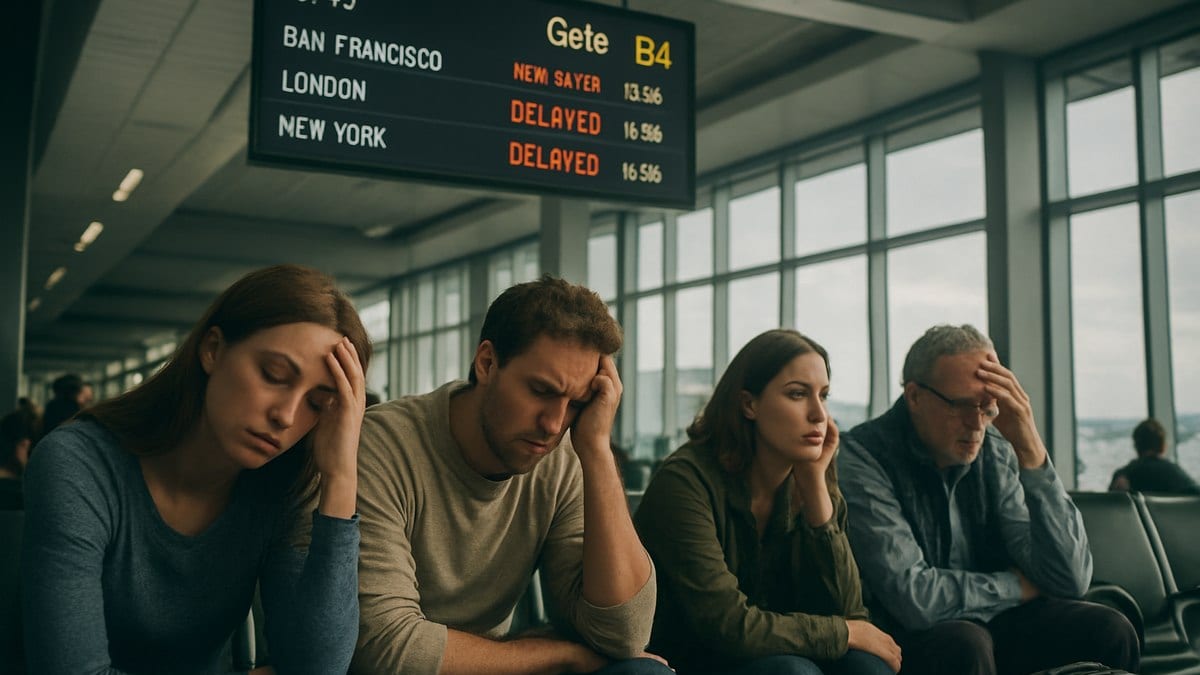
A Hidden Price Tag Behind Every “Delayed” Notice
The headline airfare that travelers see when they book a trip rarely reflects the true price of getting from one airport to another. Economic studies and industry analyses indicate that when missed connections, creeping terminal waits and tarmac holds are added up, U.S. passengers are collectively bearing around $18 billion annually in delay-related costs. That estimate reflects both out-of-pocket expenses and an assigned value for lost time.
Published coverage drawing on Bureau of Transportation Statistics data and airline trade group modeling shows that researchers typically calculate a dollar value for each hour a traveler spends in delay, often around the prevailing average wage. By multiplying that value across millions of disrupted journeys, analysts arrive at a passenger burden that runs into the tens of billions of dollars in a typical year, even before counting what airlines and the broader economy absorb.
Recent analyses of 2025 operations point to a landscape where roughly one in four U.S. passengers experienced a delay or cancellation at some point during the year. With 900 million or more passenger trips in a strong year for domestic and international traffic, even modest average delays per traveler translate into vast aggregate time losses. When that time is converted into economic terms, the scale of the $18 billion estimate begins to come into focus.
Industry observers note that the $18 billion figure represents only the portion of delay costs directly attributable to travelers. Once airline operating costs and knock-on effects in other sectors are incorporated, total delay costs attached to the U.S. air transport system have in previous benchmark studies exceeded $30 billion nationwide, underscoring how disruption has become a structural feature of modern flying.
How 2026 Turbulence Exposes Structural Weaknesses
Early 2026 is reinforcing the picture of a fragile system. A series of late winter and early spring storms produced waves of cancellations and delays across major hubs, from Atlanta to New York and Chicago. Flight-tracking data cited in recent news reports indicated days with more than 7,000 delayed flights in the United States alone, with passengers facing hours-long queues at security and customer service desks.
Separate analysis highlighted by travel industry publications suggests that disruption in March 2026 has spilled beyond U.S. borders, affecting tens of thousands of flights across North America and the Caribbean. These episodes arrived as airlines pushed aggressive schedules for spring break and Easter travel, building on strong demand in 2024 and 2025, while air traffic control staffing and ground handling resources in some markets remained under pressure.
Government data for 2025, summarized in recent Air Travel Consumer Reports, indicate that a mix of causes lies behind the current turbulence. Airline-controlled factors such as crew and maintenance issues, late arriving aircraft, and broader National Aviation System constraints all contribute meaningfully to delays, while extreme weather remains a recurring but smaller share of the total. This pattern has persisted into 2026, according to analysts who track real-time performance dashboards.
The long government shutdowns in 2025 and 2026 added another stress point, as temporary reductions in flight volumes and staffing backlogs at security and air traffic facilities created ripple effects that lasted well beyond the official end of the funding gaps. Research released by a regional Federal Reserve bank in late 2025, examining shutdown-induced delays, underscored how sensitive on-time performance has become to variations in federal aviation services.
What the $18 Billion Means for Individual Travelers
Behind the aggregate figures, the $18 billion annual hit shows up in very personal ways. Passengers facing missed connections or long holds often pay for airport meals, rideshares, or hotel rooms that were not budgeted at the time of booking. Surveys conducted by passenger rights groups in recent years have found that many travelers who suffer delays end up out of pocket after having to pay more to rebook flights or arrange alternative ground transport.
Time is the largest component of the hidden cost. Economic studies that inform the $18 billion estimate generally assign a per-hour value to traveler time, recognizing that hours spent waiting in terminals or stuck on taxiways could otherwise have been used for work, family, or rest. Frequent fliers see this most acutely: trip-tracking apps and analytics firms report individual travelers losing dozens of hours a year to delays, a pattern that, when extrapolated across the flying public, produces the enormous national totals.
There is also a psychological cost that does not easily fit into a spreadsheet. Recent coverage of spring 2026 disruptions has highlighted passengers sleeping on terminal floors, struggling to find information, and navigating crowded rebooking lines. A past survey by an aviation analytics firm, still cited in current reporting, suggested that a significant share of U.S. travelers felt they did not receive sufficient information during disruptions and struggled to change their plans without incurring additional charges.
Travel insurance data provides another window into the stakes. A 2025 analysis by a U.S. insurance comparison platform found that trip cancellation and delay claims often ran into several thousand dollars each, reflecting the combined cost of nonrefundable hotels, prepaid tours and last-minute flight changes. While not every delayed passenger files a claim, these figures suggest that the $18 billion estimate is consistent with the scale of losses seen in insured segments of the market.
Winners, Losers and the Geography of Delay
The burden of delay is not evenly distributed. Airport rankings released in early 2026 by consumer and travel publications, drawing on 2025 operational data, show sharp variation in on time performance across the United States. Some large hubs in Texas and the Mountain West posted relatively strong punctuality figures despite heavy traffic, while several East Coast and Midwestern airports struggled with higher disruption rates, reflecting congestion, complex weather patterns and infrastructure constraints.
Reports based on data from passenger rights companies indicate that nearly one third of flights in the peak summer months of 2025 arrived late or were canceled at certain airports, making timing and routing decisions critical for travelers trying to minimize risk. July emerged as a particularly challenging month, with more than 31 percent of passengers nationwide experiencing some form of disruption, according to a widely cited 2025 disruption study.
Route-level data tell a similar story. Long-haul international services from certain West Coast gateways have maintained excellent on time performance, offering relatively predictable journeys for travelers heading to Asia and the Pacific. By contrast, dense short-haul corridors along the East Coast and in parts of the Midwest remain vulnerable to cascading delays when early-morning rotations slip or storms roll through, magnifying the hidden cost of disruption for business travelers who rely on tight daytrip schedules.
These disparities feed directly into the $18 billion passenger cost estimate. Travelers who routinely pass through congested hubs or fly at peak times shoulder a disproportionate share of the burden, while those able to choose off peak flights or alternate airports are, in effect, better insulated. Analysts who study the distributional impacts of air travel disruption argue that this creates an uneven playing field between major metropolitan areas and smaller markets.
Policy Debates and the Push for Accountability
The mounting evidence that flight delays are costing U.S. travelers about $18 billion per year is fueling renewed policy debates in Washington and across state capitals. According to published coverage, federal officials have been weighing stronger consumer protection rules, including clearer refund obligations, automatic fee-free rebooking in some circumstances and enhanced transparency around delay causes and passenger rights.
Consumer advocates often point to the European Union’s compensation regime, which mandates standardized payouts for significant delays and cancellations in many cases, as a benchmark for what could be adopted or adapted in the United States. At the same time, industry groups frequently highlight the complexity of the U.S. operating environment and caution that blanket compensation rules could increase overall ticket prices or lead airlines to trim marginal routes.
Infrastructure and technology investments are another focal point. Analyses from airline associations and academic researchers emphasize that modernizing air traffic control systems, expanding runway and gate capacity at key hubs and improving staffing resilience throughout the system could all help reduce delay minutes. Such improvements, proponents argue, would generate broad economic gains, with a portion of the savings translating into a reduced annual burden on passengers.
For now, publicly available data suggest that disruption will remain a defining feature of U.S. air travel through the 2026 peak season. With demand still robust and weather and staffing challenges unlikely to disappear, analysts expect the hidden $18 billion price tag of delays to stay in focus for travelers, policymakers and airlines alike.