

More news on this day
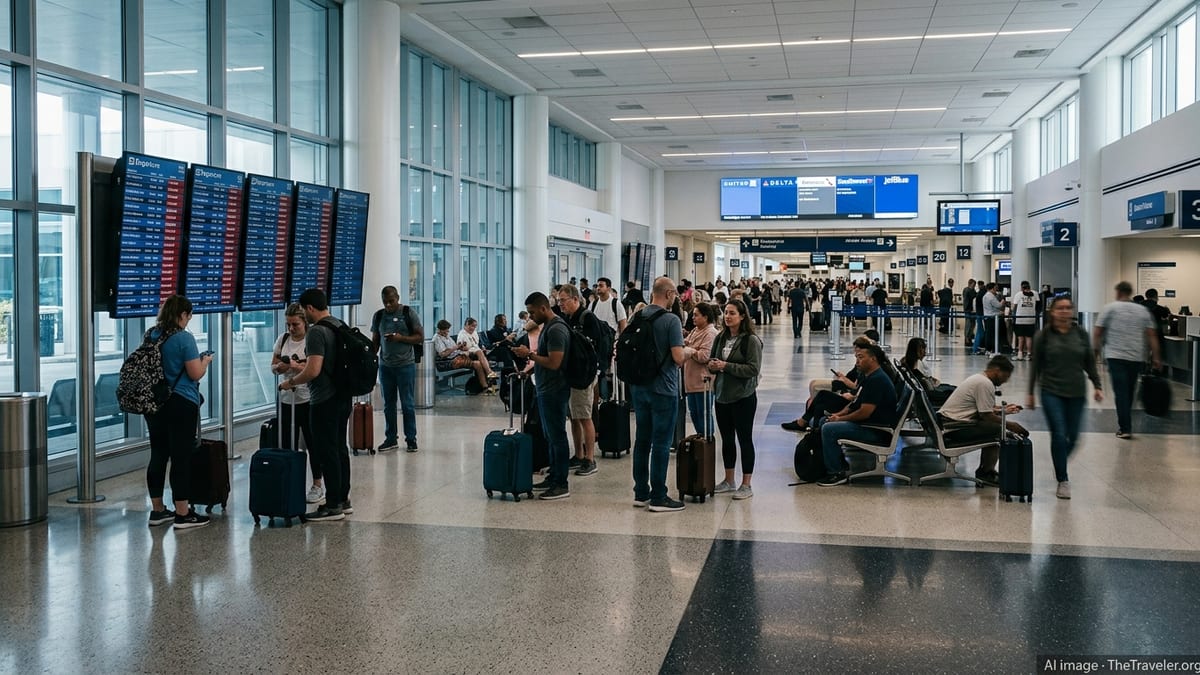
Passengers traveling through Tampa International Airport today are encountering a wave of disruption, with publicly available tracking data showing 46 delayed flights and 3 cancellations affecting a mix of domestic and international routes.
Get the latest news straight to your inbox!
Disruptions Ripple Through a Busy Spring Travel Day
The latest flight status boards for Tampa International Airport indicate that delays are concentrated across the middle of the day and early evening, a period when leisure and business traffic typically peaks. While the overall operation remains far from a complete shutdown, the number of affected flights is large enough to create visible congestion at gates and in seating areas around the airsides.
The 46 delayed flights span departures and arrivals on multiple carriers, including large US network airlines, low cost domestic operators, and international services that connect Tampa with hubs across North America and Europe. The three cancellations recorded so far today are distributed across different airlines rather than concentrated with a single carrier, suggesting broader operational pressures instead of an isolated mechanical or staffing issue.
For individual travelers, the headline numbers translate into missed connections, extended layovers and last minute itinerary changes. Families returning from spring vacations, sports fans heading to games, and business travelers working within tight schedules are all among those affected, with many facing uncertainty over revised departure times.
Despite the disruption, the scale of today’s irregular operations at Tampa International remains modest compared with the most severe national weather or air traffic control events, which can lead to hundreds of delays and widespread cancellations at major hubs. Even so, the knock-on effects across airline networks can continue into the evening as aircraft and crews fall out of position.
Weather, National Strains and Network Knock-On Effects
Publicly available aviation data for the wider US network today points to weather and broader system strains as a likely backdrop for Tampa’s difficulties. Storm systems and unsettled conditions in other regions of the country can slow traffic flows into and out of key hubs, forcing airlines to adjust schedules and creating late inbound aircraft for subsequent legs to Florida.
When a late-arriving aircraft is scheduled to operate a Tampa flight, even a modest delay at an out-of-state hub can cascade into a longer hold on the ground for passengers waiting in Tampa’s gate areas. These kinds of secondary delays are common during periods of unstable weather patterns elsewhere in the network, even when skies over Tampa itself remain relatively calm.
In addition to meteorological factors, the broader US aviation system is managing ongoing strains around air traffic control staffing and federal budget uncertainty. Industry coverage in recent days has highlighted the risk that reduced staffing or changing operating patterns at regional facilities can lengthen spacing between aircraft, slow departure queues, and create minor bottlenecks that ripple across multiple airports.
Such national-level pressures tend to show up as extended taxi times, ground holds, or constrained arrival rates, prompting airlines to pad schedules or temporarily reduce frequencies. Tampa, as a growing medium to large market with heavy seasonal demand, is often exposed to these nationwide constraints even when local operations are comparatively efficient.
Airlines and Routes Most Affected
Today’s disruption at Tampa International appears to be spread across a mix of short haul and medium haul routes, including flights to major domestic hubs in the Northeast and Midwest, popular leisure destinations within Florida and the Southeast, and selected international services. Routes into congested northern airports that are themselves experiencing delays are among those showing the longest knock-on impacts in Tampa’s departure boards.
Major US carriers that operate hub connections from Tampa, including routes to cities such as Atlanta, Charlotte, Dallas and Chicago, are prominent among the delayed flights. Low cost and leisure-oriented airlines that serve point to point routes to secondary cities are also represented, although many of those delays remain under an hour, according to current tracking data.
Internationally, services linking Tampa with transborder markets and transatlantic connections have not escaped today’s irregular operations. Where long haul flights rely on tight connection windows at foreign or US partner hubs, even small schedule shifts out of Tampa can create challenges for passengers attempting to make same day onward journeys.
Because the day’s three cancellations are spread across different operators, travelers booked on those flights are being re-accommodated onto later departures or routed via alternative hubs. For some, this will mean adding an extra connection or overnight stay before reaching their destination.
Impact on Passenger Experience at the Terminal
Inside Tampa International’s terminal complex, today’s delays are manifesting in longer dwell times at security-adjacent concessions, busier seating zones around departure gates, and increased rebooking activity at airline customer service counters. Travelers who arrived early in anticipation of a routine departure are spending more time in the airport’s central landside hub and at the airsides while they wait for updated flight information.
Tampa International’s design, with separate security checkpoints for each airside and a central landside terminal, typically helps to spread passenger volumes and reduce crowding. Even during irregular operations, this layout can make the experience feel calmer than at some larger single-hub terminals, although gate areas for significantly delayed flights can still become crowded as passengers stay close to boarding zones.
Reports from recent days about security screening at the airport suggest that checkpoint wait times have generally remained within moderate ranges, even as other US airports have seen longer lines. Today’s primary pain points at Tampa therefore appear to be at the gate and in the broader airline operation rather than at the Transportation Security Administration checkpoints.
Retailers and food and beverage outlets in the terminal are likely to see elevated demand as travelers use the additional time to eat, charge devices and occupy children. For those facing multi-hour delays, airport amenities and seating options become particularly important in mitigating the stress of disrupted plans.
What Travelers Can Do If Their Flight Is Affected
For passengers flying through Tampa International today, publicly available consumer guidance from airlines and regulators outlines several practical steps to manage delays and cancellations. Checking flight status frequently through airline apps and third party tracking tools is essential, as departure times can shift multiple times over the course of an afternoon.
Travelers experiencing significant delays or a cancellation are generally encouraged by consumer advocates to contact their airline through multiple channels, including mobile apps, websites and customer service phone lines, rather than relying solely on the airport ticket counter. Rebooking options may appear digitally before agents are available at the gate, particularly during peak disruption.
In cases where delays extend for many hours or cancellations require an overnight stay, policies vary by carrier and by cause of the disruption. Published airline customer service commitments explain when meal vouchers, hotel accommodation or alternative routing may be offered. Passengers connecting to international flights should pay close attention to minimum connection times and entry requirements at any newly assigned transit points.
Travel experts also note that keeping boarding passes, receipts and documentation of delay times can be useful for any later claims or reimbursement requests. While today’s situation at Tampa International does not currently resemble a major nationwide meltdown, it serves as another reminder that even a relatively modest number of schedule changes at a single airport can have a marked effect on individual travel plans.