

More news on this day
Washington Dulles International Airport is entering April under pressure as spring thunderstorms, recent air traffic control disruptions and ongoing airfield work converge to produce a choppy start to the peak travel season.
Get the latest news straight to your inbox!
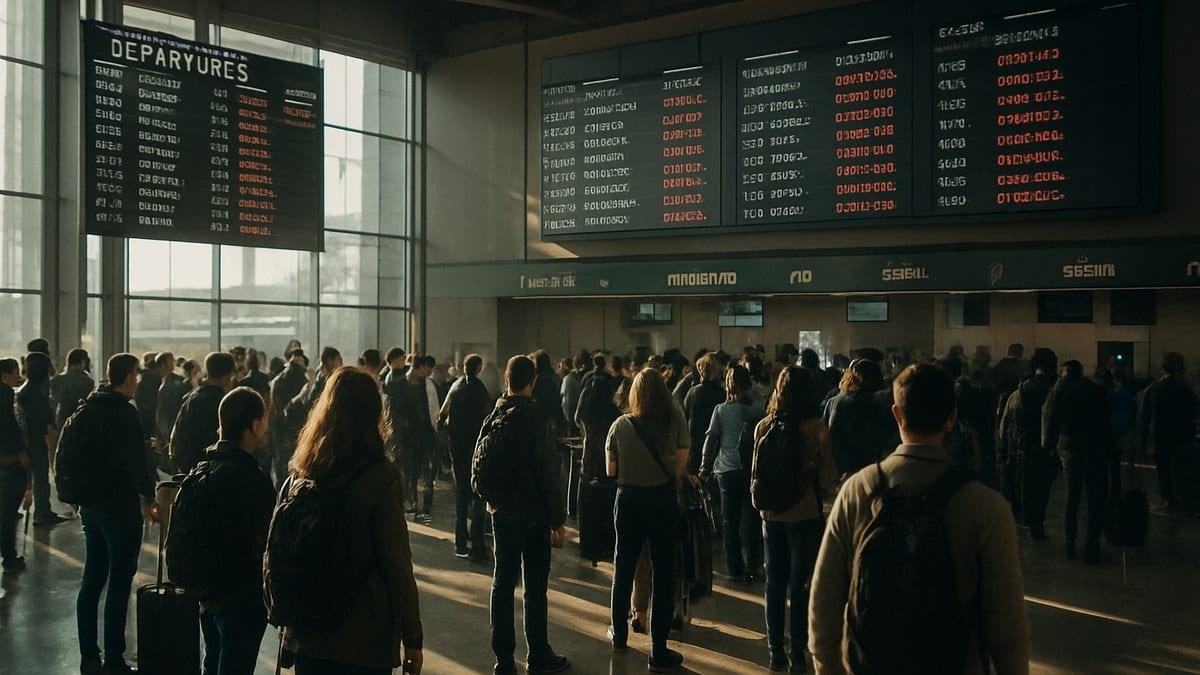
Stormy Skies and a Rough Start to April
Early April weather has played a central role in disruptions at Washington Dulles, with fast-moving thunderstorms sweeping through the Mid-Atlantic and triggering temporary halts to flights across the capital region. Publicly available accounts describe a late-day storm outbreak on April 1 that brought ground stops and rolling delays to Dulles, Reagan National and Baltimore/Washington International, as inbound aircraft were held at departure airports and departures from Washington slowed to a crawl.
Travel-industry reports indicate that the April 1 storms hit during a busy afternoon and early evening travel window, amplifying the impact for passengers. Even after the most intense cells passed, delayed aircraft and crew misalignment contributed to a lingering backlog, with some flights departing hours behind schedule and others canceled outright.
For travelers using Dulles in the opening days of April, this meant long lines at customer service desks, tight connections evaporating and late-night arrivals turning into overnight stays. While thunderstorms are a familiar springtime risk in the Mid-Atlantic, the timing and intensity of the early April systems have underscored how quickly normal operations can unravel when severe weather coincides with peak traffic.
Ground Stops Linked to Air Traffic Control Issues
Alongside weather, a series of recent air traffic control disruptions in the Washington region set the stage for heightened sensitivity to any operational hiccups at Dulles. Public information from the Federal Aviation Administration shows that in March, ground stops were imposed across all three major Washington-area airports after issues emerged at the Potomac Consolidated Terminal Radar Approach Control facility, which manages much of the region’s airspace.
On those March days, flights bound for Dulles were in some cases held for hours on the ground at origin airports, while departures from IAD were paused or heavily rationed. Accounts from passengers and flight-tracking snapshots pointed to delays stretching beyond three hours for some services, adding to the overall strain on airline schedules heading into April.
Although those specific ground stops were lifted by late evening, the resulting displacement of aircraft and crews created a ripple effect. Airlines entered April with operations already stretched, meaning that subsequent weather disruptions at Dulles had greater potential to cascade into wider network problems. For travelers, this translated into a higher likelihood that a local delay would affect onward connections across domestic and international routes.
April 1 Tallies Highlight Extent of Dulles Disruptions
Newly published aviation and travel-industry coverage points to substantial disruption focused specifically on Dulles as April began. One report summarizing April 1 operations at Washington Dulles cited more than 80 delayed departures and arrivals, along with several cancellations, across major carriers including United Airlines, American Airlines and Delta Air Lines.
The affected flights linked Dulles with key business and leisure destinations such as New York, Chicago, Toronto and London, illustrating how local disruptions at IAD quickly reverberate across both domestic and transatlantic networks. With Dulles serving as a major hub for long-haul operations, late departures from Washington can mean missed curfews or misaligned connection banks at overseas airports.
These early April tallies follow a broader national trend of spring irregular operations, with other hubs experiencing their own weather and staffing challenges. For passengers at Dulles, however, the combination of regional thunderstorms, prior ground stops tied to air traffic control problems and already fragile schedules has created a particularly testing environment.
Infrastructure Work Adds Another Layer of Complexity
While weather and airspace management have been the immediate triggers of recent delays, longer-running infrastructure work is also shaping the operating backdrop at Dulles. Federal aviation planning documents list Washington Dulles as a site of ongoing airfield lighting and control system upgrades across 2026, part of a multi-year safety and modernization program.
These projects, which focus on airfield lighting and associated control and monitoring systems, can require temporary runway or taxiway closures, reconfigured traffic patterns and nighttime work windows that limit operational flexibility. Although such improvements are designed to enhance efficiency and safety over the long term, they can leave airports with less margin to absorb unexpected shocks from storms or air traffic control disruptions.
For Dulles, this means that even minor schedule perturbations in April may be harder to smooth out if key pieces of airfield infrastructure are temporarily constrained. Travelers are unlikely to see many outward signs of the work beyond occasional construction zones and vehicle movements, but its presence in the background helps explain why the airport may feel more vulnerable to disruption during this phase.
What Spring Travelers Through Dulles Should Expect
With April still unfolding, publicly available indicators suggest that Dulles could continue to face intermittent disruptions as storm systems pass through the Mid-Atlantic and as the regional air traffic control system works through recent challenges. Forecasts for the coming days highlight the potential for additional rounds of showers and thunderstorms, which can quickly lead to flow-control measures and ground delay programs when they intersect with peak traffic periods.
Passenger advocates and travel analysts are encouraging travelers flying via Dulles this month to build more slack into their itineraries, especially for evening departures and tight connections. Monitoring airline apps, airport status dashboards and independent flight-tracking services before leaving for the airport can provide early warning of ground stops, reroutes or extended holding patterns that may not yet be reflected on departure boards.
For now, there is no indication from public data that Dulles is facing a single, long-term operational crisis. Instead, the picture emerging from early April is one of compounding pressures in an already busy spring travel season, where weather, infrastructure work and airspace management challenges are combining to turn what might have been routine delays into broader, more visible disruptions for Washington-area travelers.