

More news on this day
Passengers connecting through Minneapolis–St Paul International Airport in April 2026 are facing mounting delays as spring weather, runway work and heavy demand converge to slow operations at one of the Midwest’s key hubs.
Get the latest news straight to your inbox!
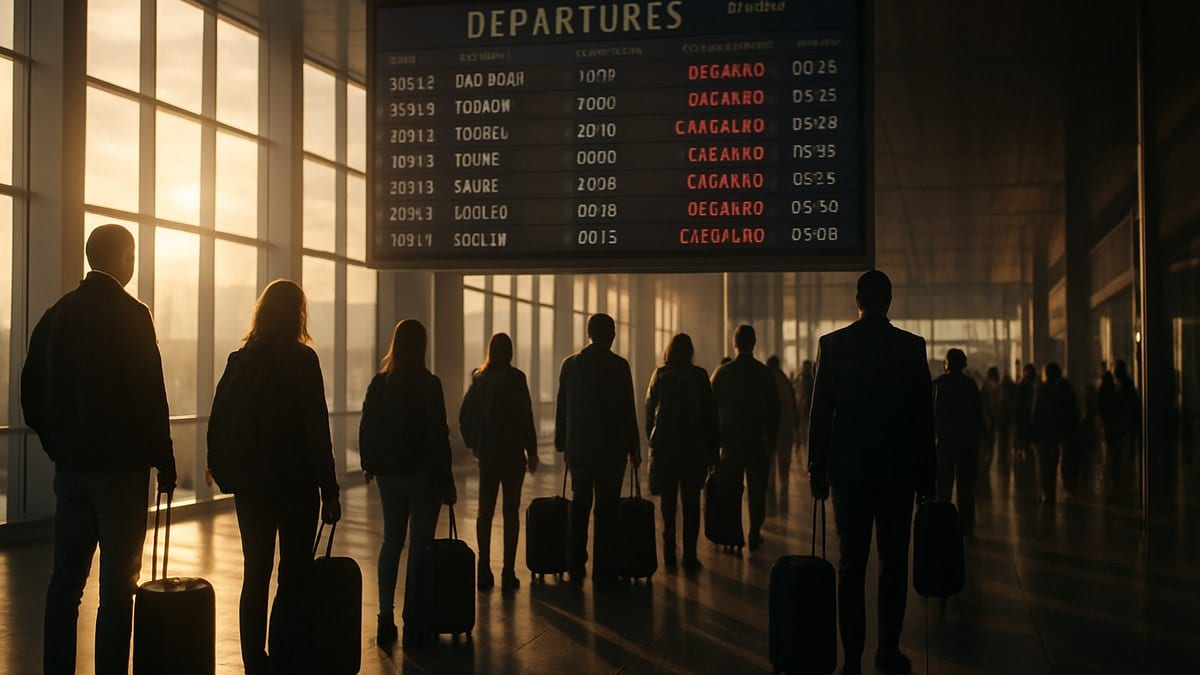
Disruption Builds Through Early April
Published reports tracking U.S. flight performance indicate that disruptions have intensified nationwide in early April, with Minneapolis–St Paul International Airport (MSP) increasingly caught in the pattern. Industry data aggregators tracking delays and cancellations on April 5 highlighted MSP among the hubs experiencing notable schedule strain, with more than 120 delayed departures and nearly 20 cancellations recorded that day alone.
Coverage from travel-focused outlets on April 11 shows that MSP continues to feature in national tallies of disrupted operations. On that date, one nationwide roundup of flight problems listed at least 18 delayed flights and several cancellations at the airport, a relatively small share of the country’s overall disruption but significant for travelers depending on the hub for onward connections.
The issues at MSP are unfolding against a backdrop of severe weather across large parts of the United States. Recent analyses of national disruption patterns link thousands of delayed and canceled flights since the start of April to thunderstorms, strong winds and air traffic restrictions, all of which can quickly affect tightly timed banked schedules at connecting hubs such as Minneapolis–St Paul.
While individual delay counts fluctuate from day to day, the emerging picture for April is of a hub contending with repeated bouts of operational stress rather than a single isolated incident. For connecting passengers, that translates into a higher risk that even minor schedule shifts elsewhere in the network can cascade into missed or compressed connections at MSP.
Runway Work Adds Pressure to a Busy Schedule
Beyond weather, infrastructure activity is adding further complexity. A Federal Aviation Administration construction impact outlook shows that a multiyear project affecting MSP’s runways is entering a new phase in April 2026. One key runway, 12R/30L, is scheduled to be closed from April 14 to May 23 for safety area regrading and shoulder rehabilitation, limiting available arrival and departure capacity.
The FAA analysis notes that the combination of this closure with earlier work on runway 04/22 is expected to increase airport-level delay as traffic is funneled onto remaining runways. Previous phases of runway closures at MSP have already been associated with measurable increases in average delay per operation, and the latest phase is expected to put additional pressure on air traffic management tools used to meter departures and arrivals during peak periods.
State transportation performance reporting also underscores how sensitive MSP can be to shifts in capacity and schedule. Minnesota’s transportation system performance summary, using federal on-time performance statistics, shows that while average delays at the airport have generally trended in the single-digit minutes per operation in recent years, those averages can rise quickly when periods of adverse weather and construction overlap.
With the newest runway closure period beginning in mid-April, aviation analysts expect that any renewed rounds of stormy weather over the Upper Midwest could produce more noticeable queues for takeoff and landing, particularly during morning and afternoon rush banks dominated by major hub carriers.
Spring Storms and a Fragile National Network
The local picture at Minneapolis–St Paul is closely tied to broader strains across the U.S. aviation system this spring. A major January winter storm and a significant mid-March blizzard both forced large numbers of cancellations and delays at Midwest airports, including MSP, underscoring how quickly schedules can unravel when severe systems pass through the region.
More recently, travel-rights organizations tracking April disruptions have reported that storms and air traffic control restrictions have affected thousands of flights across the country in the span of a few days. Their breakdowns highlight how adverse conditions at major hubs such as Atlanta, Chicago and New York reverberate throughout domestic networks, affecting secondary hubs even when local skies are relatively clear.
MSP’s role as a connecting point for both domestic and long-haul international routes means it is particularly exposed to such knock-on effects. Flight-network databases show that as of April 2026, around 15 airlines serve Minneapolis–St Paul from roughly 160 airports worldwide, with one large U.S. carrier operating by far the greatest share of routes. That concentration strengthens the hub’s connectivity but also means that disruption in one region of the carrier’s network can quickly ripple through the Minnesota operation.
For travelers, the practical impact can range from relatively modest arrival delays of 30 to 60 minutes to missed international connections that require overnight stays. Travel-commentary and consumer-rights pieces published in recent days emphasize that even when local conditions at MSP appear normal, passengers may still encounter rolling delays caused by aircraft and crews arriving late from previously disrupted segments.
Peak Travel Demand Tightens the Margin
The timing of these operational challenges coincides with one of the airport’s busiest stretches of the year. A March media release from the Metropolitan Airports Commission, which operates MSP, highlighted a strong first wave of 2026 spring break traffic and pointed to a robust schedule of domestic and international destinations through the season.
The commission’s guidance encouraged travelers to arrive at least two hours before domestic flights and three hours before international departures, a recommendation that reflects both increased passenger volumes and tighter security and check-in processes during peak windows. With load factors rising on key leisure and visiting-friends-and-relatives routes, opportunities to rebook disrupted passengers onto later flights can be more limited than during off-peak months.
Network-planning documents and regional air service updates from other airports also show a continued build-up of seasonal flights feeding into Minneapolis–St Paul, including routes from warm-weather and leisure markets. This additional capacity is welcome news for tourism and business travel but also narrows the margin for recovering from even short-lived interruptions, since spare aircraft and crew are often committed across a wider range of destinations.
Travelers who rely on MSP for complex itineraries, particularly those combining regional feeders with long-haul departures, are therefore facing a more constrained environment in April. Reports on traveler forums suggest that some passengers have begun adding extra buffer time into their connections through Minneapolis–St Paul or opting for earlier departures in case later flights are caught up in weather or congestion-related slowdowns.
What Passengers Can Expect Through Late April
With runway work scheduled to continue into late May and the spring storm season still active across the Upper Midwest, operational specialists expect MSP to remain vulnerable to periods of elevated delay through the rest of April. While there is no indication of a systemic shutdown, a pattern of intermittent schedule disruptions appears likely, particularly on days when poor weather intersects with peak travel waves.
Publicly available disruption trackers suggest that even on comparatively calm days, Minneapolis–St Paul may record clusters of delays in the morning and late afternoon as traffic banks compress around available runway capacity. On busier travel days, the combination of heavy demand, constrained infrastructure and lingering crew or aircraft misalignments from previous disruptions could push some flights into extended holding or ground waits.
Consumer-rights organizations note that the causes of many of the current delays, including severe weather and air traffic control limits, are often categorized as circumstances outside an airline’s direct control, which can affect eligibility for monetary compensation under certain regulations. However, passengers may still be entitled to rebooking assistance, meal vouchers or hotel accommodation depending on the carrier’s policies and the specific circumstances of a disruption.
For now, travel advisers and published guidance recommend that passengers transiting MSP in April 2026 build in longer connection times, monitor flight status closely through official airline and airport channels, and consider alternate routings if their journeys are especially time-sensitive. As the runway project progresses and the storm season gradually recedes, operational data over the coming months will show whether the current spike in delays at Minneapolis–St Paul subsides or signals a more persistent challenge for one of the nation’s key Midwestern hubs.