

More news on this day
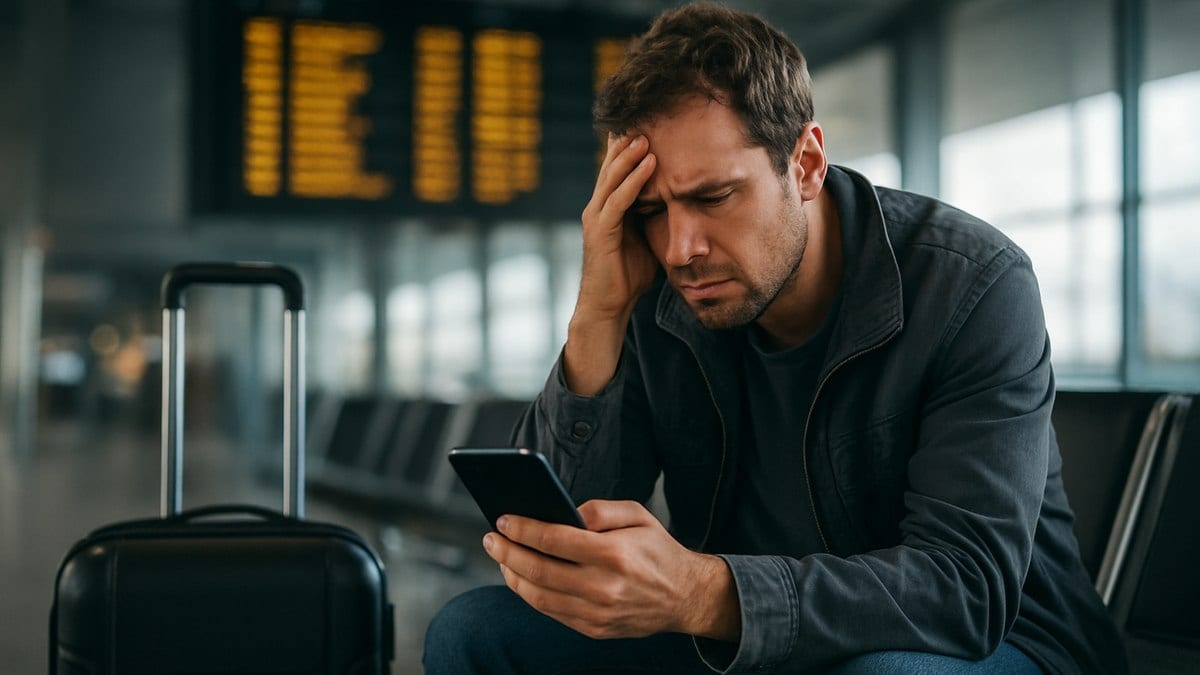
Flight delays in the United States are quietly stripping an estimated $18 billion a year from travelers’ wallets and time in 2026, as disruptions compound into lost work hours, extra expenses and abandoned plans that never appear in headline ticket prices.
Get the latest news straight to your inbox!
A Growing Price Tag on Everyday Disruptions
The latest assessments of aviation delay costs suggest that U.S. passengers collectively shoulder roughly $18 billion annually in lost time and out-of-pocket expenses when flights run late or are canceled. This figure reflects a convergence of industry data, academic work on the value of passenger time and recent consumer surveys that track how much people actually spend when their trips unravel.
Analyses building on Federal Aviation Administration and airline trade group research indicate that the total economic cost of flight delays across the U.S. system is substantially higher once airline operating expenses and knock-on impacts to other sectors are included, often estimated in the range of more than $30 billion a year. Within that larger total, the slice borne directly by travelers has now climbed into the neighborhood of $18 billion as volumes rebound, fares rise and travel demand remains strong.
Researchers typically arrive at these numbers by combining detailed delay statistics with an assigned monetary value for each passenger’s time, often drawn from transportation agency guidelines. When those lost hours are multiplied across tens of millions of delayed travelers, even modest schedule disruptions add up to an enormous economic burden that is largely invisible in traditional inflation or fare metrics.
New consumer-focused studies in 2025 and early 2026 have reinforced this picture, reporting hundreds of dollars in average financial impact per disrupted passenger once missed workdays, childcare adjustments and same-day rebookings are factored in. Scaled nationally, those per-person figures align closely with the emerging $18 billion estimate for annual passenger costs.
Why Flights Are Still Running Late
Behind the mounting economic losses is a complex web of factors affecting U.S. aviation reliability. Data compiled from federal statistics and independent delay trackers show that weather remains a dominant driver of disruptions, but it is far from the only one. Congested airspace, aging infrastructure, high traffic volumes and periodic shortages of air traffic controllers and airline crew continue to weigh on on-time performance.
Recent research on the 2025 federal government shutdown, published by the Federal Reserve Bank of Richmond, highlighted how reductions in government aviation services and staffing contributed to measurable spikes in delay minutes at major hubs. Separate government data and news coverage of the ongoing 2025 and 2026 shutdown episodes have documented cutbacks in air traffic capacity across dozens of high volume markets, reinforcing how quickly delays can propagate through a tightly coupled national network.
Operational breakdowns within carriers also play a persistent role. High profile technology outages and scheduling failures in recent years have led to mass cancellations and rolling delays across large route maps. Industry and academic reports note that as airlines have optimized schedules and aircraft utilization to maximize revenue, the system’s ability to absorb shocks has thinned, leaving passengers more exposed when storms, staffing gaps or mechanical issues occur.
Security screening and airport operations add another layer. A growing body of academic work examining flight delay propagation over the past decade suggests that queue buildups at checkpoints and gate bottlenecks can increasingly be observed in delay data, particularly at the busiest hubs. Even when such delays are measured in minutes rather than hours, their cumulative effect on nationwide statistics is significant.
The Hidden Household Costs of Being Stuck
For individual travelers, the $18 billion figure becomes tangible in the form of meals, hotel nights, rideshare fares and missed opportunities that are rarely reimbursed. Consumer-focused analyses published in 2025 and 2026 describe disrupted passengers spending substantial sums on last minute lodging, airport food and alternative transportation, particularly when delays stretch overnight or cause missed connections.
Several recent reports emphasize that the economic cost of a delay is not limited to what is spent inside the airport. Lost wages when employees cannot reach job sites on time, forfeited vacation days and penalties for missed events all contribute to the overall passenger burden. Parents may face additional childcare costs, while small business owners can lose revenue from appointments that never occur. These diffuse losses are hard to track on a receipt but are central to the multi billion dollar annual total.
Analysts also point to the mental and physical toll of prolonged disruption. Survey based work cited in recent coverage notes increased stress, sleep disruption and health impacts for travelers facing repeated or long lasting delays. While these outcomes are harder to quantify precisely in dollar terms, they underscore that the ledger of harm extends beyond straightforward financial losses.
Importantly, a sizable share of the $18 billion is effectively shifted from corporate balance sheets to household budgets. As airlines refine their customer service commitments and regulators issue guidance on what must be covered in specific scenarios, many categories of expense remain squarely in passengers’ laps, especially when disruptions are attributed to weather or air traffic control constraints rather than airline decision making.
Policy Debates and Patchwork Protections
The rising cost of delays for travelers is unfolding against a backdrop of evolving rules and heated policy debates. In contrast to the European Union’s compensation regime, which entitles many passengers to fixed payouts when flights are significantly delayed or canceled, U.S. protections remain comparatively narrow and heavily conditioned on the cause of the disruption.
Recent guidance from the Department of Transportation clarified that airlines are not required to cover passenger expenses such as meals or hotel stays when cancellations or long delays stem from certain aircraft recalls or safety directives. At the same time, large U.S. carriers have expanded voluntary customer service commitments for events within their control, publicly outlining when they will provide hotel rooms, meal vouchers or alternate transportation.
Industry filings and prior coverage of regulatory initiatives show airlines pushing back on proposals to mandate European style compensation for delays, arguing that such rules would add billions in costs and ultimately be passed on through higher fares or reduced service. Consumer advocates counter that without stronger financial penalties, passengers continue to absorb the brunt of disruption related risk while carriers and airports have limited incentive to invest in resilience.
As these debates play out, the practical result for travelers is a patchwork of protections that vary by airline, route, cause of delay and even the specific wording of carrier policies at the time of travel. This complexity leaves many passengers uncertain about what help they can expect when their flight is late, and it complicates efforts to reduce the $18 billion in annual losses borne by the public.
Tech Fixes, Infrastructure Upgrades and What Comes Next
Despite the scale of the problem, there are signs that technology and infrastructure investments could help ease the burden of delays over time. Air traffic modernization programs, advanced rerouting tools and predictive analytics for crew and maintenance scheduling are being promoted in industry and academic research as ways to trim delay minutes and reduce the likelihood of cascading disruption.
Several recent reports on artificial intelligence in airline operations suggest that more precise forecasting of weather impacts and passenger flows can allow airlines and airports to make earlier adjustments, from preemptive rebookings to dynamic gate assignments. Even modest reductions in average delay length could translate into hundreds of millions of dollars in annual savings for passengers when scaled across the national network.
Infrastructure funding for runways, taxiways and terminal expansions may also play a role in easing chronic congestion at major hubs, though such projects unfold over many years. In the meantime, travel experts cited in consumer coverage continue to advise passengers to build in additional buffer time for connections, favor early morning departures and monitor real time data on airport performance when planning trips.
As 2026 progresses, the emerging consensus in publicly available analyses is that flight delays will remain an expensive feature of U.S. air travel, even if incremental improvements materialize. Unless policy changes or large scale operational reforms significantly alter the incentive structure for airlines and airports, the roughly $18 billion in annual passenger borne costs is likely to persist, keeping the true price of flying higher than the fare printed on the ticket.