

More news on this day
Flight delays in the United States are quietly costing passengers an estimated $18 billion every year in hidden expenses, as travelers absorb the price of lost time, unexpected meals, hotels and last-minute changes that rarely show up in official fare comparisons.
Get the latest news straight to your inbox!
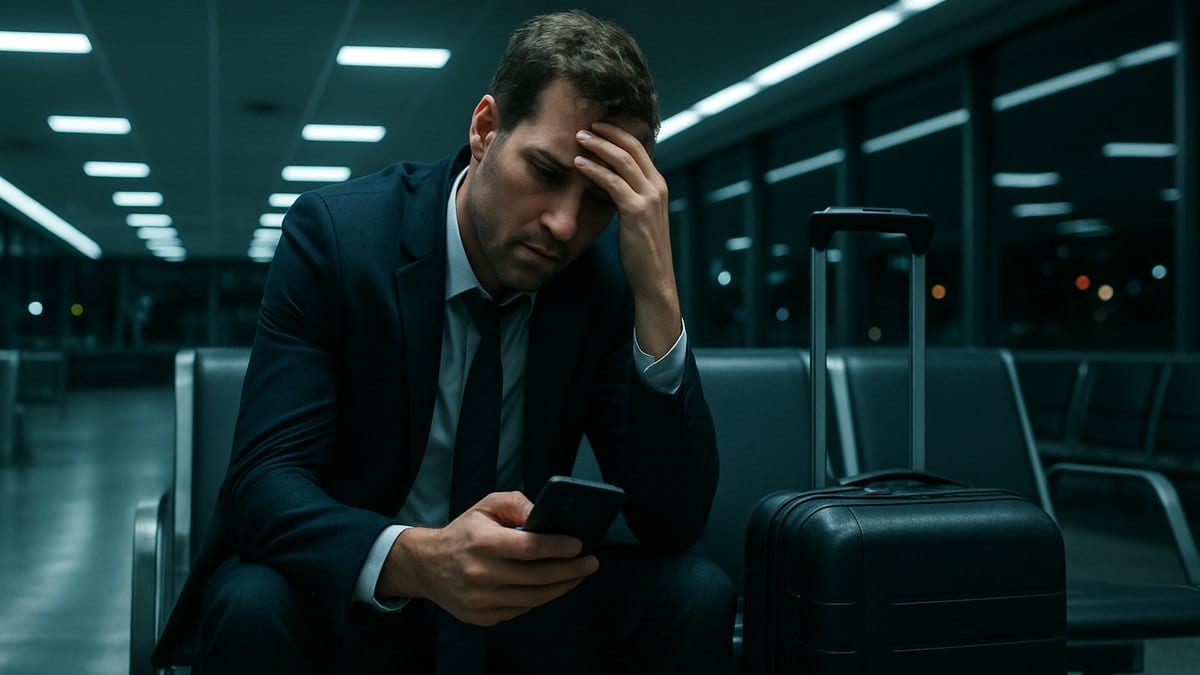
A Growing Price Tag on Passenger Time
Recent technical analyses of the U.S. aviation system indicate that the single largest share of delay-related costs now falls on passengers themselves, primarily through the value of their lost time. One government-linked assessment of air traffic delay trends found that passenger-related impacts have risen into the range of roughly $18 billion annually, even as airlines and regulators point to improvements in on-time performance.
These estimates build on a long line of economic studies that assign a dollar value to each hour a traveler spends waiting in terminals, sitting on taxiways, or rerouting after missed connections. When multiplied across millions of domestic flights and hundreds of millions of passengers in a typical year, even modest schedule disruptions add up quickly. Reported average delay durations in the range of 20 to 30 minutes for U.S. carriers translate into billions of dollars in foregone productivity and leisure time alone.
Industry data compiled by airline trade groups and federal researchers also highlight that total delay costs to the broader economy are significantly higher once airline operating expenses and knock-on impacts to other sectors are counted. Previous benchmark studies placed the combined annual burden for airlines, passengers and related industries above $30 billion in pre-pandemic years, underscoring how the roughly $18 billion that passengers personally shoulder is only part of the story.
Despite a relatively low cancellation rate in 2023 and 2024, Bureau of Transportation Statistics data show that about one in five domestic flights still arrives at least 15 minutes late. For travelers, these short but frequent disruptions often matter more than headline cancellation figures, because they quietly erode schedules, compress connection windows and ripple through work and family plans.
Meals, Hotels and Rideshares Add Up Fast
Beyond the economic value of time, direct out-of-pocket spending is an increasingly visible component of the hidden cost of delays. Recent consumer surveys analyzed in published coverage have found that passengers caught in significant disruptions commonly spend more than $400 per incident on necessities such as extra meals, emergency clothing, replacement toiletries and local transportation when their itineraries fall apart.
One 2026 analysis of disrupted passengers in North and South America and Europe, reported in U.S. media, indicated that affected travelers spent on average more than $100 on food and drink, close to that amount again on essential purchases, and over $200 on local transport and related costs every time a major delay or cancellation struck. When mapped onto federal data showing hundreds of thousands of long delays each year in the United States alone, those averages help explain how aggregate passenger costs can climb into the tens of billions.
Holiday periods and major weather events amplify these pressures. Around Thanksgiving and peak winter travel, consumer finance and travel reports routinely document scenarios in which a single overnight disruption leads to an unplanned hotel stay of $200 or more, multiple additional meals and rideshare charges, and in some cases the need to buy entirely new tickets to reach time-sensitive events. For families or groups traveling together, the expenses scale quickly.
Many of these costs are not fully reimbursed, even when passengers eventually secure partial compensation or travel credits. Standard travel insurance products often impose waiting periods and strict caps on delay benefits, while airline vouchers may expire before they are used. As a result, a meaningful share of the $18 billion in annual passenger costs ultimately lands on household budgets rather than balance sheets in the aviation sector.
Why Delays Persist Despite Better Cancellation Rates
Federal transportation statistics show that U.S. airlines have recently achieved some of the lowest cancellation rates in more than a decade, helped by more conservative scheduling, new consumer rules on refunds and stronger scrutiny of operational meltdowns. However, on-time arrival performance has improved far less dramatically, with a substantial minority of flights still experiencing delays of 15 minutes or more.
Academic work using large samples of Bureau of Transportation Statistics data points to a complex mix of factors behind persistent delays. Weather remains a major driver, but newer analyses highlight the growing contribution of air traffic control constraints, ground delay programs and security-related bottlenecks in a system operating near capacity on many routes. Research into delay propagation shows how a late inbound aircraft can push subsequent flights off schedule for an entire day, particularly at busy hubs.
Large, headline-grabbing disruptions provide periodic reminders of how fragile the system can be. Recent technology outages and staffing shortages have resulted in the cancellation of thousands of flights over just a few days, costing individual airlines hundreds of millions of dollars and stranding well over a million passengers. While such events are relatively rare, they sit atop a baseline of more routine delays that collectively impose far greater cumulative costs on travelers over the course of a year.
Policy initiatives have focused primarily on transparency and accountability rather than direct financial compensation. The U.S. Department of Transportation has strengthened its refund rules for significant disruptions and launched public dashboards that compare what airlines voluntarily promise when delays are within their control. Advocates argue that these steps make it easier for passengers to understand their rights, but they do not yet mirror the automatic cash compensation regimes in regions such as the European Union.
How Travelers Are Adapting to an Uncertain System
As the hidden costs of delay become more widely documented, frequent travelers are changing their behavior. Corporate travel managers increasingly factor likely disruption costs into decisions about routings and preferred carriers, while individual passengers are more willing to pay a premium for nonstop flights, early-day departures and airlines with stronger on-time records, viewing these choices as a form of informal insurance against missed meetings and overnight stays.
Consumer surveys highlighted in recent travel and finance reporting suggest that many passengers now build larger buffers into their plans, arriving earlier for important events, scheduling same-day meetings more conservatively, and avoiding tight connections in delay-prone hubs. Some leisure travelers report shifting trips away from peak holiday weekends altogether, trading convenience for a lower risk of disruption-related expenses.
The rise of low-cost carriers and ultra-tight scheduling has also reshaped expectations. While these airlines often advertise the lowest base fares, irregular operations can come with fewer built-in protections, less interline rebooking flexibility and more limited customer service options when delays occur. Travel analysts note that when stranded passengers must arrange their own hotels and alternative flights at the last minute, any initial savings can evaporate, feeding directly into the broader $18 billion burden shouldered by consumers.
At the same time, more major airlines have begun publicly outlining policies that include complimentary meals, hotels and rebooking in certain categories of controllable delays, partly in response to federal pressure and competitive dynamics. These commitments reduce some out-of-pocket spending for affected customers, but coverage varies by carrier and circumstance, and many weather- or air-traffic-related delays fall outside the scope of such guarantees, leaving passengers to absorb the costs.
Calls for Stronger Protections and Smarter Investment
The mounting evidence that delays cost U.S. travelers around $18 billion per year has renewed debate over who should bear those costs and how best to reduce them. Consumer advocates and some policy researchers argue that stronger compensation rules, similar to those in Europe, could both shift part of the financial burden back toward airlines and create stronger incentives for punctuality.
Industry groups counter that the U.S. aviation network operates under different regulatory and weather conditions, and emphasize that heavy compensation mandates could ultimately lead to higher fares or reduced service to marginal communities. Instead, they point to targeted investment in air traffic control modernization, runway and gate capacity, and better weather forecasting as more efficient ways to trim delay minutes at scale.
Technical studies of delay economics suggest that even modest improvements in on-time performance can unlock substantial benefits for passengers and the wider economy. Because the value of travelers’ time makes up such a large portion of total delay costs, shaving just a few minutes off average late arrivals across millions of flights could save consumers billions of dollars annually in aggregate, while also easing pressure on airlines and the business sectors that depend on reliable air service.
For now, the numbers indicate that U.S. travelers remain the silent financiers of aviation delays, paying through hours lost and wallets opened. Until systemic improvements compress delay durations more consistently, the hidden $18 billion line item will continue to shadow American air travel, shaping how and when people choose to fly.