

More news on this day
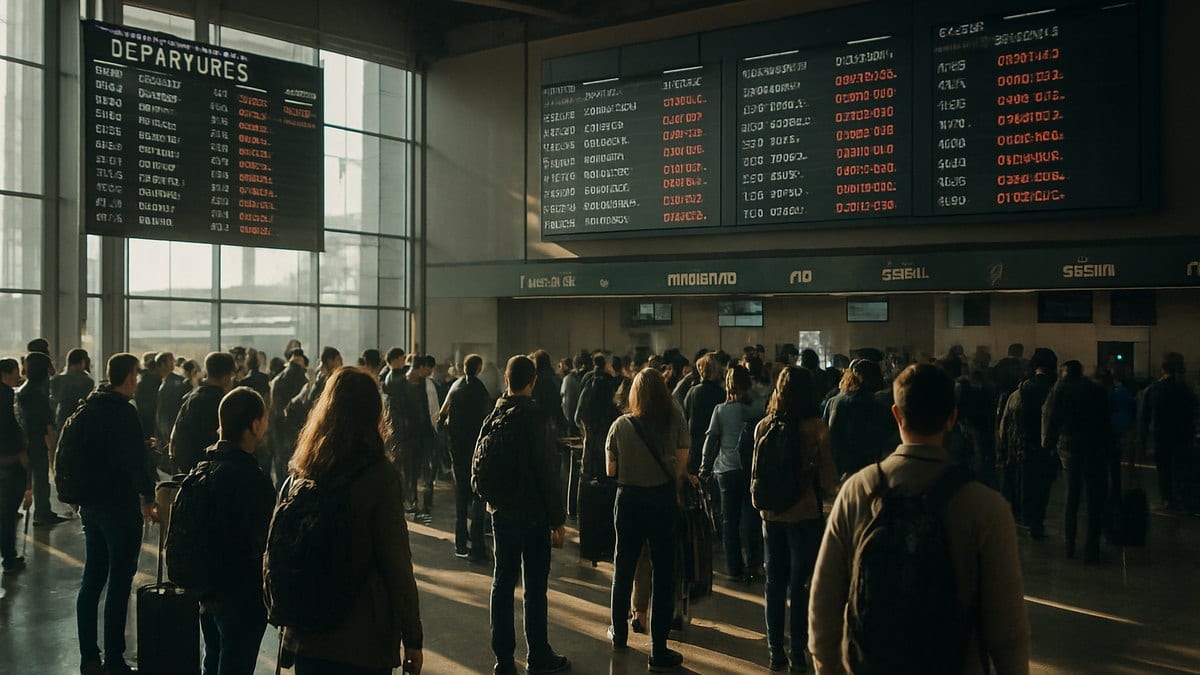
Spring travel out of Washington Dulles International Airport is off to a turbulent start, with a series of April disruptions compounding delays that began building in March across the capital region’s airspace.
Get the latest news straight to your inbox!
Storm Systems Trigger New Wave of April Slowdowns
Fast-moving spring storms are adding a fresh layer of disruption at Washington Dulles just as April travel demand accelerates. Thunderstorms that swept through the Mid-Atlantic on April 1 brought ground stops and rolling delays to the region’s major airports, including Dulles, as air-traffic managers slowed arrivals and departures for safety. Publicly available tracking data and passenger reports indicate that afternoon and evening departures were especially hard hit, with some flights pushed back by an hour or more as the weather moved through.
The April 1 storms followed a broader pattern of weather-driven slowdowns that has affected multiple US hubs this month. Operational summaries describe a patchwork of ground delay programs and spacing restrictions as controllers navigated low clouds, lightning and shifting wind patterns. For Dulles, that has meant tight capacity during peak periods and longer-than-normal recovery times after each burst of bad weather.
While many flights have ultimately departed, the cumulative effect has been mounting congestion inside the terminal and on surrounding roadways. Travelers connecting through Dulles to transatlantic and transborder destinations report missed connections and rebookings, particularly on itineraries with short layovers booked during the late-afternoon departure bank.
Forecasts for the second half of April suggest additional rounds of showers and thunderstorms are possible during key weekends, raising the risk that intermittent weather events could continue to ripple through the schedule even on days when skies eventually clear.
Lingering ATC Issues Keep Washington Airspace Under Strain
The April weather challenges have landed on top of lingering air-traffic control strains that first drew public attention in March. In mid-March, operations at Dulles and other Washington-area airports were repeatedly curtailed after an environmental issue at the Potomac Terminal Radar Approach Control facility in Warrenton, Virginia. According to published coverage and FAA statements, the facility was briefly evacuated on multiple occasions, prompting ground stops and significant reductions in arrivals and departures for airports it serves, including Dulles.
Although full service was restored, those March disruptions exposed how reliant the region’s airspace is on a single control node and how quickly problems at that facility can cascade across airports. Commentary from aviation analysts notes that even short-lived ground stops can generate hours of follow-on delays as airlines reposition aircraft and crews, especially when they coincide with busy travel periods.
In April, Dulles has continued to experience pressure from a fragile national network. Government data and airline dashboards show that delay programs at other major hubs have periodically affected Dulles-bound flights, forcing schedule adjustments and leading to irregular operations on certain days. With spring storms and high demand occurring nationwide, Washington’s international gateway is often feeling the knock-on effects of bottlenecks far beyond the capital region.
Travel observers say that combination of local ATC vulnerabilities and nationwide congestion is leaving Dulles less room to absorb shocks. Each new weather cell or equipment issue risks tipping the system into a fresh round of holding patterns, gate changes and rolling departure pushes.
Passenger Impact: Missed Connections and Longer Travel Days
The result for passengers flying through Dulles in early April has been a higher likelihood of extended travel days. Reports from travelers and flight-status aggregators indicate elevated numbers of delayed departures, with some short-haul flights to East Coast cities leaving more than an hour behind schedule. Long-haul international services have generally operated, but not always on time, magnifying the stakes for those connecting from delayed feeder flights.
Travel-focused outlets tracking day-of operations at Dulles cite instances in which dozens of flights have departed late on a single day, alongside a smaller number of outright cancellations. These patterns align with a broader national picture in which airlines are opting to delay rather than cancel when possible, keeping aircraft in rotation but stretching passengers’ itineraries well beyond their planned durations.
Inside the terminal, anecdotal accounts describe long queues at rebooking desks during peak disruption windows, as well as crowded gate areas when departure times slip repeatedly. Some travelers report overnight stays in nearby hotels after missed connections on transatlantic routes, particularly when the final leg of a journey is a short-haul domestic hop with limited late-night frequencies.
Consumer advocates point out that the April turbulence is landing on passengers who may already be contending with residual staffing constraints and tight seating availability. With planes often departing nearly full, rebooking options can be limited when several flights in a row are affected, making it harder to find same-day alternatives from Dulles or neighboring airports.
Airline and Network Shifts Reshape Dulles Traffic
Complicating the disruption picture are ongoing changes to the airline mix at Washington Dulles. Labor and industry notices circulated in March outline plans by at least one major domestic carrier to wind down operations at the airport, focusing instead on other hubs in its network from April onward. While that carrier accounts for a relatively small share of Dulles traffic compared with the dominant players, its withdrawal alters route options and could increase the load on remaining airlines on overlapping city pairs.
Analysts note that such strategic shifts can heighten the sensitivity of an airport to irregular operations. When there are fewer competitors on a route, passengers have fewer choices when a flight is delayed or canceled, and reaccommodation options may require connections through different hubs or even different Washington-area airports. In practice, that can mean longer rerouting journeys and additional exposure to delays at multiple points in the system.
At the same time, international demand through Dulles remains strong heading into the peak summer season, according to publicly available booking and capacity data. Transatlantic and transborder services are ramping up frequencies, adding to the volume of connections that must be protected during periods of disruption. Even modest departure delays on inbound domestic legs can jeopardize those high-value long-haul departures if aircraft, crews or connecting passengers are late arriving at their gates.
Airport planning documents and regional economic forecasts have long framed Dulles as a critical global connector for the Washington area. The current pattern of disruptions underscores how integral the airport is to both business and leisure travel flows, and how network reconfigurations intersect with weather and ATC constraints to shape the passenger experience.
What April Travelers Through Dulles Should Expect
With April still unfolding, publicly accessible aviation dashboards and weather outlooks point to a continued risk of intermittent disruption at Washington Dulles. While no single long-term shutdown is indicated, the combination of volatile spring weather, lingering ATC sensitivities and a densely scheduled flight program suggests that delays may recur in waves rather than as a one-time event.
Travel experts advise passengers flying from or via Dulles this month to plan for additional buffer time, particularly for afternoon and evening departures when thunderstorms are more likely and when the cumulative effect of earlier delays tends to peak. Morning flights often enjoy better on-time performance, but can still be affected when aircraft and crews arrive late from the prior day’s operations.
According to passenger-rights organizations, those traveling through Dulles should pay close attention to the specific cause codes attached to delays and cancellations, which determine eligibility for compensation or rebooking assistance on some itineraries. Weather-related disruptions are frequently treated differently from issues attributed to crew scheduling or equipment, and policies vary between airlines and jurisdictions.
For now, the story of April at Washington Dulles is one of a busy international hub grappling with overlapping pressures rather than a single dramatic shutdown. As the month progresses, how quickly airlines and air-traffic managers can recover after each bout of disruption will shape whether Dulles passengers remember this spring as a rough patch or a prolonged season of delays.