

More news on this day
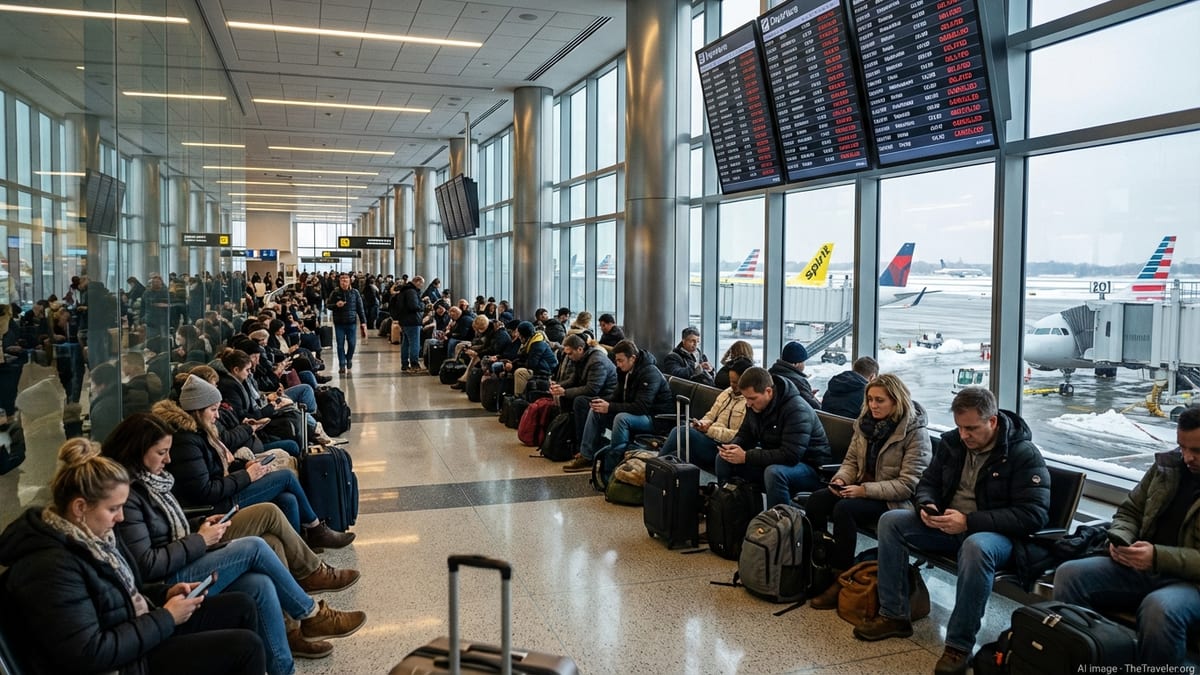
Passengers at New York’s LaGuardia Airport faced mounting frustration today as 161 flights were delayed and eight canceled, snarling operations for Spirit Airlines, Delta Air Lines, American Airlines and other major carriers on heavily traveled domestic and international routes to Fort Lauderdale, Atlanta, Boston and Dallas.
Winter Weather and Congested Skies Trigger New Disruptions
The latest wave of disruption at LaGuardia comes amid a volatile winter for US air travel, with repeated storms battering key hubs along the East Coast and in the Midwest. On Sunday, operational data showed LaGuardia once again straining under the pressure as airlines slowed departures and arrivals in response to deteriorating conditions and crowded airspace.
While New York City escaped the full shutdowns seen during severe events earlier in the season, airlines at LaGuardia were forced to lengthen ground times, reshuffle gate assignments and stack departures in holding patterns, contributing to the 161 delayed departures and arrivals. The eight cancellations, though modest in number, rippled through already tight schedules and left many travelers scrambling for scarce seats later in the day.
Carriers have been attempting to balance safety concerns with the need to keep aircraft and crews moving across a national network that remains under strain from recurring winter storms. As delays built at LaGuardia, knock-on effects were felt in Boston, Atlanta, Fort Lauderdale and Dallas, all of which serve as important connection points for domestic and international itineraries.
Airport officials urged passengers to arrive early, stay in close contact with their airlines and be prepared for gate changes or rolling departure estimates. Check-in halls and security lanes remained busy throughout the day as delayed travelers mixed with on-time passengers arriving for evening flights.
Spirit, Delta and American Among Hardest Hit
Low-cost and legacy carriers alike were caught in the disruption, with Spirit Airlines, Delta Air Lines and American Airlines among the most affected operators at LaGuardia. Spirit, which runs a dense schedule of leisure-oriented flights from New York to Florida and other sun destinations, saw delays cascade across its network as aircraft arriving late from Fort Lauderdale and other cities could not be turned around on time.
Delta, which maintains a substantial presence at LaGuardia, faced rolling delays on popular shuttle-style routes to Boston and key business and leisure services to Atlanta and Dallas. Longer-than-planned ground stops for deicing, crew reassignments and runway spacing requirements forced the airline to repeatedly adjust departure boards, leaving travelers facing waits that stretched from under an hour to several hours in some cases.
American Airlines customers also experienced schedule turbulence as the carrier juggled tight aircraft rotations and crew duty limits. With limited spare capacity available in the heart of the winter travel season, American’s options to rebook passengers on alternative same-day departures were constrained, especially on peak-time flights between LaGuardia and Boston or connecting services onward to the South and Midwest.
Other carriers with smaller operations at LaGuardia, including low-cost and regional airlines, reported scattered delays but benefited slightly from having fewer overlapping banked departures. Nevertheless, as the day wore on, even airlines with initially modest disruptions saw the impact grow as aircraft and crews failed to return to schedule.
Key Routes to Fort Lauderdale, Atlanta, Boston and Dallas Affected
The brunt of the disruptions was felt on LaGuardia’s busiest domestic corridors, including services to Fort Lauderdale, Atlanta, Boston and Dallas, which together serve as gateways for both point-to-point travelers and those connecting onto longer-haul routes. Flights to Fort Lauderdale were particularly sensitive, as the Florida hub is a major link for cruise passengers heading to and from Port Everglades and other South Florida ports.
In Atlanta, the nation’s busiest hub, delays on inbound and outbound LaGuardia services created additional pressure on a network already juggling weather-related challenges from earlier in the week. Missed connections in Atlanta forced airlines to rebook passengers onto later departures, sometimes pushing trips into the following day where accommodation and meal support policies allowed.
Boston’s Logan International Airport, which has repeatedly experienced weather and operational knock-ons throughout this winter, again felt the strain as shuttle routes from LaGuardia ran behind schedule. Business travelers commuting between New York and Boston, a corridor that normally offers multiple departures across several airlines, reported packed re-accommodated flights and limited flexibility to switch times.
Dallas, a key connecting point for traffic heading deeper into the US and to Mexico and Latin America, also saw its schedules affected by the LaGuardia bottleneck. Even when flights operated, some departed with passengers missing from earlier delayed feeders, reducing load factors while leaving stranded travelers waiting for the next available seat.
Passengers Face Long Lines, Full Rebookings and Frayed Nerves
Inside LaGuardia’s terminals, the numbers on departure boards translated into long customer service queues, full standby lists and growing frustration as travelers navigated the latest in a series of winter disruptions. Families bound for school holidays in Florida, business travelers on tight itineraries and international passengers connecting through US hubs all competed for limited rebooking options.
Many travelers reported wait times of an hour or more to speak to airline agents at service desks, prompting some to turn to mobile apps or airport kiosks to secure alternative flights before options disappeared. With aircraft often departing fully booked even after delays, passengers who misconnected from other airports found themselves with few same-day alternatives.
Food courts and seating areas became de facto waiting rooms as departure times were repeatedly pushed back in 15- or 30-minute increments. Portable chargers and power outlets were in high demand, while some travelers resorted to camping out on the floor near gates as the day stretched into evening.
Despite the frustration, most airlines emphasized that safety remained the first priority and encouraged travelers to consider voluntary rebooking if their plans were flexible. For those who chose to abandon trips altogether, standard US Department of Transportation rules on refunds for canceled flights continued to apply, though compensation for weather-related delays remained limited.
Ongoing Winter of Discontent for US Air Travel
The scene at LaGuardia fits into a broader pattern of winter disruption across the United States, with major storms and persistent cold weather repeatedly testing airline and airport resilience. From Philadelphia and Boston to Atlanta and Chicago, carriers have spent weeks juggling rolling delays, cancellations and tight crew availability in an effort to keep national schedules intact.
Industry analysts note that tighter staffing margins, high demand and complex hub-and-spoke networks have left airlines particularly vulnerable this season. When one major airport, such as LaGuardia, experiences a spike in delays and cancellations, the effects can be felt hundreds or even thousands of miles away, as aircraft and crews fail to arrive where they are needed on time.
For travelers, the latest bottlenecks serve as another reminder of the importance of flexibility during the winter months. Experts continue to advise booking earlier flights in the day when possible, leaving buffer time for connections, and closely monitoring airline communications for schedule changes and travel waivers.
As operations at LaGuardia gradually stabilize, attention is already turning to the next weather systems tracking across the country. With several weeks of winter still ahead, passengers and airlines alike are bracing for the possibility that today’s disruptions at LaGuardia will not be the last significant test of the US aviation network this season.