

More news on this day
Travelers across South America faced fresh disruption this weekend as São Paulo–Guarulhos International Airport reported dozens of delays and several cancellations affecting LATAM, Azul, and GOL services linking Brazil with key hubs in Rio de Janeiro, Buenos Aires, and Lima.
Get the latest news straight to your inbox!
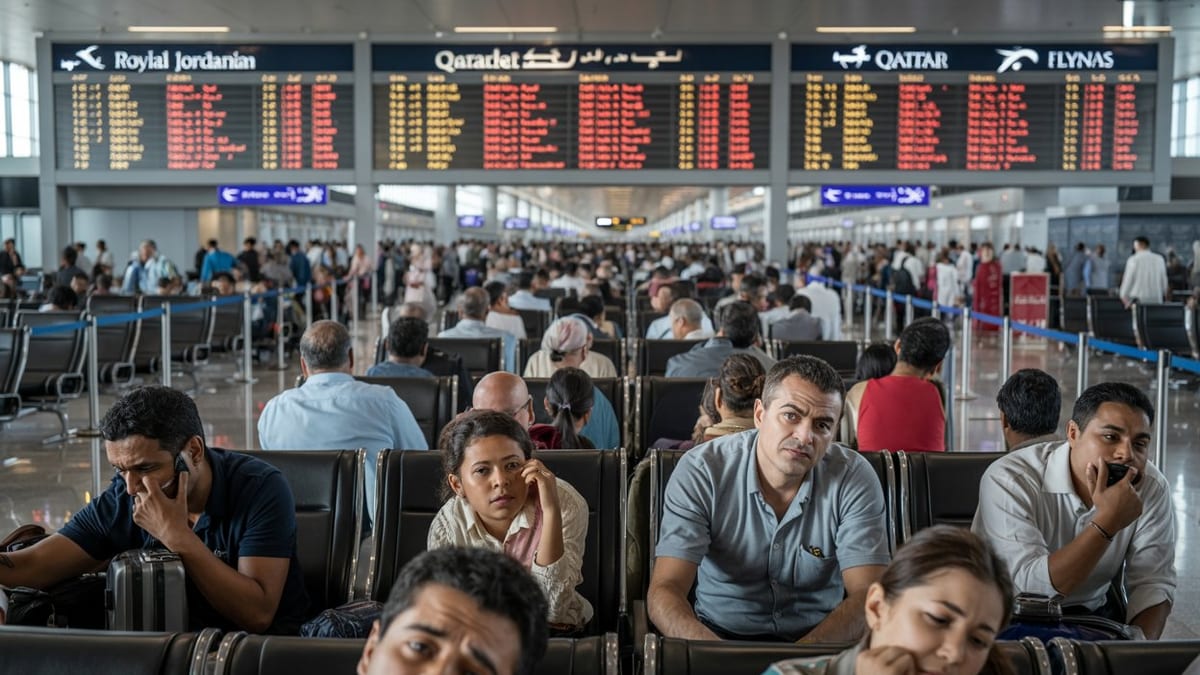
Dozens of Flights Affected Across Regional Network
Operational data compiled from airport trackers and aviation analytics platforms indicate that São Paulo–Guarulhos recorded more than 50 delayed departures and arrivals and a small number of outright cancellations over the current travel period. The disruption has primarily affected narrowbody services that connect Brazil’s busiest international gateway with major South American cities including Rio de Janeiro, Buenos Aires, and Lima.
Within this total, LATAM, Azul, and GOL services account for the majority of irregular operations, reflecting their dominant presence in Brazil’s domestic and regional markets. Guarulhos functions as a central interchange for all three carriers, meaning that schedule issues on trunk routes can quickly cascade across their networks.
The reported 53 delays and 3 cancellations include a mix of short haul shuttles between São Paulo and Rio de Janeiro as well as cross border services toward Argentina and Peru. Even when aircraft eventually depart, extended ground holds and late inbound flights are contributing to missed connections and extended journey times for passengers.
While most affected flights have ultimately operated, the pattern of rolling delays shows how even a relatively small number of cancellations can intensify pressure on peak time operations at a hub the size of Guarulhos.
Impact on Key Routes to Rio de Janeiro, Buenos Aires, and Lima
The São Paulo to Rio de Janeiro air bridge, one of South America’s busiest corridors, has seen repeated schedule adjustments as airlines work to absorb late running aircraft. Publicly available timetables show LATAM and GOL operating frequent shuttles between Guarulhos and Rio’s Galeão and Santos Dumont airports, with several of these rotations departing behind schedule during the latest disruption cycle.
Connections between Guarulhos and Buenos Aires have also been affected, with GOL, LATAM, and partner airlines operating multiple daily services to the Argentine capital’s main airports. Tracking data for recent days highlights late arrivals and extended turnaround times on flights between São Paulo and Buenos Aires, raising the risk of missed onward connections for travelers heading to secondary cities in both Brazil and Argentina.
On the long regional sector linking São Paulo and Lima, LATAM’s hub to hub pattern has been particularly sensitive to delays. Lima serves as a gateway for connections to the Andes and Pacific coast, so knock on effects from a late departure out of Guarulhos can extend to destinations as far as Cusco, La Paz, or Santiago when aircraft and crews arrive outside their scheduled banks.
For passengers, the combination of short haul shuttles and longer regional links sharing the same aircraft and crew pools makes disruption on any one leg capable of derailing an entire day’s itinerary, especially where minimum connection times are tight.
LATAM, Azul, and GOL Under Operational Strain
LATAM, Azul, and GOL collectively carry the bulk of Brazil’s domestic air traffic and a significant share of regional flows. Publicly available performance reports and recent traffic analyses show that these airlines routinely operate dense schedules through Guarulhos, using the airport as a key plank in their connection strategies for both leisure and business markets.
In the current episode, LATAM appears to account for a sizeable portion of the recorded delays, in line with its role as the largest operator at Guarulhos and a major provider of flights to Lima and Buenos Aires. Observers of Brazil’s aviation market note that high aircraft utilization and complex connection banks can leave large carriers more exposed when minor disruptions accumulate over the course of the day.
Azul, which has historically emphasized operational reliability and connectivity from other hubs such as Campinas, has nonetheless been drawn into the disruption where its Guarulhos operations intersect with wider traffic flows. Meanwhile, GOL’s strong presence on the shuttle routes to Rio and Argentina means that any congestion at Guarulhos or along the southeast corridor can quickly translate into late arrivals and departures.
Public metrics released by Brazilian air traffic authorities and airport operators in recent months have highlighted ongoing challenges in maintaining on time performance during peak periods, especially when weather, airspace constraints, or ground handling bottlenecks coincide.
Knock On Effects for Connections and Passenger Experience
For travelers using Guarulhos as a connecting hub, even moderate delays can have outsized effects. Airline schedule planners typically build in connection windows of 60 to 90 minutes on domestic transfers and longer for international itineraries, but real world experience shared by passengers suggests that disruptions at security, immigration, or baggage transfer can quickly erode these buffers.
Recent traveler reports circulating in public forums describe missed connections at Guarulhos after late inbound flights from Rio de Janeiro, Buenos Aires, and Lima, particularly when separate tickets or different airlines are involved. In such cases, rebooking options can be limited, especially on busy weekends or during holiday peaks when remaining seats are scarce.
Some passengers have indicated that they now plan longer layovers in São Paulo to protect against the risk of misconnecting, even when it means extending total travel time. Others highlight the importance of monitoring flight status in real time and using airline apps or airport displays to anticipate potential delays early enough to adjust ground transport or accommodation plans.
These experiences underline how a cluster of 53 delays and a handful of cancellations can ripple far beyond the immediate departure boards at Guarulhos, affecting hotel bookings, tour departures, and business schedules across multiple countries.
What Travelers Should Watch in the Coming Days
With Guarulhos entering another busy stretch of regional and long haul departures, airlines and airport stakeholders are expected to continue adjusting schedules and aircraft rotations to stabilize operations. Travelers booked on LATAM, Azul, or GOL flights to or through São Paulo in the near term may wish to keep a close eye on departure times and any aircraft or gate changes.
Publicly available guidance from aviation consumer groups suggests that passengers should allow extra time at the airport, especially when connecting between domestic and international flights or switching between airlines. Where possible, booking itineraries on a single ticket and with generous minimum connection times can increase the likelihood of being reprotected automatically if disruption occurs.
For those heading to or from Rio de Janeiro, Buenos Aires, or Lima, the latest data indicates that most flights are still operating, albeit with a greater risk of delay. Keeping flexible ground plans, including airport transfers and hotel check in times, may help mitigate the inconvenience if schedules shift.
As airlines refine their operations and traffic patterns evolve through the season, on time performance at Guarulhos will remain closely watched by both industry analysts and travelers, given the airport’s pivotal role in linking Brazil with the rest of South America.