

More news on this day
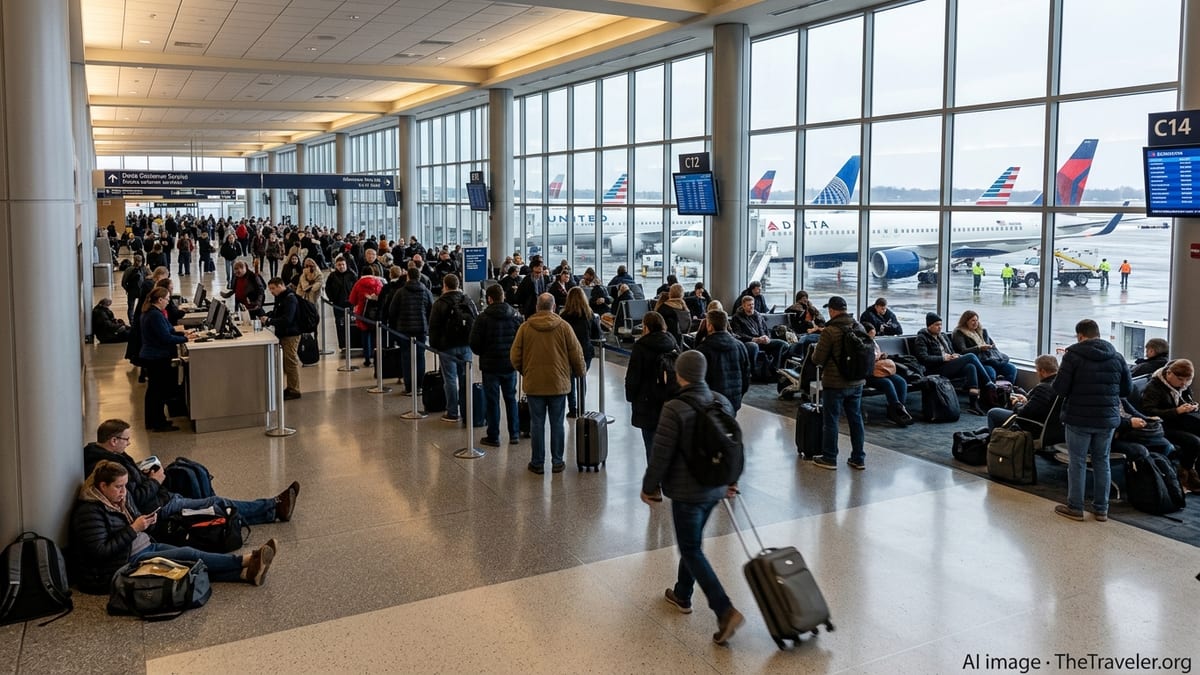
Hundreds of travelers at Minneapolis–St. Paul International Airport faced extended disruptions today as publicly available flight-tracking data showed three cancellations and 126 delays, snarling operations for Delta Air Lines, United Airlines, American Airlines and several smaller carriers.
Get the latest news straight to your inbox!
Weather and Network Strains Ripple Through MSP Operations
The day’s disruptions at Minneapolis–St. Paul unfolded against a broader backdrop of unsettled late-winter weather and continuing strain across U.S. airline networks. Recent storms across the Upper Midwest in March 2026 have periodically tightened capacity, complicating efforts by carriers to keep schedules on track and reposition aircraft and crews.
Minneapolis–St. Paul, a major hub for Delta and an important station for United, American and low-cost competitors, typically handles hundreds of daily departures. Even a handful of cancellations combined with more than a hundred delayed flights can quickly translate into several planeloads of travelers stuck in terminals or forced to rebook.
Publicly available aviation dashboards for today list just three outright cancellations at MSP, a modest figure compared with historic winter storms, but the 126 delayed flights highlighted how even small schedule changes can stack up. Rolling delays often stem from aircraft arriving late from other cities hit by storms or congestion, leaving passengers in Minneapolis waiting for planes and crews to cycle back into position.
Recent analyses of national delay patterns also show Minneapolis–St. Paul ranking among airports where passengers collectively lose substantial time each year to ground holds and late arrivals. On high-impact days like today, those trends are felt more acutely by travelers who see their itineraries pushed back hour by hour.
Delta, United, American and Others Work Through Backlogs
With MSP serving as a primary hub, Delta bore a significant share of today’s disruptions, although publicly visible data showed delays spread across most carriers at the airport. When a hub carrier’s schedule begins to slip, the effects extend far beyond a single city, touching connecting flights that depend on timely arrivals from Minneapolis–St. Paul.
United and American also registered delays on routes into and out of MSP, reflecting the interconnected nature of the domestic network. Aircraft and crews arriving from other parts of the country affected by storms, staffing constraints or air traffic control slowdowns tended to arrive behind schedule, narrowing the margin for on-time departures.
Published coverage in recent weeks has described U.S. airlines juggling recovery from earlier weather events and busy spring travel demand, leaving less buffer to absorb a day of concentrated delays at a key Midwestern hub. When recovery windows shrink, even a relatively small number of cancellations, such as the three recorded today, can still leave many passengers stranded as rebooking options fill quickly.
Operational summaries circulated by industry observers indicate that airlines are increasingly relying on preemptive schedule adjustments to avoid even more severe knock-on effects. While this can reduce the risk of large numbers of aircraft and crews being stranded, it also means that passengers at airports like MSP may encounter longer planned gaps, extended layovers and last-minute retiming of departure boards.
Terminal Crowds, Missed Connections and Changing Travel Plans
Inside Minneapolis–St. Paul’s terminals, the operational picture translated into crowded gate areas and long lines at customer service desks. With more than one hundred delayed departures, even modest schedule shifts were enough to push back connections for travelers headed to smaller regional cities or long-haul international destinations.
Minneapolis–St. Paul’s role as a connecting hub meant that some travelers were only briefly passing through the Twin Cities on their way to other regions of the United States and abroad. For these passengers, delays onto or out of MSP often triggered missed onward flights, creating a cascade of rebookings across airline reservation systems.
Publicly available guidance from major U.S. airlines suggests that travelers caught in same-day disruption are frequently offered options to switch to later flights, adjust routings through other hubs, or in some cases shift travel to another date when seats permit. On high-demand days, however, available seats can be scarce, leading to extended overnight stays or the need for alternative arrangements such as rail or rental cars for shorter regional journeys.
Observers of recent disruptions at MSP have also noted that airline call centers and digital channels play a larger role in managing passenger flows during busy periods. With gate agents focused on boarding and turnaround tasks, many travelers are turning to mobile apps and airline websites to rebook or monitor rolling changes to departure times.
Why a Day With Few Cancellations Can Still Feel Chaotic
The relatively small number of outright cancellations at Minneapolis–St. Paul today might suggest a manageable day on paper, yet the volume of delays told a different story for those on the concourses. Aviation analysts often point out that delays are less visible in headline statistics yet more disruptive to individual itineraries, especially when they emerge in clusters.
When dozens of flights are pushed back by 30 to 90 minutes, the result can be a complex puzzle of missed connections, reassignments and rolling gate changes. Each delayed arrival has the potential to disrupt the next leg for that aircraft, forcing airlines to reshuffle equipment and staff or hold departures while waiting for maintenance checks and catering services to catch up.
Minneapolis–St. Paul’s geographic position at the crossroads of north–south and east–west routes also turns it into a barometer for wider network stress. Industry data from previous months show that when storms and congestion hit other parts of the country, MSP often experiences secondary impacts as airlines divert aircraft and adjust schedules to protect transcontinental and international flights.
Passengers at the airport today encountered that phenomenon firsthand, with delays sometimes attributed to aircraft arriving late from distant hubs unaffected by local Twin Cities weather. The pattern highlights how contemporary airline schedules operate with narrow buffers, where disruptions rarely remain confined to a single region or storm system.
Growing Calls for Greater Resilience in U.S. Air Travel
Today’s disruptions at Minneapolis–St. Paul add to a growing chorus of concern about the resilience of U.S. air travel infrastructure. National reports examining passenger delay hours point to several large hubs, including MSP, where travelers collectively lose significant time each year as they wait on the ground or circle in holding patterns.
Policy discussions at the federal level have increasingly focused on modernizing air traffic control technology, improving data sharing between airlines and airports, and investing in infrastructure that can better withstand severe weather. While such initiatives are long-term in nature, they frame the context in which daily events like today’s delays at MSP take place.
For travelers, practical guidance from consumer advocates remains largely unchanged: build extra time into tight itineraries, favor earlier departures that offer more recovery options, and monitor flight status closely on days when storms or national congestion are in the forecast. Such strategies do not eliminate the risk of disruption but can offer better odds of reaching a destination the same day when schedules begin to slip.
As Minneapolis–St. Paul works through the backlog created by today’s 3 cancellations and 126 delays, attention across the industry remains fixed on how quickly airlines can reset their operations before the next wave of late-winter weather or heavy travel demand arrives.