

More news on this day
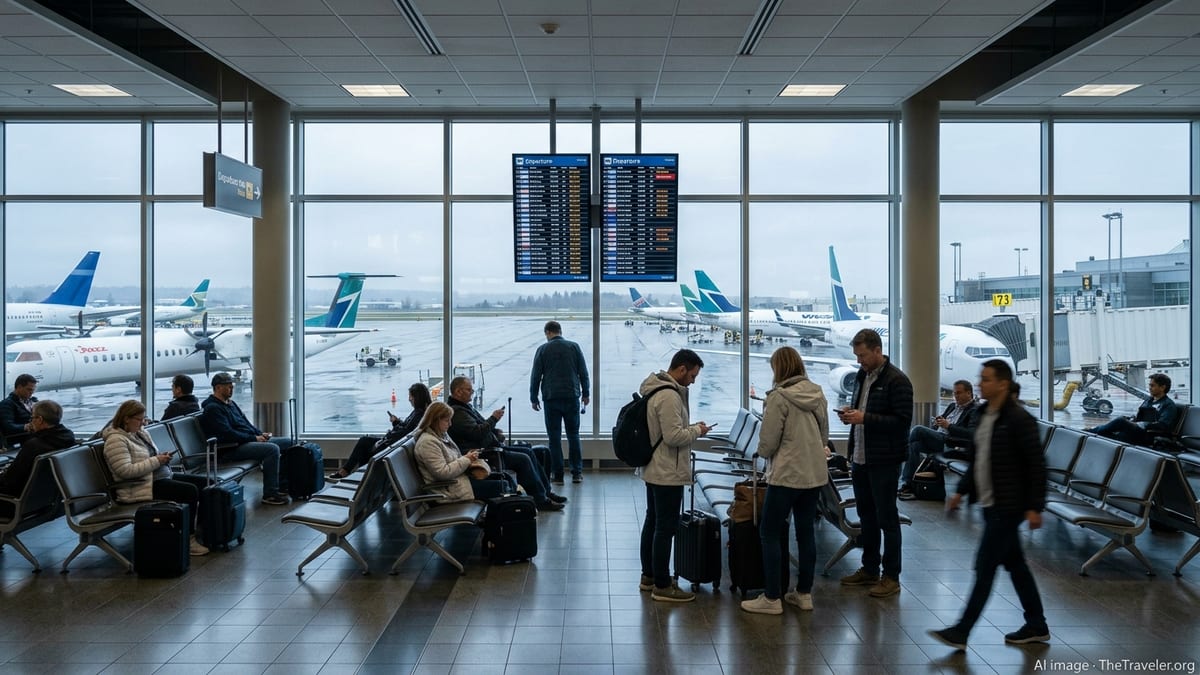
Travelers moving through Vancouver International Airport faced widespread disruption as nine flights were cancelled and 143 were delayed, sending knock-on effects across major Canadian and U.S. routes and straining already busy spring travel corridors.
Get the latest news straight to your inbox!
Delays Mount at a Key Canadian Hub
Vancouver International Airport, one of Canada’s busiest gateways for domestic and transborder flights, reported a sharp spike in operational disruption as dozens of services ran late or failed to depart. Publicly available flight-tracking data showed nine cancellations alongside 143 delayed departures and arrivals, affecting a mix of regional and mainline services throughout the day.
The pattern of disruption concentrated around peak travel periods, when banks of flights connect Vancouver with other major hubs. As schedules slipped, aircraft and crews fell out of position, compounding delays into the afternoon and evening. The resulting congestion affected both departing and arriving passengers, with some connections missed and itineraries requiring rebooking.
Reports indicate that the backlog at Vancouver added pressure to an air transport system already operating near capacity during the late winter travel period. Even a modest number of cancellations at a major hub can have an outsized impact, as airlines work with tight turnaround times and limited spare aircraft.
Operational bulletins and publicly available weather data suggest a mix of factors behind the disruption, including challenging conditions along the Pacific coast and flow-control measures further east. The combination left airlines juggling crew duty-time limits, aircraft rotations and gate availability throughout the day.
Ripple Effects Across Domestic Routes
The knock-on effects from Vancouver were felt most sharply on core domestic links to Toronto, Calgary and Kelowna. These routes function as essential connectors in Canada’s aviation network, feeding both long-haul international flights and shorter regional services. When flights on these corridors run late, onward journeys across the country, and even across the Atlantic and Pacific, can be affected.
Toronto-bound flights faced longer ground times as aircraft awaited new departure slots, while Calgary services experienced a combination of late arrivals into Vancouver and delayed returns. Kelowna, a key interior gateway, also saw schedule slippage as regional aircraft cycled through Vancouver later than planned. Passengers reported extended waits at departure gates and tighter transfer windows at connecting airports.
According to published coverage and airline status pages, delays on these domestic routes led to a cascade of schedule adjustments, including aircraft swaps and short-notice gate changes. While most flights eventually operated, the accumulated minutes of delay translated into missed connections for some travelers and late-night arrivals for others.
Government transportation performance dashboards have highlighted how even relatively small changes in cancellation rates at large hubs can disrupt overall punctuality. The situation in Vancouver reflected that dynamic, with a limited number of outright cancellations but a much larger pool of affected flights.
Transborder Links to Los Angeles and Other U.S. Cities Affected
Transborder services linking Vancouver with Los Angeles and other U.S. cities were also caught up in the disruption. These routes depend heavily on precise timings to match U.S. customs and immigration processing windows, as well as slot constraints at busy American airports. When flights slip out of their scheduled departure times, congestion at arrival terminals and airspace flow restrictions can further compound delays.
Flight-status boards showed Vancouver to Los Angeles departures operating behind schedule, with some services facing protracted boarding and pushback times. Delays on earlier feeder flights into Vancouver meant some passengers arrived at the gate with little time to spare, prompting airlines to hold certain departures where possible while still balancing crew duty limits.
Other U.S. gateways, including hubs in the Pacific Northwest and Mountain West, also recorded late-arriving flights from Vancouver. In several cases, the delayed inbound aircraft were scheduled to continue onward to additional destinations, extending the impact of a single late departure across multiple city pairs.
Travel organizations monitoring North American operations noted that recent winter storms and unsettled conditions have left schedules more vulnerable to disruption. In this context, the Vancouver delays contributed to a broader pattern of patchy reliability on cross-border routes during the season.
Multiple Airlines Caught in the Disruption
The operational challenges at Vancouver did not concentrate on a single carrier. Regional operator Jazz, low-cost and network services from WestJet and WestJet Encore, and flights from Pacific Coastal Airlines were all affected, alongside other domestic and international airlines. This broad impact reflected the shared dependence on airport infrastructure and air-traffic flow rather than any single airline-specific issue.
Publicly available information from airline tracking services showed regional carriers encountering particular difficulty maintaining tight turnarounds. Short-haul aircraft that typically operate multiple daily segments between Vancouver and nearby cities saw delays accumulate over the course of the day, occasionally forcing schedule reshuffles or cancellations when rotations could not be recovered.
WestJet and WestJet Encore, which operate a mix of narrow-body jets and turboprops from Vancouver, experienced delays across both domestic and transborder networks. These disruptions came amid wider scrutiny of schedule reliability in Canada, where passenger advocates have pointed to recurring weather and staffing pressures as ongoing challenges.
Pacific Coastal Airlines, a key link to smaller communities on the British Columbia coast and interior, also appeared among the delayed operators. For travelers on these routes, even relatively short holdups can have an outsized impact, particularly where onward ground transportation options are limited or infrequent.
Passenger Impact and What Travelers Can Do
For passengers, the immediate effects of the Vancouver disruptions were longer waits at gates, tighter or missed connections and, in some cases, overnight stays or rerouting through alternative hubs. Crowded departure halls and rebooking queues once again highlighted the vulnerability of complex itineraries when a major hub experiences operational stress.
Consumer information from regulators and travel organizations emphasizes the importance of monitoring flight status frequently on days when disruptions are widespread. Travelers connecting through Vancouver are encouraged to allow longer layovers where possible, particularly during winter and early spring, when storms and traffic-management initiatives are more common.
Travel advisories also recommend that passengers familiarize themselves with airline policies under Canada’s Air Passenger Protection Regulations, which outline entitlements in cases of significant delays and cancellations. While compensation depends on the cause of disruption and the size of the carrier, knowing the rules in advance can help travelers navigate rebooking, meal vouchers and accommodation options more confidently.
As airlines and airport operators work to restore normal operations, published performance data suggest that most delays at large Canadian hubs are resolved over the following operating day. However, the Vancouver episode demonstrates how a relatively small number of cancellations, combined with extensive delays, can still reshape travel plans for hundreds of passengers across multiple provinces and into the United States.