

More news on this day
Flight delays in the United States are quietly draining travelers’ wallets and schedules, with recent analyses indicating passengers shoulder roughly $18 billion each year in hidden costs ranging from wasted time to last-minute hotels and meals.
Get the latest news straight to your inbox!
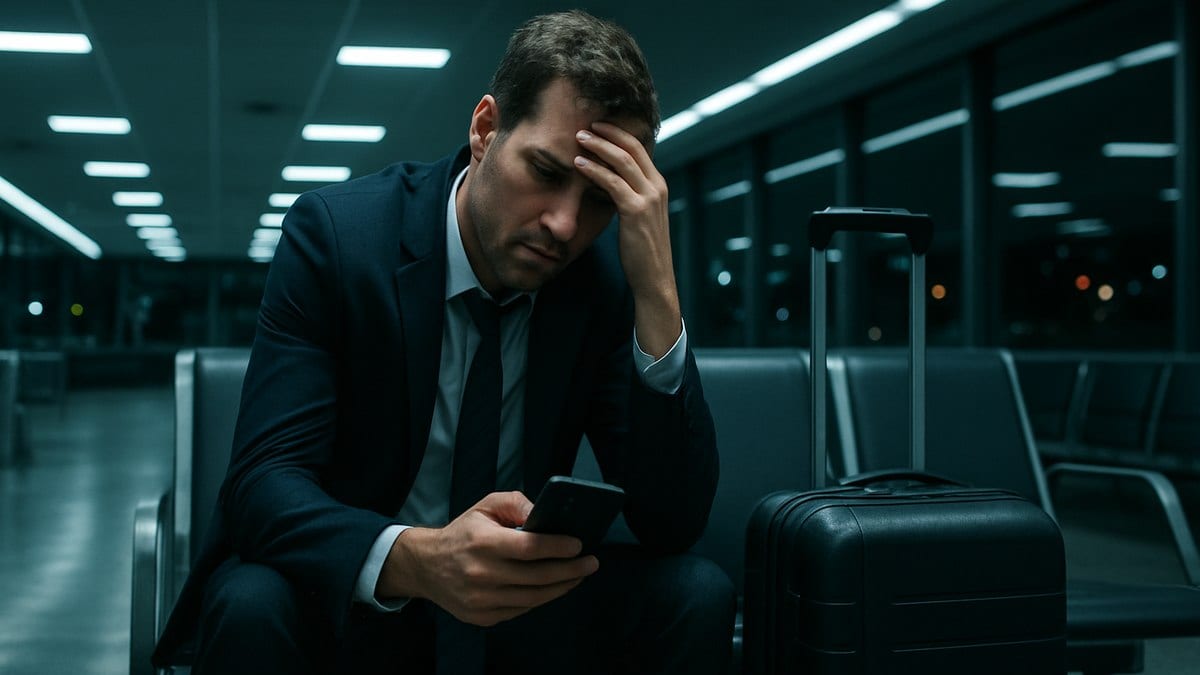
Billions Lost in Passenger Time and Out-of-Pocket Expenses
Multiple economic assessments of aviation disruptions point to a widening gap between what airlines pay directly for delays and what passengers absorb in lost time and incidental spending. Earlier federal and academic work pegged the total cost of domestic flight delays to the U.S. economy at roughly 33 to 41 billion dollars in a typical year, with passengers historically bearing about half of that burden in the form of lost productivity and disrupted plans.
Newer market data reports and industry submissions referenced in regulatory filings indicate that U.S. travelers now lose well over 30 billion dollars annually when both time and cash costs are counted. Within that figure, passenger time alone is often valued at more than 12 billion dollars a year, using conservative hourly estimates based on transportation economics. When additional outlays for food, ground transport, rebooking fees, and extra nights of lodging are included, the effective hit to consumers approaches 18 billion dollars annually.
These calculations build on methodologies developed in earlier research for the Federal Aviation Administration and the congressional Joint Economic Committee, which attempted to capture not only the minutes spent waiting at the gate but also the ripple effects of missed connections, re-routed itineraries, and trips cut short or extended because travelers anticipate congestion. While the exact totals vary by study and year, the consistent conclusion is that passengers collectively lose tens of billions of dollars, with a sizable share now concentrated in hidden, traveler-borne costs.
Analysts note that these losses are particularly acute for workers in high-wage metropolitan areas, where the value of time estimates used in cost models are significantly higher. A recent economic brief from a regional Federal Reserve bank, examining delays during a government shutdown, found that passengers at major coastal hubs faced time losses priced at more than 70 dollars per hour, underscoring how quickly a few hours of disruption can translate into substantial financial impact.
Delayed Flights Are Becoming a Routine Part of U.S. Travel
The growing cost burden on passengers comes as delays solidify into a routine feature of the U.S. air travel system rather than an occasional inconvenience. Bureau of Transportation Statistics data summarized in recent flight delay market reports show that average delays for U.S. carriers remain in the 20 to 30 minute range, affecting hundreds of thousands of flights each quarter.
Private analyses of airline performance highlight that, in some years, close to one in five U.S. flights is disrupted by a delay or cancellation. A recent review of operations at major airports reported that even some of the better performing hubs still see average waits of more than an hour once a flight is delayed. For travelers navigating tight connections, those aggregate statistics translate directly into missed flights, rerouted journeys, and extra nights away from home.
Disruptions related to air traffic controller shortages and temporary government funding lapses have added new pressure points. Publicly available data from the Federal Aviation Administration show that staffing challenges have triggered nationwide ground delays and required temporary reductions in traffic at dozens of high volume airports. Economic research on the 2025 government shutdown estimated that the additional delays at affected airports translated into millions of hours of lost time for passengers within weeks.
Weather remains a dominant factor, particularly during peak summer storm seasons and winter operations, but carrier-related issues such as maintenance, crew scheduling, and late arriving aircraft contribute a sizable share of delay minutes. One recent analysis of U.S. delay causes found that airline-controlled factors accounted for nearly one third of total delay time, suggesting that operational decisions and investments by carriers play a significant role in shaping passengers’ on time experience.
Hidden Costs Extend Far Beyond the Ticket Price
The 18 billion dollar estimate for traveler borne costs captures a variety of expenses that are rarely visible at the time of booking. In addition to the lost value of time, passengers frequently pay out of pocket for meals, hotel rooms, rideshares, and rebooked itineraries when delays stretch into overnight disruptions or lead to missed connections that fall outside airline policies.
Industry research summarized in recent aviation policy reports describes how a single severe delay can cost a family hundreds of dollars, particularly when it requires last minute hotel rooms at airport adjacent properties and premium priced ground transport. For business travelers, the economic hit can be even more pronounced when canceled meetings or lost workdays are factored into the value of the trip.
These hidden costs are unevenly distributed. Travelers who lack schedule flexibility or who are connecting through congested hubs are more exposed to cascading disruptions. Consumers booking basic economy fares can face additional change fees or reduced flexibility when trying to adjust their plans after a delay, amplifying the final cost of a disrupted trip. Survey data collected by travel analytics firms also indicate that many passengers only learn of delays once they reach the airport, limiting their ability to make lower cost alternative arrangements.
The environmental and infrastructure impacts of delays compound the economic burden. Older analyses by federal agencies and congressional committees found that extensive delays in a single year wasted more than a billion dollars in jet fuel, increasing operating costs and emissions. Newer work by aviation researchers suggests that delay propagation in tightly scheduled airline networks can spread quickly throughout the system, magnifying both direct and indirect costs for passengers and carriers alike.
Policy Shifts and Compensation Rules Shape Who Pays
Recent policy developments in Washington are redefining how the costs of delays are shared between airlines and passengers. The U.S. framework differs markedly from European rules, where long delays and cancellations often trigger standardized cash compensation. Domestic guidance has historically focused on tarmac delays and disclosure obligations rather than broad based reimbursement of traveler time and expenses.
Over the past two years, the U.S. Department of Transportation has rolled out new consumer facing dashboards and rulemakings that clarify what forms of care and compensation airlines voluntarily provide during controllable disruptions. However, updated guidance issued in late 2025 indicated that carriers are not required to cover expenses such as meals and hotels when delays stem from certain safety related aircraft recalls, even when the resulting disruption is widespread. That stance leaves many travelers shouldering the cost of events that fall outside traditional weather categories.
Industry groups have warned that importing European style compensation models wholesale into the U.S. market could add billions of dollars in annual costs to carriers and potentially result in more preemptive cancellations when severe weather is forecast. Consumer advocates, by contrast, argue that stronger mandatory standards for vouchers, refunds, and alternative transportation would shift a larger share of today’s hidden costs back to the companies that design schedules and manage operations.
In formal submissions to federal regulators, airline trade associations have acknowledged that delays cost airlines and travelers billions of dollars each year but emphasize that much of the disruption originates in factors beyond carrier control, including air traffic management constraints and extreme weather. Policy research institutes and academic economists counter that investments in modernizing the air traffic system, improving crew and aircraft utilization, and increasing resilience to storms could meaningfully reduce the passenger time and expense embodied in the 18 billion dollar estimate.
What Growing Costs Mean for the Future of U.S. Air Travel
The mounting price tag of delays for U.S. travelers is influencing how policymakers, airlines, and airports prioritize investments. Federal planning documents for the modernization of the national airspace system highlight reduced travel time, fewer delays, and avoided cancellations as central benefits, with projected economic gains measured in tens of billions of dollars over coming decades.
Airport authorities are also using delay and on time performance data to make the case for expanded runway capacity, upgraded taxiways, and improved terminal infrastructure. Separately, airlines are increasingly deploying new analytics to predict congestion, adjust schedules, and reroute aircraft before minor disruptions cascade into system wide breakdowns. Research applying network science to airline operations has shown that reducing a small number of highly disruptive bottlenecks can significantly cut overall delay propagation.
For travelers, however, the day to day experience remains shaped by crowded skies and tight schedules. Consumer surveys conducted by travel research firms continue to show that flight delays rank among the most frustrating aspects of air travel, eroding trust and pushing some passengers to consider alternatives such as video conferencing, rail, or driving for shorter routes. If the current trajectory of disruptions and hidden costs continues, analysts suggest it could gradually dampen demand growth on marginal routes and shift leisure travelers toward destinations perceived as easier to reach.
As the busy summer travel season approaches, the 18 billion dollars in annual hidden costs serves as a stark indicator of how much value is at stake. Whether through regulatory changes, infrastructure upgrades, or operational improvements, the contest over who ultimately pays for America’s chronic flight delays is likely to remain a central issue in aviation policy debates for years to come.