

More news on this day
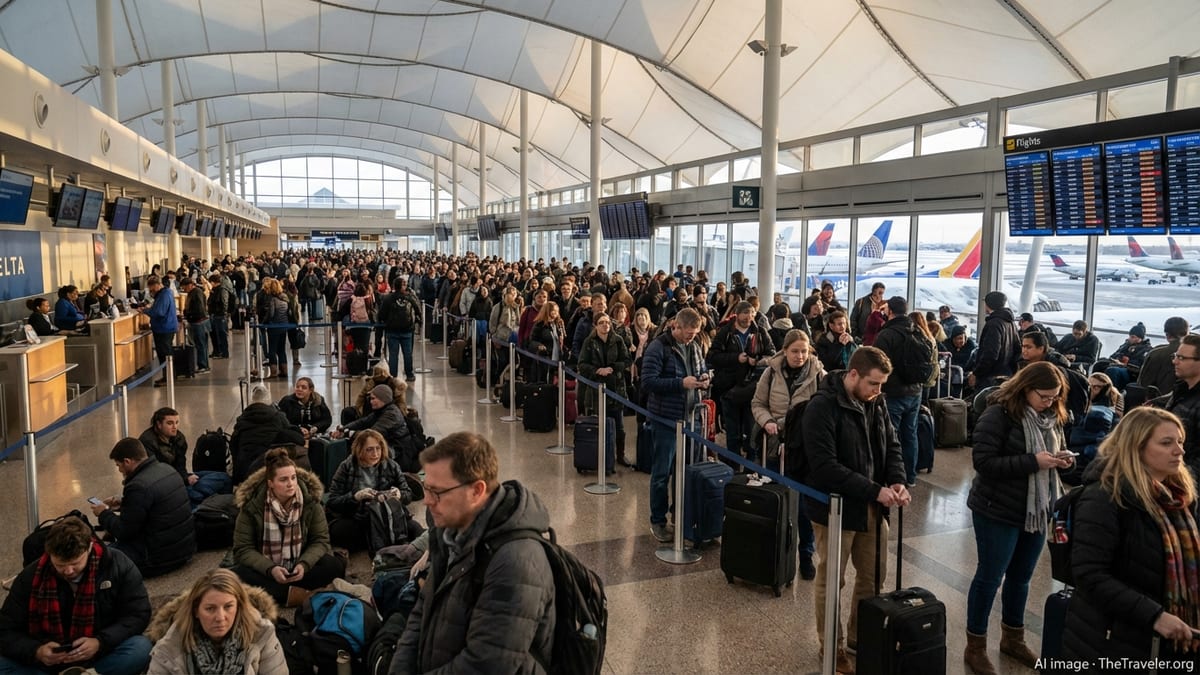
Hundreds of passengers were left stranded at Denver International Airport on Friday as 199 flights were delayed and four were canceled, disrupting operations for United Airlines, Southwest, Delta and other carriers on busy domestic and international routes.
Ripple Effects Across Major U.S. Hubs
The disruption at Denver International Airport, one of the nation’s busiest and most delay prone hubs, quickly spread across airline networks serving cities including Atlanta, Seattle, Dallas and San Francisco. With aircraft and crews out of position, even airlines with relatively few scheduled departures from Denver saw their operations impacted throughout the day.
United Airlines, which maintains a large hub at Denver, reported cascading knock on effects as delayed departures on early morning and midday flights compressed the afternoon schedule. Southwest and Delta, both of which rely on Denver as a key connecting point in the Mountain West, also faced mounting delays as aircraft arriving late were turned around for onward flights to other U.S. hubs.
Passengers connecting through Denver to major coastal gateways faced some of the most acute disruptions. Travelers bound for Atlanta and Dallas reported multiple rolling delay notifications, while flights heading to West Coast destinations such as Seattle and San Francisco saw boarding times repeatedly pushed back as airlines waited for arriving aircraft and available gates.
Airport officials said they were coordinating closely with airline operations centers to manage gate assignments, prioritize connections where possible and keep passengers informed, but acknowledged that the concentration of delays in a relatively short time window created significant congestion in both the concourses and on the airfield.
International Routes to Paris and Toronto Affected
The knock on impact was not limited to domestic travel. International flights linking Denver to major global gateways, including Paris and Toronto, also experienced significant schedule disruptions as delays accumulated through the day. Passengers on transatlantic services reported late inbound aircraft, extended ground handling times and revised departure slots as airlines worked with air traffic control to secure new clearances.
For many long haul travelers, even modest departure delays created the risk of missed onward connections in Europe and Canada. Several passengers bound for Paris said airline staff were working to rebook tight onward links to destinations across the continent, with some offered overnight accommodation at their connecting hubs due to missed last bank departures.
Services to Toronto were similarly affected, with delays in Denver rippling into the tightly scheduled North American transborder network. Airlines sought to consolidate some lightly booked departures and protect later flights in order to minimize the number of outright cancellations, a strategy that reduced but did not eliminate the disruption for travelers holding same day connections.
Travel analysts noted that international routes are especially vulnerable when a hub such as Denver experiences concentrated delays, because aircraft typically operate long rotations and crews are bound by strict duty time limits. Once a long haul aircraft departs late, it can carry schedule irregularities across several days unless airlines can find spare aircraft or adjust rotations.
Scenes of Crowded Gates and Lengthy Lines
Inside the terminal, the operational issues translated into crowded gate areas, long lines at customer service desks and anxious waits at departure boards as passengers attempted to understand how the evolving situation would affect their travel plans. Families returning from ski trips, business travelers on tight schedules and international visitors all converged on the same limited rebooking resources.
At United and Southwest counters, some travelers reported queuing for more than an hour to speak with an agent as staff worked case by case to reroute passengers and issue meal or hotel vouchers where company policy allowed. Delta and other carriers also deployed additional staff to help manage the flow, pointing customers to mobile apps and self service kiosks when possible to reduce the strain on in person support.
Concourse seating quickly filled as departure times slipped, with many travelers improvising makeshift workspaces near power outlets and families spreading out on the floor when seats ran short. Airport volunteers and staff circulated with basic updates, while overhead announcements urged passengers to monitor airline apps and gate displays for the latest information.
Food and beverage outlets in the main terminal and concourses saw brisk business throughout the day, as stranded passengers settled in for longer waits than planned. Some concession operators extended hours to accommodate the unexpected surge, while airport managers encouraged vendors to maintain adequate stock levels as the disruption continued into the evening.
Why Denver Is Vulnerable to Disruptions
Denver International Airport has developed a reputation in recent years as one of the U.S. facilities with a relatively high share of disrupted passengers, reflecting a combination of heavy traffic volumes, complex connecting banks and exposure to challenging weather conditions. Studies of 2025 flight performance have consistently placed Denver near the top of national rankings for delays, highlighting the structural pressures on the hub during busy travel periods.
While Friday’s disruption was not tied to a single severe weather event of the kind that has occasionally forced ground stops or widespread cancellations in the past, operational analysts pointed to the way small schedule perturbations at a major hub can quickly cascade when there is limited slack in aircraft and crew rotations. Once early departure banks are pushed back, later flights frequently encounter knock on delays, especially on days when demand is strong and most flights are already close to full.
Denver’s role as a key connecting point between the U.S. coasts, the Mountain West and international destinations adds another layer of complexity. Airlines use the airport to funnel passengers between smaller regional cities and major hubs, which means that a single delayed flight can affect numerous onward connections. When several carriers simultaneously experience schedule challenges, the network wide impact can be significant even if the number of outright cancellations remains relatively low.
Industry observers also noted that airlines are still refining staffing and scheduling strategies after several volatile travel seasons, with lingering crew availability issues and tight maintenance windows leaving less room for recovery when irregular operations strike.
Advice for Travelers Facing Similar Disruptions
For passengers caught up in Friday’s delays at Denver, the experience served as a reminder of how important preparation and flexibility can be when traveling through major hubs that are known to experience frequent schedule pressures. Travel experts recommend that passengers build longer connection times into itineraries when routing through airports such as Denver, especially during peak seasons or when storms are forecast along key routes.
They also advise travelers to download airline apps and enable notifications before heading to the airport, as digital tools typically provide the earliest updates on gate changes, rolling delays or rebooking options. In many cases, passengers can confirm alternate flights or request electronic meal vouchers directly through an app, avoiding the need to stand in long lines at customer service counters during irregular operations.
Those booking long haul journeys that rely on a Denver connection, particularly to destinations such as Paris or Toronto, are encouraged to consider arriving earlier in the day, when more backup options are available if problems arise. Travel planners note that first wave departures often enjoy a higher on time performance, and that midday or evening connections at busy hubs can be more vulnerable when earlier delays accumulate.
As airlines and airport officials work to restore normal operations, passengers are urged to keep all receipts for unexpected expenses such as meals, ground transportation and overnight stays, as some costs may be recoverable under carrier policies or through travel insurance. While the majority of delayed flights from Denver were expected to depart later in the day, residual effects on aircraft positioning and crew scheduling may continue to affect select routes into the weekend.