

More news on this day
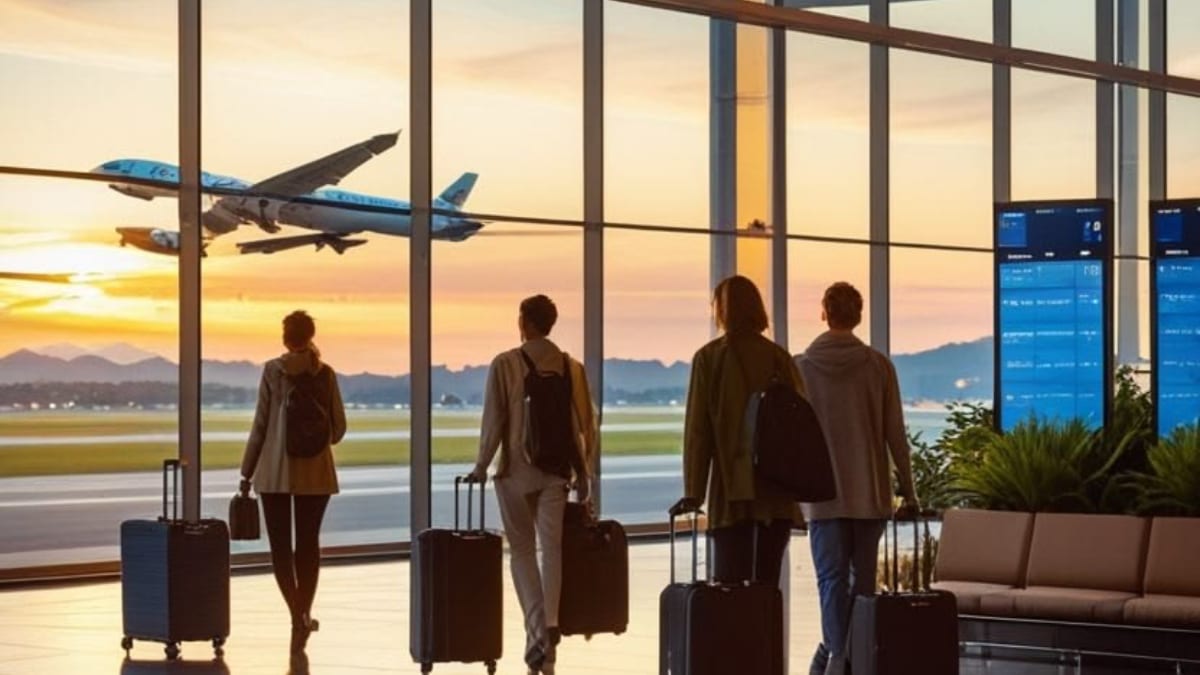
Flight delays are surging across the United States this spring as severe weather, runway construction, staffing shortfalls and heavy demand combine to strain the aviation system, leaving travelers facing longer waits and more missed connections at some of the nation’s busiest hubs.
Get the latest news straight to your inbox!
Weather Turbulence Hits Already Busy Spring Travel
A sequence of late winter storms and early spring severe weather events has repeatedly disrupted air traffic from the Northeast to Texas in recent weeks, coinciding with one of the busiest leisure travel periods of the year. Publicly available tracking data and industry reports indicate that multiple days in late March and early April produced several thousand delays nationwide as storms swept through major airline corridors.
On March 31, a mix of severe thunderstorms, rapid snowmelt and flash flooding across central and eastern states contributed to more than 3,000 flight delays and over 100 cancellations, according to aviation data cited in independent travel coverage. Subsequent storms around Washington, D.C., and the Mid-Atlantic on April 1 triggered temporary ground stops at the region’s three main airports, with knock-on delays rippling across the network as aircraft and crews fell out of position.
The Northeast has also been hit by late season snow and unseasonably cold temperatures, with travel industry reports on April 6 describing more than 200 cancellations and roughly 3,000 delays tied to winter weather at airports serving New York, Boston, Connecticut and Washington, D.C. Those conditions have affected operations for major U.S. and Canadian carriers, amplifying congestion at large hubs just as many families head out for spring break trips.
Travel analysts note that early April demand is running at or above pre-pandemic levels at many U.S. airports, meaning there is less slack in schedules to absorb weather-driven interruptions. Even short-lived storms are resulting in extended recovery periods as airlines work to reposition aircraft and flight crews while navigating crowded skies.
Runway and Infrastructure Projects Add to Airport Bottlenecks
Weather is not the only factor slowing travelers. A growing list of runway and airfield construction projects is constraining capacity at several major airports, increasing the risk that bad weather will translate into long queues on the ground and in the air. These projects are aimed at modernizing infrastructure and improving safety, but the short-term impact for passengers is often more delays.
At San Francisco International Airport, a six-month repaving and upgrade project on one of the north-south runways, combined with new federal landing procedures for closely spaced parallel runways, has led regulators to cut the maximum number of arrivals per hour from 54 to 36. Local reports indicate that about one quarter of arriving flights could experience delays of 30 minutes or more while the work is underway, particularly during busy late afternoon and evening periods when transcontinental and transpacific flights converge.
Similar runway and safety-area improvement programs are underway or planned at other large airports, including Boston Logan, where state transportation documents describe extended closures of a key east-west runway during parts of 2025 and 2026. Planning materials project that when a primary runway is closed for weeks at a time, average delays can quickly climb into the double digits, with hundreds of thousands of passengers affected over the life of a project.
In some cases, terminal renovations and landside construction are compounding the strain. In Houston, a multiyear upgrade program at George Bush Intercontinental has reshaped gate and boarding bridge layouts, contributing to localized congestion that has been magnified when storms roll through southeast Texas. Ground transportation construction around major hubs, such as roadway improvements at Dallas Fort Worth, is also slowing passenger access and check-in during peak hours.
Staffing Shortfalls and Flight Caps Limit Flexibility
Behind the visible bottlenecks on the tarmac and in the terminal, the U.S. air traffic control system continues to confront persistent staffing gaps that limit the ability to recover quickly from disruptions. Recent federal assessments and independent aviation analyses describe a workforce that remains below internal targets at many of the highest-volume facilities, from en route centers to terminal radar approach controls.
In early April, an aviation industry publication highlighted a new acknowledgment from federal regulators that 20 major air traffic control facilities have fallen to what the agency classifies as critical staffing levels, with certified controller counts dropping below 70 percent of desired benchmarks. That description aligns with previous government watchdog findings that the overall controller workforce has shrunk in recent years even as traffic has rebounded, prompting greater use of overtime and reducing scheduling flexibility.
These constraints have already translated into hard limits on flights at some airports. Newark Liberty remains under a federally imposed cap of 72 combined arrivals and departures per hour through late 2026, following a period of heavy delays tied to controller shortages, technology issues and construction. Industry data also show that staffing-related traffic management programs at Chicago O’Hare and in key air route centers can produce average delays measured in tens of minutes when demand outstrips controller availability.
For airlines, that means less room to add extra sections or rapidly re-time flights when storms or runway closures snarl operations. For passengers, it means that once delays start to accumulate on a busy day, there are fewer options for the system to catch up before the next weather system or peak travel bank arrives.
Capacity Pressures Mount as Demand Outpaces System Growth
Beyond specific weather events or construction zones, the broader U.S. aviation grid is wrestling with structural capacity challenges. Domestic demand has returned strongly, with multiple travel industry surveys pointing to passenger volumes at or above 2019 levels across much of the network. However, airspace, runway and staffing capacity have not expanded at the same pace.
Government accountability reports issued in late 2025 describe a controller workforce that has declined by about 6 percent over several years at the same time that traffic has largely recovered, leaving key facilities short of personnel. Parallel concerns over runway throughput and taxiway congestion have prompted a wave of infrastructure proposals, but many of those projects will not be completed for years.
In the near term, airlines are leaning on schedule adjustments, seasonal capacity shifts and more conservative planning at vulnerable hubs. Some carriers have trimmed peak-time frequencies at congested airports or consolidated lightly booked flights to create more breathing room in their operations. Others have invested in upgraded dispatch and forecasting tools designed to anticipate weather and traffic disruptions earlier in the planning cycle.
Despite these efforts, analysts note that the combination of high demand and constrained capacity leaves little margin for error. When several stressors hit at once, such as a storm system moving through a region also affected by runway work and staffing limits, even relatively modest operational issues can cascade into widespread delays across the country.
What Travelers Can Expect in the Weeks Ahead
With spring break travel continuing through much of April and the busy summer season already visible on airline booking curves, current patterns suggest that elevated delay levels are likely to persist, particularly on weather-sensitive routes and at infrastructure-constrained hubs. Recent disruption data, including a day with more than 5,000 delays and several hundred cancellations reported across the U.S. network, underscore how quickly conditions can deteriorate when multiple bottlenecks align.
Travel experts reviewing public flight statistics advise that passengers transiting through the Northeast, Midwest and key southern hubs such as Houston and Dallas should be prepared for potential schedule changes on days with active weather forecasts. They also highlight that infrastructure projects at airports like San Francisco and Boston may extend the window of heightened delay risk through at least the fall of 2026, especially during morning and evening rush periods.
Consumer advocates emphasize that most of the current disruptions are being driven by weather, airspace constraints and safety-related construction, areas where U.S. rules generally do not require airlines to provide cash compensation. However, carriers commonly issue travel waivers and same-day rebooking options during major events, and some have expanded the use of automatic reaccommodation tools to reduce time spent in customer service lines.
For now, publicly available operations data and airline advisories point to an aviation system operating close to its limits. As long as storms continue to sweep across busy corridors and long-planned runway projects and staffing recovery efforts remain in progress, travelers are likely to encounter more delayed flights and extended gate holds, even on days when skies appear mostly clear.