

More news on this day
U.S. air travelers are facing a new wave of disruption this spring as a combination of severe weather, runway construction, staffing shortfalls and heavy demand drives a sharp rise in flight delays across the national system.
Get the latest news straight to your inbox!
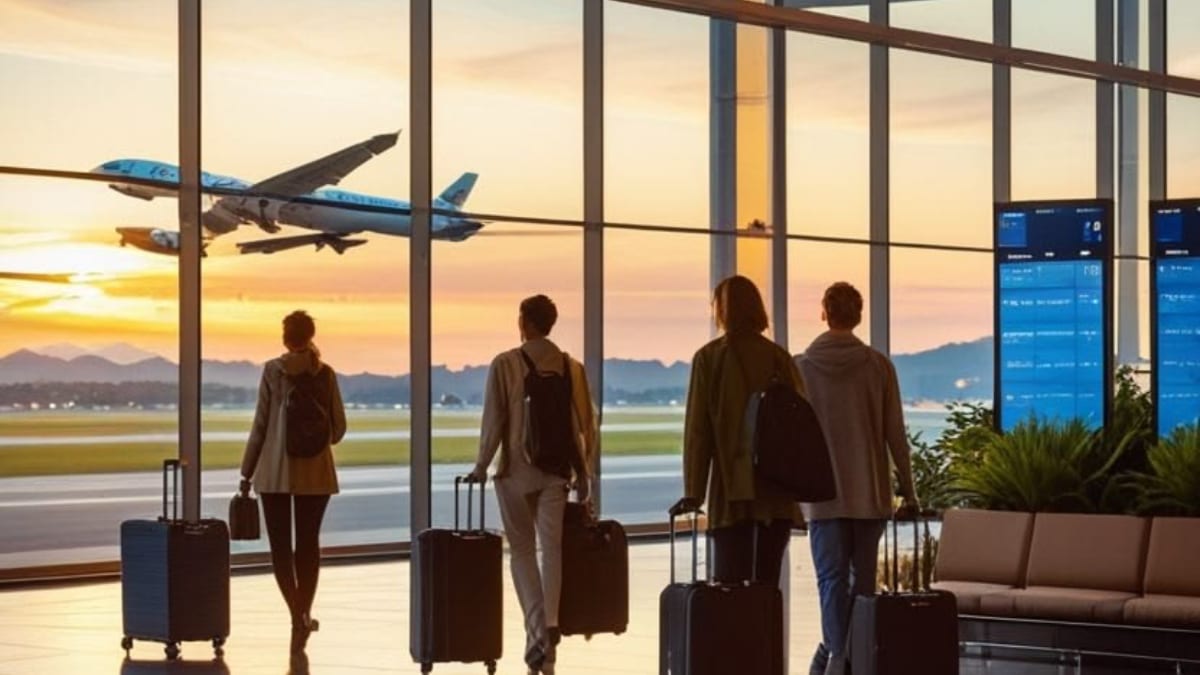
Stormy Spring Weather Knocks Airline Schedules Off Course
Early April has brought a fresh round of thunderstorms, flooding and turbulent weather patterns that have quickly rippled through airline operations. Publicly available flight-tracking data for Easter weekend indicate that more than 5,500 U.S. flights were delayed and several hundred were canceled over just a few days, with the worst impacts centered on Easter Saturday and the surrounding period.
Reports from aviation and travel outlets show that storms over Texas, the Midwest and the Southeast forced ground delay programs at a series of major hubs, including Chicago O’Hare and Dallas Fort Worth, limiting arrivals and departures during peak holiday travel windows. Once early departures slipped behind schedule, later flights often missed their planned takeoff slots, leaving aircraft and crews out of position for subsequent legs.
National Weather Service summaries for the first days of April describe a corridor of heavy rain and severe thunderstorms stretching from the central Plains into the Great Lakes, with totals of 3 to 6 inches of rainfall in some areas between March 31 and April 4. That pattern followed multiple March tornado outbreaks and a historic late February blizzard in the Northeast, creating a near continuous sequence of weather hazards for airlines to work around.
Travel analysts note that while severe storms are a seasonal reality, this year’s repeated systems have struck precisely as carriers ramp up spring and early summer schedules. With departure banks already tightly packed, even brief ground stops have been enough to trigger long lines at gates and mounting delay totals nationwide.
Runway Projects and Capacity Limits Squeeze Key Hubs
Beyond weather, structural capacity limits at several large airports are compounding delays. At San Francisco International Airport, a major runway rehabilitation project and updated federal spacing rules have combined to significantly reduce the number of arrivals the airport can accept per hour. Publicly available information from recent coverage indicates that the airport’s arrival rate has been cut by roughly one third while work proceeds, shifting SFO from about 54 to 36 arrivals per hour.
Runway closures and taxiway reroutes at SFO mean arriving flights often face longer sequencing times, particularly during low-visibility conditions when air traffic managers must space aircraft further apart. Airlines are attempting to adjust schedules and build in longer planned block times, but observers expect elevated delay risk at the Bay Area hub throughout the construction window.
Similar infrastructure work at smaller and mid-sized airports is exerting local pressure on the network. Industry publications have highlighted multi-month runway rebuilds at regional facilities in recent years, some funded through the Federal Aviation Administration’s Airport Improvement Program, that temporarily shift traffic onto secondary runways or reroute flights to nearby airports. These projects are designed to improve long-term safety and capacity but often translate into short-term congestion spikes when combined with strong demand.
Transportation planners caution that runway and taxiway work is likely to remain a recurring factor in U.S. delay patterns. After years of deferred maintenance and rising traffic at many hubs, more airports are entering intensive modernization phases that require partial closures, complex phasing plans and careful coordination with airlines to limit disruption.
Staffing Shortages Weigh on Controllers and Security Lines
While physical capacity is one constraint, the availability of trained personnel is increasingly central to the delays story. In early April, an aviation trade outlet reported that the Federal Aviation Administration has now classified staffing at 20 of its highest traffic air traffic control facilities as being at critical levels, with certified controller counts falling below 70 percent of the agency’s own targets.
Recent congressional and oversight documents describe a systemwide shortfall of several thousand certified controllers relative to desired staffing levels, following years of hiring gaps, training backlogs and elevated attrition. Independent analyses note that during past peak periods, controller shortages at complex facilities such as the New York area terminal radar approach control have contributed to ground holds and extended airborne holding, particularly during summer storms.
On the security side, the Transportation Security Administration is confronting its own staffing pressures. A partial federal government funding lapse that began in mid February has left many TSA officers working without regular pay. According to recent public statements and coverage, hundreds of officers have resigned since the shutdown began, and airports have closed some checkpoints or consolidated lanes to cope with fewer screeners.
Travel reports from the last several weeks describe hour long security lines at some large airports, including Atlanta, where a combination of severe weather, a closed checkpoint and staffing shortages slowed operations at one of the world’s busiest hubs. Longer screening times feed directly into departure delays when passengers and crews are unable to reach gates on schedule, especially during heavily banked morning and evening waves.
Heavy Demand and Tight Schedules Amplify Every Disruption
The current spike in delays is landing in the context of robust passenger demand. Industry commentary and federal traffic data show that U.S. domestic air travel volumes have returned to, and in many cases surpassed, pre pandemic levels at major hubs. Airlines have responded by scheduling dense departure banks and aggressively utilizing aircraft fleets to maximize available capacity.
That efficiency push leaves relatively little slack in the system. When storms close a key arrival corridor, a runway project narrows throughput, or staffing shortfalls force a temporary ground stop at a major terminal radar facility, carriers have fewer spare aircraft and crew hours available to recover the operation quickly. A delay to an early morning flight out of a hub can cascade into a full day of late departures across multiple cities as the aircraft cycles through its schedule.
Travel publications note that airlines are increasingly padding scheduled block times and adding connection buffers heading into the busy summer 2026 season, effectively acknowledging that chronic constraints will continue to generate congestion. Some carriers have also trimmed peak day schedules at the most delay-prone airports to reduce strain on air traffic control sectors that have been flagged as understaffed.
For passengers, the result is a travel environment in which even moderate storms or localized operational problems can produce outsized disruption. Experts emphasize that while the most severe meltdowns still tend to coincide with major weather events, the underlying system is more sensitive than in the past because of persistent staffing and capacity gaps.
What Travelers Can Expect in the Weeks Ahead
Looking ahead through April and into the early summer travel build up, publicly available planning documents and industry forecasts suggest that many of the forces driving the current wave of delays will remain in play. Springtime thunderstorm risk typically increases into May, runway work at San Francisco and other airports will continue, and air traffic control staffing improvements are expected to unfold only gradually.
Airlines have begun publishing revised schedules that incorporate longer block times on some of the most delay-prone routes and have advised customers through general travel alerts to monitor flight status closely on days when storms threaten major hubs. Analysts also expect carriers to rely more heavily on proactive rebooking and flexible change policies around forecast weather events to spread passenger loads across the day.
Security remains another wild card. As long as the current federal funding standoff persists, TSA staffing levels may continue to fluctuate, potentially forcing periodic checkpoint closures or lane reductions at busy airports. Travel industry coverage indicates that some regional airports are particularly vulnerable to losing commercial service, as limited numbers of screeners are redeployed to major hubs.
With demand high and systemic constraints unresolved, aviation observers anticipate that elevated delay statistics could become a defining feature of the 2026 travel year. For now, flight-tracking dashboards continue to show hundreds of cancellations and several thousand delays on the worst days, underscoring how quickly the interconnected mix of weather, infrastructure, staffing and capacity can push the system to its limits.