

More news on this day
Flight disruptions intensified across the United States as delays climbed past 2,345 on Thursday, snarling schedules at major hubs from Atlanta and Chicago to New York, Miami and Los Angeles and rippling through airline networks nationwide.
Get the latest news straight to your inbox!
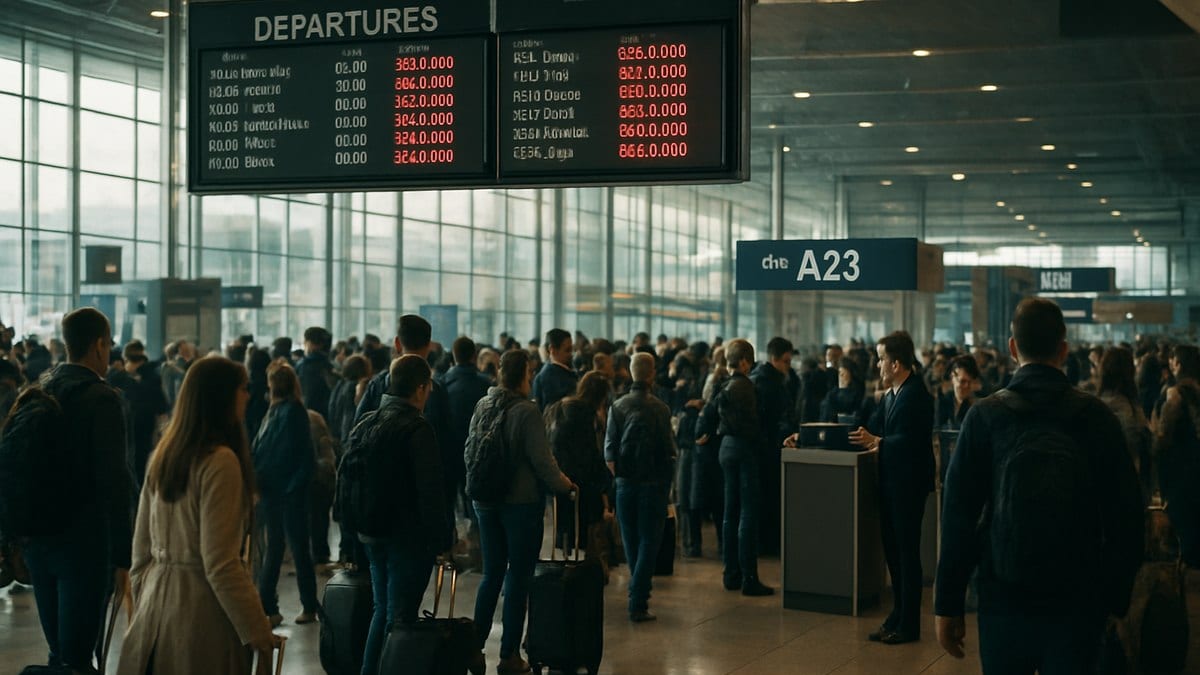
Congestion Spreads Across the Busiest U.S. Airports
Publicly available flight-tracking dashboards on Thursday showed a surge of delays across multiple large hubs, with aggregate counts surpassing 2,345 affected departures and arrivals. The disruption pattern mirrored recent spikes reported earlier in the week, when thousands of flights experienced schedule slippages across the country. While cancellation totals remained lower than during the most severe winter or holiday disruptions, the sheer volume of delayed operations created long queues at gates, extended tarmac times and missed connections for connecting passengers.
Recent coverage from aviation and travel outlets indicates that Chicago, Atlanta, New York area airports, Miami, Houston, Los Angeles and Denver again featured prominently among the hardest-hit facilities. In similar events reported this week, counts at individual hubs have reached several hundred delays in a single day, underscoring how quickly operational strains at a few airports can cascade throughout the system. Flights routed through these large connection points frequently experienced rolling knock-on delays, even when their origin airports were not directly affected by local weather or infrastructure issues.
Data snapshots reviewed during the afternoon peak showed congestion building steadily through the day, with the largest concentrations of delayed flights clustered in the late morning and evening waves. As inbound aircraft arrived behind schedule, airlines faced challenges resetting aircraft and crew rotations in time for subsequent departures. The resulting bottlenecks were most visible in dense banks of short- and medium-haul routes linking major hubs, where even modest delays of 30 to 60 minutes quickly multiplied across multiple legs.
Weather, Staffing and Tight Schedules Combine
Recent travel reporting has consistently linked elevated disruption levels in early April to a combination of transitional-season weather, staffing constraints in parts of the air traffic control system and tight airline scheduling. Thunderstorms, lingering winter conditions at northern airports and low cloud ceilings in several regions have periodically forced traffic managers to slow arrival and departure rates, reducing runway capacity and triggering ground delay programs at busy fields. Even when storms passed quickly, their impact on the carefully timed national airspace system continued for hours.
At the same time, analyses published in the past year by transportation agencies and industry observers show that airlines are operating with relatively lean buffers in their schedules, particularly at major hubs. High aircraft utilization and tightly timed connection banks allow carriers to maximize revenue on popular routes, but they also leave limited room to recover when one leg falls behind schedule. Public datasets compiled in recent federal air travel reports highlight how disruptors such as weather, late-arriving aircraft and air traffic system constraints remain leading causes of delays.
Staffing has also featured in several recent investigations into recurring slowdowns at intensely used terminals and in high-altitude airspace corridors. Reports summarizing government communications and airline schedule adjustments in late 2025 described targeted flight reductions at specific congested airports intended to relieve pressure on overburdened control facilities. Although some of those emergency measures were later eased, commentary from aviation analysts suggests that pockets of strain persist, with temporary controller shortages requiring spacing of flights that reduces hourly throughput.
Passengers Confront Long Lines and Missed Connections
For travelers on Thursday, the numbers translated into crowded terminals and extended travel days. When delay counts rise above a few thousand nationwide, airline networks typically see a surge in missed connections at the largest hubs, as inbound flights arrive after onward departures have closed boarding. This scenario has recurred frequently in recent days, according to consumer travel coverage that has documented passengers being rerouted through alternative cities, moved to next-day flights or placed on standby lists as airlines work to absorb stranded demand.
Major network carriers with hubs at Atlanta, Chicago, Dallas, Miami, Houston, Denver, New York and Los Angeles have been particularly exposed during these spikes, due to their dependence on carefully choreographed inbound and outbound banks of flights. Low cost and leisure-focused airlines have not been immune, especially when severe weather hits popular sun destinations or when bottlenecks emerge at shared infrastructure such as security lines and ramp areas. In several of the most affected hubs this week, local reporting pointed to long queues at check-in counters and gate podiums as travelers sought rebooking options or clarity on shifting departure times.
Extended disruption also tends to stress airport services beyond the airlines themselves. Food and retail concessions, ground transportation providers and airport security operations often see sudden surges in demand when passengers remain in terminals for longer than planned. Observers note that, although staffing levels at many airports have improved compared with the most acute phases of the pandemic period, pressure points still appear when multiple waves of delayed passengers converge on limited seating, restrooms and customer service desks.
Pattern Fits a Broader Post-Pandemic Volatility
The latest wave of disruptions fits into a broader pattern of volatility that has characterized U.S. air travel in the post-pandemic years. Government transportation statistics released over the past several months indicate that on-time performance has improved from some of the worst periods in 2022, yet delays and cancellations remain elevated compared with pre-2020 norms at several key hubs. Analyses by independent travel data providers show that certain airports, including New York LaGuardia and Chicago O’Hare, continue to record among the highest average delay durations in the country.
Industry commentators have highlighted how climate patterns appear to be increasing the operational challenges facing airlines and air traffic managers. Stronger and less predictable storm systems, heavier rainfall and more frequent episodes of extreme heat or snow have been cited in public reporting as factors driving weather-related disruptions. Studies compiling data for 2024 and 2025 suggest that weather accounted for a significant share of cancellations and substantial delays, particularly during peak summer thunderstorm seasons and winter storm cycles.
At the same time, passengers are flying in large numbers, maintaining pressure on a system that has not fully added back all pre-pandemic capacity in every market. Several major carriers have signaled cautious growth strategies, emphasizing reliability and cost control. However, the pattern of large, sudden disruption days indicates that the system remains vulnerable when multiple risk factors align, such as localized storms interacting with already constrained airport layouts and heavily utilized runways.
What Travelers Can Do on High-Disruption Days
Consumer guidance shared across travel media in recent days has emphasized preparation and flexibility for those flying through major hubs when disruption indicators climb. Many advisories recommend checking flight status repeatedly on the day of travel, using both airline mobile apps and airport information boards, and considering earlier departures when feasible to provide a wider recovery window if delays mount. For itineraries involving critical connections, travel experts often suggest building in longer layovers at known congestion points or booking nonstop flights where possible.
Passengers caught in rolling delays are frequently advised to explore multiple channels for assistance, including self-service rebooking tools, mobile chat features and customer service phone lines, rather than relying solely on in-person help at the gate. Travel insurance policies, where purchased, may provide some reimbursement for meals, hotels or alternative transportation during severe disruption, though coverage terms vary. Publicly available resources from the U.S. Department of Transportation also outline airline commitments regarding rebooking and basic care during controllable delays, information that can help travelers understand their options in complex situations.
With delay counts topping 2,345 on Thursday and recent days showing similarly high totals, many observers expect airlines and federal transportation agencies to face renewed scrutiny over the resilience of the U.S. aviation system. For now, industry data and published commentary suggest that travelers moving through the busiest hubs should anticipate continued periods of irregular operations, particularly during active weather patterns and peak travel weekends.