

More news on this day
A turbulent start to April has left air travelers across the United States facing a string of difficult days, with publicly available tracking data indicating more than 2,300 daily flight delays at major hubs as spring storms, record passenger demand and persistent operational pressures converge during the busy Easter travel period.
Get the latest news straight to your inbox!
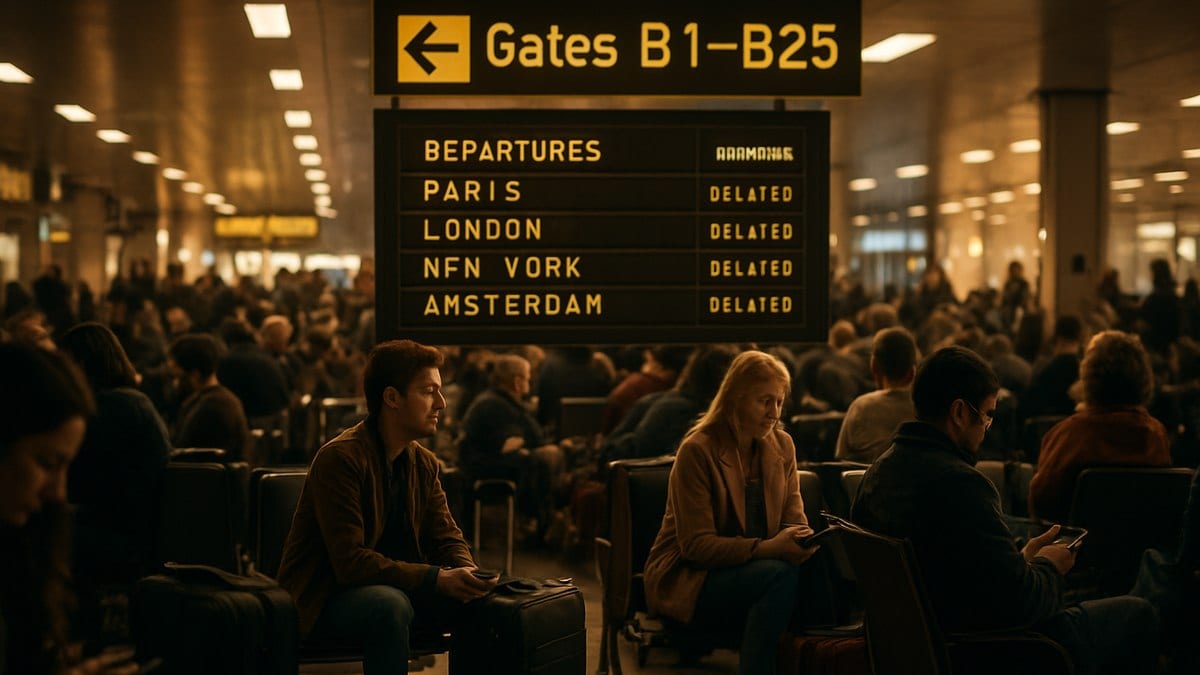
Early April Brings Sustained Wave of Disruptions
Data compiled from multiple flight-tracking platforms and travel-industry roundups shows that the first week of April 2026 has produced a near-continuous run of elevated disruptions, with daily tallies frequently surpassing 2,300 delayed flights within, into or out of the United States. On peak days over the long Easter weekend, national totals climbed far higher, with reports of more than 5,600 delays on April 4 alone and more than 15,000 delays over the four-day stretch from April 2 to April 5.
Coverage of the period highlights that the worst of the turmoil has not been confined to a single flashpoint day, but rather has unfolded as a rolling pattern of strain across the network. On April 5, for example, one nationwide snapshot cited roughly 3,963 delays and more than 415 cancellations, capping a multi-day wave that had begun before the holiday weekend and continued into the following Monday.
By April 6 and April 7, publicly available data still showed thousands of delayed flights each day, including one count of 4,722 delays and 307 cancellations on April 6 and another tally of about 4,395 delays on April 7. The figures underscore that, even outside the single busiest travel days, the system has been operating under persistent stress, routinely logging more than 2,300 delays daily across U.S. airports.
Major Hubs Shoulder Brunt of the Turbulence
Reports from aviation data providers and travel outlets indicate that a familiar group of large hubs has borne much of the impact. Atlanta, Chicago O’Hare, Dallas Fort Worth, Houston George Bush, Minneapolis–Saint Paul, the New York area airports, Los Angeles, Las Vegas, Philadelphia, Boston and Orlando have all featured prominently in delay and cancellation rankings during the early April turbulence.
Several of these airports are key connecting points in carrier networks, handling some of the highest volumes of flights and passengers in the country. When thunderstorms, wind or congestion disrupt operations at these hubs, the knock-on effects can quickly ripple nationwide, generating secondary delays at smaller airports that depend on timely arrivals and departures from the big centers.
Daily breakdowns compiled by travel-news and industry publications describe individual airports logging more than 1,000 delays in a single day at the height of the disruptions. Even when local weather has improved, residual congestion and aircraft positioning challenges have continued to weigh on on-time performance, suggesting that the system has limited slack to absorb repeated shocks.
Government and academic research cited in recent coverage has long noted that a relatively small number of large hubs account for a disproportionate share of passenger delay hours. The pattern in early April 2026 aligns with that history, with problems at a handful of critical nodes contributing significantly to the national total of more than 2,300 daily delays.
Weather, Demand and Structural Strain Converge
Published accounts of the disruption point to a combination of immediate and structural drivers behind the turbulent week. Lines of spring storms sweeping from the Midwest through the Southeast brought heavy rain, thunderstorms and strong winds across some of the busiest aviation corridors, prompting traffic-management initiatives such as ground delays, reroutes and reduced arrival rates at major hubs.
At the same time, the disruptions have coincided with one of the highest-demand periods of the year. Forecasts from industry groups and travel analysts ahead of the season projected about 171 million passengers flying between March 1 and April 30, with roughly 2.8 million passengers and around 26,000 flights per day scheduled across U.S. carriers. That level of throughput leaves airlines and airports with limited room to maneuver when weather or technical issues emerge.
Reports also highlight underlying system pressures, ranging from tight staffing in specialized roles to aircraft utilization patterns that depend on quick turnarounds. When bad weather or congestion forces even short ground holds, those delays can cascade through the rest of the day, particularly on thinner routes where there are fewer alternative flights available for rebooking.
Recent analyses of delay patterns during March 2026, which saw more than 31,000 combined delays and cancellations across the Americas, have raised further questions about the resilience of the aviation system heading into the peak summer season. The early April figures, with daily U.S. delays regularly surpassing 2,300, have reinforced those concerns among industry observers and travelers alike.
Traveler Impact Spreads Beyond the Big Airports
While much of the statistical focus has centered on major hubs, coverage of the recent disruptions shows that smaller and mid-sized airports have also felt the impact. When aircraft and crews are out of position at the large connecting points, regional flights to cities such as Columbus, Norfolk or New Orleans can face extended delays or outright cancellations, even when local conditions appear calm.
In early April, one national round-up highlighted a day with more than 3,100 delays and over 100 cancellations concentrated across a mix of large and regional airports, illustrating how stress at the core of the network radiates outward. Travelers on routes with limited daily frequencies can be particularly vulnerable, as a single cancellation may eliminate the only nonstop option, forcing lengthy connections or overnight stays.
Publicly available guidance from airlines and travel advisers during the current wave of disruptions has emphasized the importance of building extra time into itineraries, especially when connecting through weather-prone hubs. Early-morning departures are often cited as less susceptible to knock-on delays, and routes with multiple daily flights are generally viewed as offering better recovery options if problems arise.
For many passengers, however, the sheer scale of the recent disruptions has limited the effectiveness of such strategies. With more than 2,300 delays recorded on a typical disrupted day and significantly higher numbers during the holiday weekend peaks, rebooking inventories have at times been stretched thin, particularly for families and groups seeking to travel together.
What the Turbulent Week Signals for the Months Ahead
The pattern of elevated delays in late March and early April has prompted renewed scrutiny of how the U.S. aviation system will handle the months ahead. Travel analysts note that spring break and Easter often serve as a stress test for airline and airport operations, offering early clues about potential vulnerabilities before the height of summer travel.
According to recent industry commentary, airlines have invested in schedule resilience since the pandemic, bringing on more staff, acquiring additional aircraft and deploying tools to improve crew planning. Even so, the persistence of more than 2,300 daily delays during the recent turbulent week suggests that weather, airspace complexity and tight operating margins continue to challenge on-time performance.
Some observers point to the ongoing interplay between traffic growth and infrastructure limits. As passenger numbers climb and flight volumes edge higher, crowded skies and busy terminals can magnify the impact of each individual disruption. The experience of early April, with storms, surging demand and structural constraints combining to produce thousands of delays per day, offers a preview of the stakes as the industry moves toward the summer peak.
For now, publicly available data and published travel guidance indicate that passengers planning trips through major U.S. hubs in the coming weeks may want to monitor flight status closely, arrive at airports early and consider flexible routing options where possible, as airlines and airports work to stabilize operations after one of the most turbulent weeks of the spring travel season.