

More news on this day
Air travelers across the United States are contending with another bruising spell of disruption, as flight-tracking data shows delays spiking past 2,345 in a single day at major hubs from Atlanta and Chicago to New York, Miami and Los Angeles, capping a week of rolling problems for carriers and airports heading into the busy spring travel season.
Get the latest news straight to your inbox!
Delay Wave Rolls Through the Nation’s Busiest Airports
Publicly available data from flight-tracking services for the past several days indicates that large U.S. hubs have repeatedly logged four-figure delay totals, with one recent day surpassing 4,300 delayed flights nationwide and more than 200 cancellations layered on top. Chicago O’Hare, Atlanta, New York area airports, Houston, Orlando, Los Angeles and Seattle were among the heaviest hit, reflecting how quickly congestion at a few key nodes can ripple across the domestic network.
Reports focused on individual airports point to severe pressure at specific hubs. Coverage of operations in Atlanta on April 5 described at least 285 delays and 76 cancellations tied to that airport alone, while separate tallies from Miami and Denver highlighted hundreds more affected flights on peak days. When combined, the latest figures from these and other large gateways help push the national delay count well beyond the 2,345 mark, even on days without a single dominant storm system.
Recent disruption snapshots also underscore how concentrated the pain can be at certain hubs. Chicago O’Hare, for example, was cited as recording well over 200 delays in one 24 hour period, the highest count among a group of major airports tracked that day. At the same time, New York’s LaGuardia and Newark, along with Dallas Fort Worth and Denver, have each experienced their own spikes as late arriving aircraft and constrained departure slots stack up through the afternoon and evening.
For passengers, these elevated delay numbers translate into long queues at service counters, crowded concourses and missed connections that can strand travelers far from their intended destinations. The disruptions are particularly acute for those connecting through a single main hub, where a late inbound flight can knock out onward options to smaller cities until the following day.
Spring Storms, Staffing Strains and Tight Schedules Collide
Published coverage of the current disruption cycle points to a familiar mix of causes. Severe spring thunderstorms, low clouds and high winds over parts of the Midwest, South and Northeast have reduced airport capacity and triggered traffic management initiatives that slow arrivals into already busy hubs. In several recent cases, weather in one region has produced knock on effects thousands of miles away as airlines struggle to reposition aircraft and crews.
At the same time, ground and runway projects at some large airports are further constraining operations. Reports highlighting runway work and airfield construction note that temporary closures can reduce the number of available takeoff and landing slots during peak hours. Even modest reductions in runway throughput can magnify the impact of a passing storm cell or a burst of late afternoon congestion.
Staffing remains another pressure point. Analyses of the national air traffic system describe ongoing controller shortages at several key facilities, limiting the flexibility to recover quickly when weather or technical problems arise. Airline reports and expert commentary similarly indicate that some carriers continue to work with lean crew rosters and tight schedule buffers, making it harder to absorb delays without cascading disruptions.
These overlapping factors are unfolding against a backdrop of strong demand. Recent industry and airport statistics show passenger volumes in early 2026 at or above pre pandemic levels at many hubs, driven by spring break trips, late season ski traffic and early warm weather getaways. With more flights operating near capacity, any disruption that forces reaccommodation can quickly exhaust available seats on alternative departures.
Major Carriers and Hubs Under Particular Pressure
Recent delay and cancellation tallies highlight how the current disruption pattern is intersecting with the country’s hub and spoke system. One widely reported incident saw United Airlines log more than 800 delayed flights and dozens of cancellations in a single day, with the impact concentrated at its hubs in Newark, Chicago O’Hare, Denver, Washington Dulles and Houston. As aircraft and crews fell out of position, knock on effects stretched into the evening and following morning.
Separate coverage of Frontier Airlines detailed more than 200 significant delays and nearly 20 cancellations across its U.S. network on another day, with Denver, New York and Chicago again appearing as focal points. In Atlanta, flight disruption tallies involved multiple airlines, including Delta and several low cost carriers, as thunderstorms and congestion combined with tight crew scheduling to slow operations at the world’s busiest passenger hub.
Miami has emerged as another flashpoint in the latest disruption cycle. Reports from the first week of April describe nearly 200 delayed or canceled departures and arrivals in a single day at Miami International Airport, snarling routes not only to other U.S. gateways such as New York, Atlanta and Chicago but also to long haul destinations. Because Miami functions as a key connecting point for flights across the Americas and to Europe, problems there tend to radiate widely across airline networks.
Travel industry coverage of the most recent nationwide delay surge, in which total delays climbed above 4,300, notes that the majority of affected flights were operated by the largest U.S. carriers, including American, Delta, United, Southwest and several fast growing low cost and ultra low cost airlines. While no single company is solely responsible for the system wide turbulence, the concentration of traffic at a handful of megahubs means that operational challenges at one or two carriers can quickly spill over into the broader network.
What Travelers Are Facing at Terminals This Week
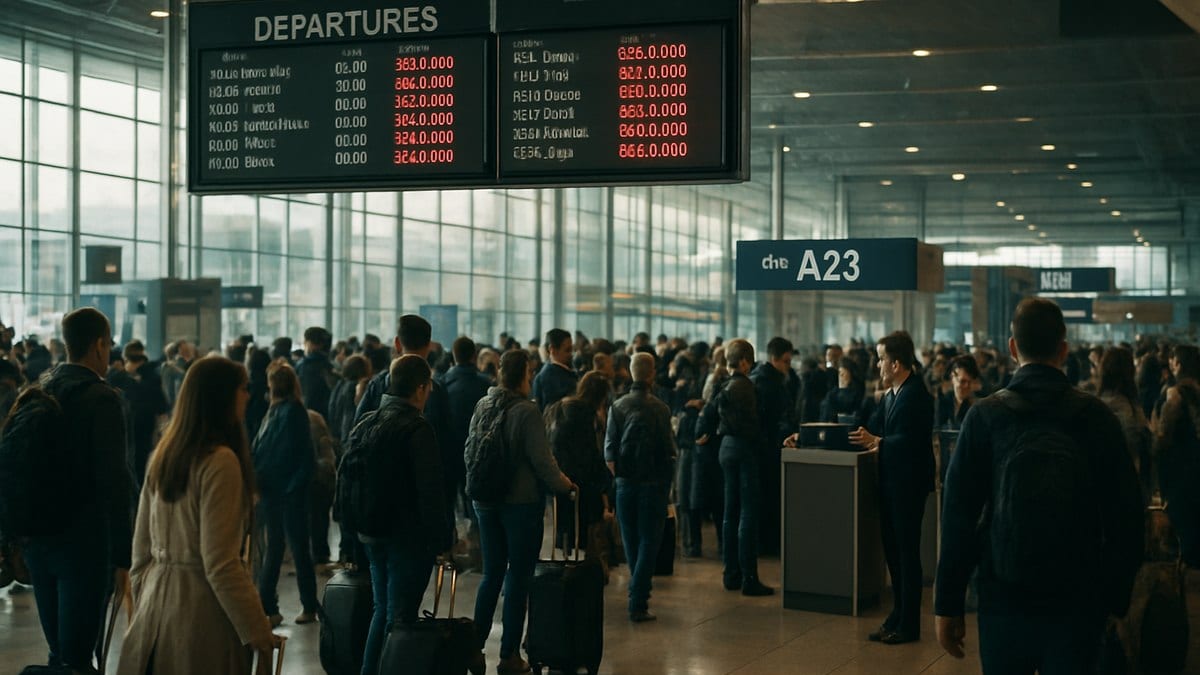
Scenes described from large airports over the past several days will be familiar to anyone who has flown during a disruption event. Passengers arriving at hubs such as Miami, Atlanta and New York have encountered long security and check in lines, departure boards full of delayed flights and crowded gate areas where travelers wait for rolling updates on departure times. In some cases, overnight delays and missed connections have left passengers hunting for hotel rooms in markets where inventory is already tight.
Published advice from consumer advocates and travel organizations emphasizes the importance of monitoring flight status closely through official airline apps and airport information screens, particularly for itineraries involving tight connections. Some guidance suggests that passengers traveling through the most delay prone hubs should consider booking longer layovers or earlier departures to build extra buffer into their plans.
Recent consumer focused reports also highlight the varying levels of assistance airlines provide during major delays. While U.S. rules do not guarantee automatic financial compensation for most weather related disruptions, carriers typically offer rebooking and, in some cases, meal vouchers or accommodations when delays are prolonged and considered within the airline’s control. Travelers are encouraged to review each airline’s customer service commitments and to keep receipts for unexpected expenses in case partial reimbursement is possible.
The knock on effects of the current delay wave are not limited to those in the terminals. Ground transportation providers near major hubs report fluctuating demand as passengers shift plans at short notice, while hotel operators near airports may see sudden spikes in same day bookings. For local economies that rely heavily on visitor spending, repeated disruption cycles can complicate staffing and inventory planning as arrival patterns grow less predictable.
Outlook: Elevated Risk as Spring and Summer Travel Build
Analysts who track aviation performance data suggest that the recent spike to more than 2,345 delays in a day fits into a broader pattern of volatility that has defined the post pandemic era of U.S. air travel. Research examining disruption clusters in the national airspace system notes that a relatively small share of days each year account for a disproportionate share of delays, often when multiple stress factors align.
Climate related weather volatility is expected to remain a key challenge. Studies of delay drivers across major U.S. airports point to an evolving role for severe storms, heat extremes and other hazards that can force sudden ground stops or reduce runway capacity. As spring thunderstorm season ramps up and the Atlantic hurricane season approaches later in the year, the risk of additional widespread disruption days remains elevated, particularly at hubs in the Southeast, Gulf Coast and central U.S. corridors.
Longer term initiatives, including investments in air traffic control staffing and technology, terminal expansions and runway upgrades, are intended to improve resilience. However, many of these projects themselves introduce short term constraints on capacity, such as temporary closures and construction related bottlenecks. Until those improvements are completed and fully integrated, travelers are likely to continue encountering pockets of severe congestion even on otherwise normal travel days.
For now, publicly available data and expert analysis point to an environment where delay counts surpassing 2,345 in a single day are likely to recur, rather than represent rare outliers. As airlines and airports work through this latest round of disruptions, passengers planning trips through the nation’s largest hubs in the coming weeks may benefit from building in flexibility, allowing extra time and keeping a close eye on evolving conditions from booking through arrival.